 A Nation Must Think Before it Acts
A Growing Rift: The Decline of Russian-Central Asian Ties
A Nation Must Think Before it Acts
A Growing Rift: The Decline of Russian-Central Asian Ties

A nation must think before it acts.
A Growing Rift: The Decline of Russian-Central Asian Ties
Executive Summary
A small group of Russian nationalists has been calling to “reclaim” Russia’s colonial territories since the Soviet Union collapsed in late 1991. After the Kremlin finally acted on these aspirations by invading parts of Ukraine, the number of Russian nationalists calling for the reconquest of areas seized by the Russian Empire or Soviet Union increased, and their cries grew louder.
Central Asia, particularly Kazakhstan, has been targeted in these remarks with increasing frequency since Russia launched its full-scale invasion of Ukraine in late February 2022. Oddly, this irredentism comes as Russian xenophobia has focused on Central Asian migrant laborers working in Russia.
Four years on from the launch of Russia’s full-scale war on Ukraine, some of the governments in Central Asia are becoming weary of enduring these threats of being reconquered by Russia. Officials in Central Asia are responding, and the number of Central Asian migrant laborers in Russia is dropping.
Tired of Hearing It
Threatening remarks about reclaiming former colonial territories have been coming from Russian television personalities, influential figures, and even state officials for years.
Comments from officials in US President Donald Trump’s administration about acquiring, or seizing, Greenland, and the special operation that led to the capture of Venezuelan President Nicolas Maduro at the start of January this year, helped fuel nationalist commentary in Russia.
Ultranationalist Vladimir Solovyov hosts the Russian television program “Solovyov Live” where he and his guests regularly talk about devastating Ukraine or destroying select European countries. On January 10, Solovyov said, “The games are over. International law and international order are irrelevant.” He continued that “If, for our national security, we needed to launch a strategic military operation on Ukrainian territory, why, for the same reasons, can’t we launch a strategic military operation in other parts of our zone of influence?”[1] Solovyov specified Armenia and Central Asia as being in that “zone of influence.”
Two days later, YouTube channel Infotselina posted an interview with Russian political philosopher Aleksandr Dugin. Dugin said a “tripolar world” was being formed and that “all territories we don’t bring under our control won’t remain neutral… they will become an outpost for others, first of all… the USA.”[2] Dugin continued, “Therefore, we cannot accept the existence of a sovereign Armenia, or a sovereign Georgia, or a sovereign Azerbaijan, a sovereign Kazakhstan, a sovereign Uzbekistan, Tajikistan, or Kyrgyzstan.” And he added, “Either they will be in our camp, part of our united union, or they will become a springboard for the West or the European Union, or America, or in some circumstances, China.”
Alisher Qodirov, the leader of Uzbekistan’s Milli Tiklanish (National Revival) party and also a deputy chairman in Uzbekistan’s Senate, responded. The day the interview with Dugin was posted, Qodirov lashed out at Solovyov’s comment on a “zone of influence.”
“Persistent statements in Russian media not only contradict the spirit of strategic partnership and allied relations but also have a destabilizing effect on them,”[3] Qodirov said, and added that cooperation among the Central Asia states gives the region the capability to give a decisive answer to any aggression.
Qodirov has become the leading critic against Russian nationalist sentiment aimed at Uzbekistan. At the start of January, Qodirov urged Uzbek migrant laborers to leave Russia after one Uzbek citizen was beaten to death one month earlier during a raid by Russian OMON riot police on a café in Khabarovsk.[4] “Use common sense,” Qodirov said, “leave Russia as soon as possible. No amount of earnings is worth the tears of your parents and children.”[5]
The rector of Uzbekistan’s University for Journalism and Mass Communications, Sherzodhon Kudrathoja also lashed out at Solovyov’s comments on January 12, writing that the Russian nationalist’s remarks ignored international law and recognition of sovereignty. Kudrathoja accused Solovyov of colonial thinking “in which borders are seen as obstacles.”[6]
Member of Kyrgyzstan’s parliament Dastan Bekeshev called for Solovyov to be declared persona non grata in Kyrgyzstan. “The Ministry of Foreign Affairs should summon the ambassador of Russia and hand over a note of protest” about Solovyov, Bekeshev said, “Such a person should never be allowed to come to Kyrgyzstan.”[7]
Aidos Sarym, a member of Kazakhstan’s Mazhilis, the lower house of parliament, responded in typical Kazakh fashion by downplaying the significance of Solovyov’s comments. “If you’re bitten by a mosquito, you don’t shoot a machine gun,”[8] Sarym said. “[Solovyov] is not an official figure who makes decisions,” Sarym added, but mentioned “he should be made persona non grata (in Kazakhstan).”
Kazakhstan has been the object of Russian irredentist rhetoric more often than the other Central Asian for the simple reason Kazakhstan shares a 4,750-mile border with Russia. For that same reason, Kazakh officials must be reserved in their reactions to Russian nationalist statements.
In early March 2022, just after Russia launched its mass invasion of Ukraine, a video was posted of Gennadi Zyuganov, the leader of Russia’s Communist Party, talking about the need to “protect the Russian-speaking population” against the “national arbitrariness that is happening in Kazakhstan.” Zyuganov said Russia should take the Soviet-era Baikonur cosmodrome, military testing areas in Kazakhstan, and take control of Kazakhstan’s uranium industry. Kazakhstan has been the world’s leading uranium producer and exporter since 2009.
Kazakhstan’s Foreign Minister at the time, Mukhtar Tleuberdi downplayed the significance of Zyuganov’s statements, saying the video was two months old, was not shown on Russian state television, and that Russia’s Communist Party was an opposition party, and its opinions were different than those of the Russian government.[9]
After Bekeshev called for Solovyov to be declared persona non grata, Kyrgyz presidential press secretary Askat Alagozov said, “Such statements should be regarded as one of many empty and unserious remarks made during the Russian journalist and TV host’s many broadcasts on a wide range of topics,” and added, “It would be another matter if similar statements had come from a deputy or a minister.”[10]
Kyrgyzstan is also in a delicate situation regarding its relations with Russia. Kyrgyzstan depends on Russia for petroleum products and Russian gas giant Gazprom owns Kyrgyzstan’s natural gas and gas pipeline network. Angering the Kremlin could result in dire consequences for Kyrgyzstan’s economy.
Russian Foreign Ministry spokesperson Mariya Zakharova addressed Solovyov’s remarks on January 16, saying the views he expressed were his personal views, not those of the Russian government. “Our country and the peoples of Central Asia have historically been bound by good-neighborly relations, strategic partnership, alliance, fraternal friendship, and cooperation,” Zakharov said, “The continued development of our ties is underpinned by good personal contacts between the leaders of friendly states, based on mutual respect and trust.”[11]
Despite Zakharova’s assurances, it is common knowledge that if the Kremlin objects to comments made by politicians or television personalities, action is swiftly taken. Since neither Solovyov nor Dugin faced any rebukes or punishment, it can be assumed the Russian government did not find their remarks objectionable.
And it is not only these recent chauvinist statements of Solovyov and Dugin that pass with little or no official reaction from Russian authorities.
Back on December 10, 2020, Vyacheslav Nikonov, Duma deputy and head of its Education and Science Committee, appeared on a television program[12] where guests denounced the 1991 Belovezha Accords that dissolved the Soviet Union, saying “Kazakhs never had any statehood” before the collapse of the Soviet Union, describing the current territory of Kazakhstan as a “gift” from Russia.
Russian President Vladimir Putin was among the first to question Kazakhstan’s statehood. In August 2014, Putin credited then-Kazakh President Nursultan Nazarbayev as having “created a state on territory that never had a state” and later repeated, “Kazakhs never had any statehood, he (Nazarbayev) has created it.”[13]
Nikonov later posted on Telegram, downplaying the intention of his remarks and expressing his “warmest feelings to the people of Kazakhstan.”
On December 12, 2020, Kazakhstan’s Foreign Ministry expressed “bewilderment” at Nikonov’s “provocative attacks.”
The next day, Yevgeny Fedorov, appeared on the BELARUSINFO program, also saying Kazakhstan’s territory was gift and was renting its land from Russia. Fedorov went further, claiming the people of Kazakhstan were ungrateful, commenting that “It’s one thing that a kind Russian person gave you a gift and you appreciate it and are friends with him. But another thing is if you spit on him, as in this case the Kazakh Foreign Ministry did [on Russia].”[14]
On December 14, 2020, the deputy chairman of the Duma’s Committee for CIS Affairs and Eurasian Integration, Viktor Vodolatsky, referred to Nikonov’s comments and said, “For us, Kazakhstan is a friendly state with which we have signed many agreements and treaties.”[15]
At a press conference in Moscow in December 2023, Russian writer and co-chairman of the A Just Russia – For Truth party Zakhar Prilepin remarked on the millions of Central Asian migrant laborers in Russia. Prilepin singled out Uzbekistan saying “since two million [Uzbek] citizens are on our territory, we’re laying claim to your territory (because) most of your people are already here.”
Uzbekistan’s population is currently more than 38 million. Uzbekistan’s Foreign Ministry summoned the Russian ambassador to complain about Prilepin’s comment. Uzbek Senate Speaker Tanzila Narbayeva commented that “Uzbekistan will never be someone’s colony.”[16]
But a month later, a Russian historian named Mihail Smolin appeared on Russia’s NTV and said Azerbaijanis, Kazakhs, and Uzbeks did not exist as a nation until after the 1917 Bolshevik Revolution.[17]
Qodirov called for canceling Russian TV programs in Uzbekistan, saying, ”Lately, we hear nothing but chauvinistic statements in Russian,” and added, “it seems [Russian authorities] are interested in such rhetoric.”[18] Qodirov questioned why Russian programming, which is still widely available in Uzbekistan, was needed since only some 3 percent of the population in Uzbekistan are ethnic Russians.
Russian Xenophobia
Russian nationalists’ calls for reconquering parts of Central Asia are somewhat ironic given the treatment of Central Asian migrant laborers in Russia. There have never been accurate figures for how many citizens of Central Asia are working in Russia since hundreds of thousands, and possibly at times several million, Central Asian citizens work illegally in Russia.
With limited employment opportunities at home, they have been coming to Russia for decades and send back billions of dollars in remittances every year. Most Central Asian migrant laborers perform menial labor, sweeping streets, working at construction sites or as delivery couriers, or drive taxis. They face discrimination and have been assaulted by Russian nationalists and skinheads. Additionally, there have been numerous cases of employers failing to pay wages and disappearing when work is completed.
The situation became much worse after the terrorist attack on Moscow’s Crocus City Hall on March 22, 2024 that left more than 140 people dead. Russian authorities detained a group of Tajiks, some who were migrant laborers, others who had been living in Russia for years and obtained Russian citizenship. The evidence against the suspects was not compelling. In the first days after they were caught and tortured into confessions (one had part of an ear cut off), Russian officials tried to connect the Tajiks to Ukrainian intelligence agencies, despite the Islamic State of Khorasan Province claiming responsibility for the attack.
The attack sparked a wave of xenophobia aimed not just at Tajiks, but at all Central Asians. A nationalist group called Russkaya Obshchina (Russian Community) often accompanies police on raids of dormitories and establishments frequented by Central Asian migrant laborers. Central Asians are routinely beaten and humiliated during these raids.
Since the Crocus City Hall attack, there have been a series of new rules enacted that make it increasingly difficult for migrant laborers from Central Asia to work legally in Russia. When they arrive in Russia they undergo mandatory fingerprinting and are photographed, their phones are checked, and in some cases, their mouths are swabbed for DNA samples.[19] Russian cities have their own regulations prohibiting migrant laborers from working certain jobs. In the Krasnodar, Volgograd, and Rostov regions they cannot work in metallurgical plants or fitness centers,[20] in St. Petersburg they cannot work as taxi drivers or couriers for delivery services.[21] By the start of 2025, there were 47 Russian regions with restrictions on the types of jobs migrant laborers could do.[22]
Additionally, there is always the fear among male migrant laborers that they could be detained or imprisoned in Russia and coerced or forced into joining the Russian military and being sent to fight in Ukraine.
Not surprisingly, the number of Central Asian migrant laborers working in Russia is decreasing quickly.
In 2017, more than 1 million Kyrgyz citizens were working in Russia,[23] by 2023 that number had dropped to some 650,000 and in 2024 to about 350,000.[24] Uzbekistan’s Migration Agency reported in January 2025 that the number of its citizens working as migrant laborers in Russia dropped from some 1.2 million in 2023 to 698,000 by the end of 2024.[25]
Opportunities for Central Asian citizens to find employment are opening up in other countries in the Middle East, Europe, and East Asia. In mid-2025, there were nearly 100,000 Uzbek citizens working in South Korea, for example.[26] Wages are usually higher in these other countries and the fears of being attacked by skinheads and ultranationalists are less.
The Blind Spot of Russian Neo-Colonization
It is understandable that Central Asian officials and citizens are growing tired of hearing Russian nationalists threaten to recolonize their land. The reactions of Central Asian officials in Kazakhstan, Kyrgyzstan, and especially in Uzbekistan to Russian irredentist remarks is sharper and come more quickly as patience thins for such comments.
There is consolation. Russia’s disastrous war in Ukraine has dragged on for more than four years, taking a huge toll on the economy and costing Russia more than 1 million men killed or wounded with little progress on the battlefield. The Russian military will probably not be in shape to launch any new incursions into other countries for years.
Additionally, the majority of Central Asia’s 80 million people are Muslims. Reincorporating Central Asia into a Russia empire would drastically change Russia’s demographic make-up. Russia’s population is some 140 million, of which, according to various figures, some 16 to 20 million are Muslims. Adding all of Central Asia would increase Russia’s population to around 220 million, of which 90 million or more would be Muslims.
Russian nationalists don’t seem to be paying any attention to that aspect of reconquest, or how an invasion of Central Asia might be seen by the Muslim peoples in Russia’s North Caucasus, such as the Chechens.
There is also China, which has invested tens of billions of dollars into Central Asia since the Soviet Union disintegrated, building roads, railways, oil and natural gas pipelines (leading to China), factories, and power plants, including wind and solar. Beijing would almost surely be upset with any Russian attempts to recolonize Central Asia.
These realizations might be encouraging Central Asians to push back on Russian nationalists’ comments, just as these comments, and the treatment of Central Asian migrant laborers in Russia, are causing a rift in Central Asian-Russian ties that could last for decades.
[1] “’The Time of Wolves and Jackals.’ How Central Asia is reacting to Solovyov’s proposal to conduct a “SVO” in the region («Время волков и шакалов». Как в Центральной Азии реагируют на предложение Соловьева провести «СВО» в регионе),” Радио Азаттык, January 14, 2026, https://www.azattyqasia.org/a/kak-v-tsentralnoy-azii-otreagirovali-na-predlozhenie-soloveva-svo-/33647240.html.
[2] “«Страны Центральной Азии должны стать частью союза с Россией» — Александр Дугин (“Central Asian countries should become part of a union with Russia” – Alexander Dugin),” Gazeta.uz, January 19, 2026, https://www.gazeta.uz/ru/2026/01/19/dugin/.
[3] “Alisher Kadyrov criticized Solovyov’s statements about Russia’s “zone of influence” in Central Asia,” UzDaily.uz, January 12, 2026, https://www.uzdaily.uz/ru/alisher-kadyrov-raskritikoval-vyskazyvaniia-soloveva-o-zone-vliianiia-rf-v-tsentralnoi-azii/.
[4] Doniyor Tuhsynov, “Citizen of Uzbekistan reportedly killed by security forces in Russia; MFA sends diplomatic note,” Kun.uz, January 2, 2026, https://kun.uz/en/news/2026/01/02/citizen-of-uzbekistan-reportedly-killed-by-security-forces-in-russia-mfa-sends-diplomatic-note.
[5] “The leader of Milliy Tiklanish called on Uzbeks to leave Russia amid reports of a migrant’s death,” UzDaily.uz, January 4, 2026, https://www.uzdaily.uz/ru/lider-millii-tiklanish-prizval-uzbekistantsev-pokinut-rossiiu-na-fone-soobshchenii-o-gibeli-migranta/.
[6] “Kudratkhoja called Solovyov’s statements about Central Asia a manifestation of colonial thinking,” UzDaily.uz, January 12, 2026, https://www.uzdaily.uz/ru/kudratkhodzha-nazval-zaiavleniia-soloviova-o-tsentralnoi-azii-proiavleniem-kolonialnogo-myshleniia/.
[7] “Kyrgyzstan wants to declare Vladimir Solovyov persona non grata,” Tengrinews.kz, January 14, 2026, https://tengrinews.kz/sng/vladimira-soloveva-hotyat-priznat-personoy-non-grata-590249/.
[8] Elizabeta Aksenova, “If you’re bitten by a mosquito, you don’t shoot a machine gun” – Aidos Sarym on Solovyov’s words,” Tengrinews, January 14, 2026, https://tengrinews.kz/kazakhstan_news/esli-ukusil-komar-ne-strelyaete-avtomata-aydos-saryim-590279/.
[9] “Kazakhstan’s Foreign Minister responded to a question about Zyuganov’s statement,” Tengriews.kz, March 10, 2022, https://tengrinews.kz/kazakhstan_news/glava-mid-kazahstana-otvetil-vopros-zayavlenii-zyuganova-463862/.
[10] Ilgar Khudiyev, “Kyrgyzstan may declare Russian TV host Vladimir Solovyov persona non grata,” Azerbaijani Press Agency, January 14, 2026, https://en.apa.az/cis-countries/kyrgyzstan-may-declare-russian-tv-host-vladimir-solovyov-persona-non-grata-488906.
[11] “The Russian Foreign Ministry commented on Solovyov’s provocative statements,” Tengrinews.kz, January 16, 2026, https://tengrinews.kz/kazakhstan_news/mid-rossii-prokommentirovali-provokatsionnyie-zayavleniya-590438/.
[12] “The Great Game,” Russian Television First Channel, aired on December 10, 2020, https://www.1tv.ru/shows/big-game/vypuski-s-angliyskim-perevodom/the-great-game-10-12-2020.
[13] Anna Dolgov, “Kazakhs Worried After Putin Questions History of Country’s Independence,” Moscow Times, September 1, 2014, https://www.themoscowtimes.com/2014/09/01/kazakhs-worried-after-putin-questions-history-of-countrys-independence-a38907.
[14] “Kazakhstan leased territory from Russia, says State Duma deputy,” Zakon.kz, December 14, 2020, https://www.zakon.kz/redaktsiia-zakonkz/5050968-kazahstan-arendoval-territoriyu-u.html.
[15] “The Russian State Duma commented on Nikonov’s comments about Kazakhstan,” Zakon.kz, December 14, 2020, https://www.zakon.kz/redaktsiia-zakonkz/5050913-v-gosdume-rf-prokommentirovali-slova.html.
[16] “Tanzila Narbayeva: Uzbekistan will never be anyone’s colony,” Радио Озодлик, December 26, 2023, https://www.azattyqasia.org/a/32746929.html.
[17] “”Stop being soft and tolerant toward Russian chauvinists” – Uzbek social media on historian Smolin’s remarks,” Радио Озодлик, January 26, 2024, https://www.azattyqasia.org/a/32792471.html.
[18] “Stop being soft and tolerant toward Russian chauvinists.”
[19] “An Uzbek man describes his deportation from Russia: “They took my fingerprints and saliva from my mouth. When I asked, ‘Why?’ they said, ‘Just because.’” RFERL Current Time TV, August 22, 2024, https://www.currenttime.tv/a/uzbekistanets-rasskazyvaet-o-deportatsii-iz-rossii-snyali-otpechatki-paltsev-vzyali-slyunu-izo-rta-na-vopros-pochemu-otvetili-prosto-tak-/33088452.html.
[20] “No work – deportation: migrant workers are being forced out of the southern regions,” RFERL Kavkazr.com, May 8, 2025, https://www.kavkazr.com/a/rabotatj-neljzya-deportirovatj-iz-yuzhnyh-regionov-vydavlivayut-trudovyh-migrantov/33402074.html.
[21] “Door-to-door resignation: Starting July 1, migrants in St. Petersburg are prohibited from working as taxi drivers and delivery workers. What will this mean?” novayagazeta.com, July 1, 2025, https://novayagazeta.eu/articles/2025/07/01/otstavka-ot-dveri-do-dveri.
[22] “47 Russian regions have introduced restrictions on migrant employment,” Kaktus Media, January 13, 2025, https://kaktus.media/doc/516134_v_47_regionah_rossii_vveli_ogranicheniia_na_trydoystroystvo_migrantov_karta.html.
[23] “Over 1 million Kyrgyzstanis working in Russia: Minister,” AKIpress, March 6, 2017, https://m.akipress.com/news:589709:Over_1_million_Kyrgyzstanis_working_in_Russia__Minister/.
[24] “The number of Kyrgyz citizens in Russia has decreased, but the volume of remittances to Kyrgyzstan has increased,” Радио Азаттык, January 29, 2025, https://www.azattyqasia.org/a/33295031.html.
[25] “Number of labor migrants from Uzbekistan abroad drops by more than a third,” gazeta.uz, January 22, 2025, https://www.gazeta.uz/en/2025/01/22/migrant/.
[26] “No. of foreigners in Korea hits record high of 2.73 mil. in June: data,” The Korea Times, July 27, 2025, https://www.koreatimes.co.kr/southkorea/globalcommunity/20250727/no-of-foreigners-in-korea-hits-record-high-of-273-mil-in-june-data.
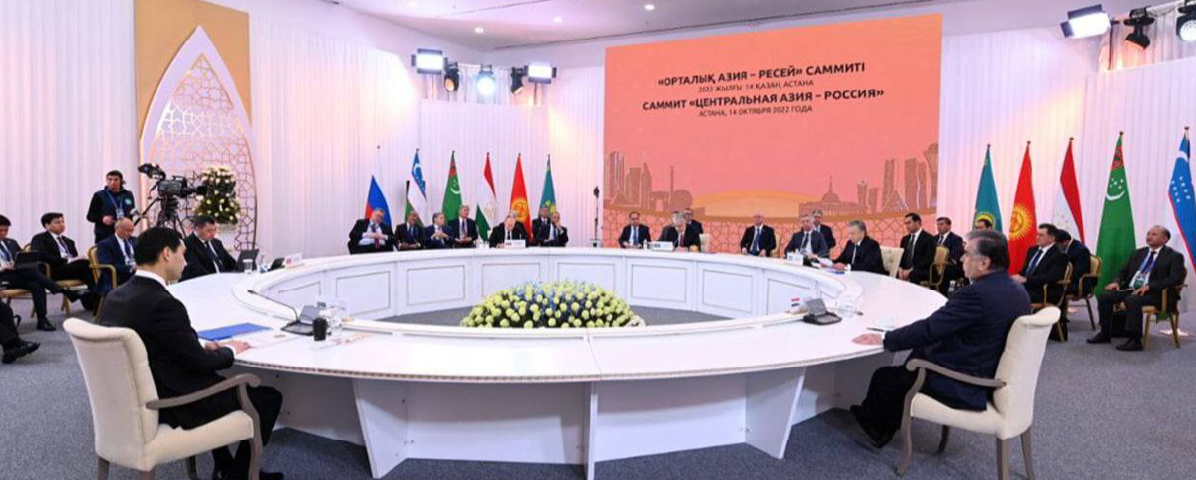
Image: yuz.uz