 A Nation Must Think Before it Acts
A Diplomatic Gesture Is Straining Ukraine–South Korea Ties

A nation must think before it acts.
A Diplomatic Gesture Is Straining Ukraine–South Korea Ties
What began as a humanitarian gesture from Ukraine to South Korea has escalated into a diplomatic standoff. During his September 23 address to the UN General Assembly, Ukrainian President Volodymyr Zelensky revealed that Kyiv had recently transferred two North Korean prisoners of war to South Korea. Captured in Russia’s Kursk region in January 2025, the soldiers had refused repatriation and asked to resettle in the South. The transaction has now become a source of tension between the two sides.
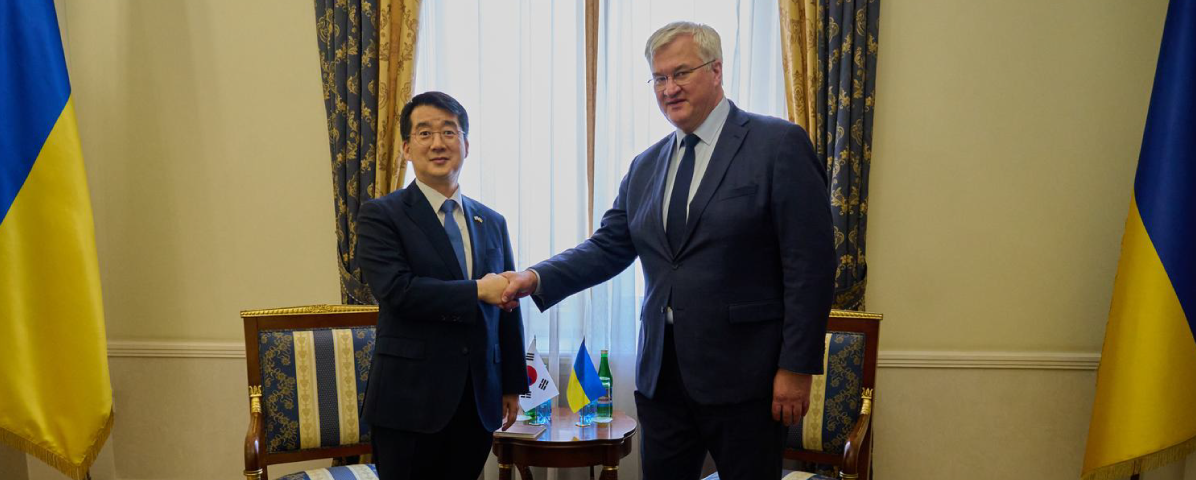
According to Seoul, the two governments had agreed, at Kyiv’s own request, to keep the transfer strictly confidential. When Zelensky’s office denied that any such arrangement existed, the Lee Jae-myung administration demanded an official apology and summoned Ukraine’s chargé d’affaires. On October 8, Seoul recalled its ambassador, its first protest recall of an envoy since 2008. Twelve days later, it announced that roughly half its embassy staff would leave Kyiv. As of early November, the two sides had continued private consultations but remained deadlocked over the apology.
Both capitals had their own calculations. The Lee administration, eager to revive dialogue with Pyongyang, sought to handle the transfer quietly. Kyiv’s public denial left Lee looking, in his own words, like a “liar.” Kyiv, for its part, likely saw the disclosure as an opportunity to highlight North Korea’s complicity in Russia’s war and rally international support. South Korea’s intelligence agency even suspected that Kyiv wanted to build support among the South Korean public for arming Ukraine directly.
The origin of the tensions may be disputed, but it has led to a broader foreign policy debate in South Korea: if US President Donald Trump is friendly with Russian President Vladimir Putin, why should it matter if Seoul turns its back on Ukraine? The argument misreads Washington’s intentions, ignores how South Korea’s conduct is perceived abroad, and overlooks the country’s own history.
Bear in mind that Trump’s seeming affinity for Putin is no guarantee that Washington would tolerate a South Korean pivot toward Moscow, especially under a new Congress.
Meanwhile, even as Trump’s closest advisers push an early end to the war, there is nonetheless strong support on both sides of the political aisle to push back against abandoning Ukraine. Some are driven by hostility toward Ukraine or toward Europe more broadly. Others believe that countering China must take priority, even at the expense of European security. From Washington’s perspective, Seoul’s dealings with Kyiv are closely tied to the US-Republic of Korea alliance itself.
Seoul’s own handling of the dispute has deepened the rift. However awkward Kyiv’s unilateral disclosure may have been, a response bordering on a diplomatic rupture was disproportionate. It also coincided with other developments that raised questions about South Korea’s alignment. President Lee has been promoting an Arctic shipping route that depends on Russian cooperation. In October, The Guardian reported that tankers had carried more than 176,000 tons of petroleum products, mostly diesel, from South Korean ports to Russia’s Far East in July and August. Seoul maintains that its trade data show no such exports. Taken together, however, these episodes have reinforced Western suspicions that South Korea is using its quarrel with Kyiv as cover to move closer to Moscow.
These suspicions carry particular weight in Europe. Despite war fatigue, Europe’s foreign policy and security establishment still regards Ukraine as a bulwark against Russian expansion. That is why three major European powers, widely understood to be Britain, France, and Germany, have offered to help mediate between Seoul and Kyiv and urged South Korea to keep supporting Ukraine.
The dispute also raises a question of national identity. Some in South Korea point to corruption in Ukraine’s leadership as a reason to dismiss its resistance against Russia. Yet South Korea, perhaps more than any other country, should be the last to belittle a nation’s fight for survival against a neighbor’s invasion. The Republic of Korea survived the Korean War only because an international coalition was willing to shed blood for its defense, with sixteen nations sending combat troops under the UN flag.
Seoul should make foreign policy on moral grounds alone. An armistice in Ukraine could be in South Korea’s national interest, since spreading American resources across multiple theaters dilutes the US security commitment in Asia. Yet open hostility toward Kyiv will do little to hasten that peace, while straining Seoul’s ties with Europe and costing it the trust of Washington’s foreign policy mainstream.
A more consequential opportunity for Seoul lies in defense-industrial cooperation with Europe. South Korean arms sales to Europe already reached about $11 billion in 2025. The more Seoul helps Europe rearm, the more room Washington has to concentrate its military resources in Asia. That role depends on Europe’s confidence that South Korea stands firmly with the West, and the current rift puts that confidence at risk. Seoul should therefore seek a diplomatic resolution to this counterproductive dispute without further delay.
Image: mfa.gov.ua