 A Nation Must Think Before it Acts
The Next Global Industrial Hubs May Not Be Where Investors Expect

A nation must think before it acts.

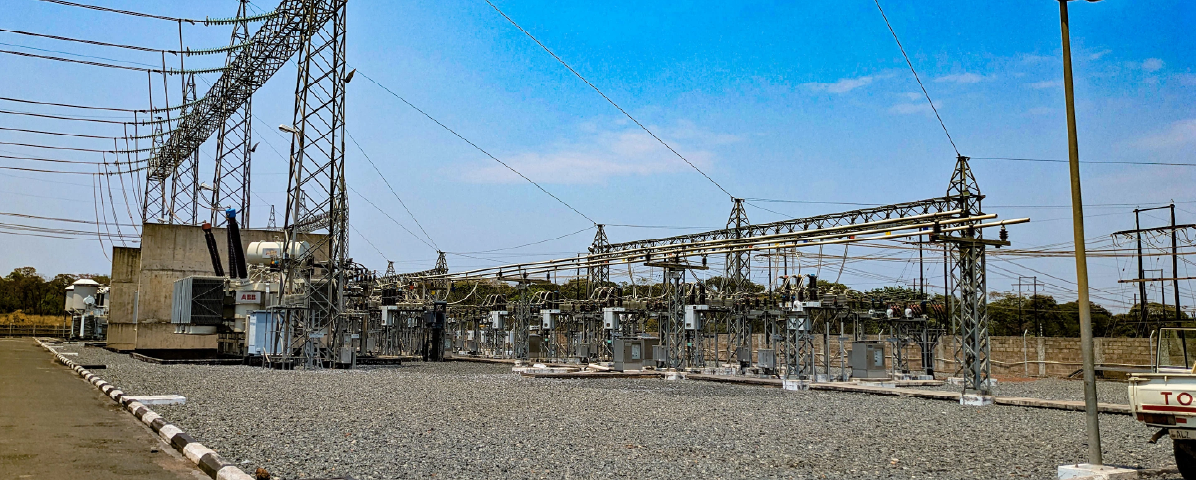
The Next Global Industrial Hubs May Not Be Where Investors Expect
Introduction: Rethinking the Geography of Global Industry
For decades, the geography of global manufacturing has been shaped by a familiar set of assumptions. Industrial production tends to gravitate towards established manufacturing centers: countries with extensive infrastructure, large consumer markets, reliable energy supplies, and access to international trade. Investors have concentrated capital in locations with existing industrial ecosystems, suppliers within manageable distances, and the capacity to scale production with a reasonable degree of certainty.
These considerations remain fundamental. Industrial development cannot be built on strategic ambition alone; the economics of manufacturing still depend on costs, productivity, infrastructure, skills, and access to markets. Yet the conditions under which companies organize production are changing. Geopolitical competition, technological transformation, the energy transition, and the pursuit of more resilient supply chains are influencing where businesses source materials, establish factories, and develop new production partnerships.
This changing environment raises a question of particular significance for Africa. Could some of the next major industrial opportunities emerge in places that international investors have traditionally approached primarily as sources of raw materials, consumer markets, or locations for infrastructure projects?
Africa warrants closer examination in this context. The continent possesses substantial mineral resources, significant agricultural capacity, considerable renewable energy potential, and a growing population. Several countries have also developed established manufacturing sectors, engineering capabilities, financial systems, and logistics networks. Others occupy strategic positions along trade corridors linking mineral-producing regions to ports and international markets. Yet these assets have not translated into a proportionate role in global manufacturing.
The African Development Bank’s 2026 industrialization assessment highlights this imbalance, estimating that Africa accounts for less of 2 percent of global manufacturing output. The continent is therefore both an important source of industrial inputs and a relatively marginal participant in the production systems that transform those inputs into finished goods.
That contrast is more than a development challenge. It presents an investment question.
The opportunity is not to assume that Africa is on the verge of becoming a single, continent-wide manufacturing powerhouse, nor to suggest that every African economy can compete successfully across all industrial sectors. Rather, the proposition is that the next generation of industrial investment opportunities may emerge from combinations of resources, infrastructure, technical capabilities, and regional market access that conventional investment analysis has not always considered collectively.
Morocco’s automotive industry, the emerging battery-materials ambitions of Zambia and the Democratic Republic of the Congo, Zimbabwe’s investments in lithium processing, and the development of agricultural-processing platforms across West Africa illustrate different dimensions of this potential. These initiatives are at varying stages of industrial maturity, and their commercial prospects differ. Taken together, however, they demonstrate why Africa’s investment landscape should be assessed through the industries and production networks taking shape across the continent.
The question is no longer simply which African country possesses the most attractive resources or the largest consumer market. Rather, it is which locations can combine their existing advantages to support production that is competitive, scalable, and commercially sustainable.
For investors, answering this question requires looking beyond national boundaries, headline investment announcements, and broad narratives about continental potential. It means identifying the specific conditions that enable industrial ecosystems to emerge, examining the relationships between markets and infrastructure, and distinguishing opportunities grounded in existing capabilities from those that remain dependent on substantial institutional or commercial change.
The next African industrial hubs will not emerge automatically from their respective resource endowments. Their development will depend on whether the continent can convert strategic relevance into productive capacity.
The Changing Geography of Global Investment
International businesses increasingly operate in an environment shaped by supply-chain resilience, technological competition, energy security, and evolving trade relationships. Companies must consider not only where production is cheapest today, but also where supplies can be secured, infrastructure is dependable, and operations are resilient to disruptions arising from overreliance on a limited number of suppliers and production centres.
This does not mean that global manufacturing is about to abandon established industrial centers. Existing manufacturing ecosystems retain considerable advantages, including experienced workforces, specialized suppliers, advanced infrastructure, financial depth, and decades of accumulated technical knowledge. Relocating production can be expensive, and investors are unlikely to move factories simply because another location offers attractive natural resources.
Nevertheless, the search for additional sources of supply, alternative production locations and new industrial partnerships creates openings for economies capable of meeting specific commercial requirements.
UN Trade and Development’s World Investment Report 2026 describes a global investment environment in which capital flows remain uneven, with investment increasingly concentrated in strategic industries and selected locations. For African economies, the implications are significant, as growing international demand for investment does not guarantee that African countries will attract it. They must compete to become commercially relevant to the industries attracting capital.
The global energy transition offers a useful illustration. Growing demand for batteries, electricity networks, electric vehicles, and renewable-energy systems creates demand for minerals and processed materials, but the resulting industrial opportunities extend beyond mining. They encompass refining, chemicals, components, equipment, engineering services, recycling, and logistics.
The International Energy Agency’s 2025 report, Stepping up the Value Chain in Africa, examines opportunities for African countries to participate more extensively in critical-mineral processing and clean-energy technology manufacturing. Its central implication for investors is that resource production and industrial participation are not synonymous.
A country can be a major supplier of an important mineral while capturing only a limited share of the manufacturing activity built around it. Conversely, a country with fewer natural resources may establish a competitive industrial position through technological capabilities, skilled labor, reliable infrastructure, and access to customers.
This distinction helps explain the different trajectories of African industrial centers.
Morocco’s automotive sector demonstrates how investment, supplier development and access to export markets can create a manufacturing ecosystem. The DRC and Zambia are exploring whether their mineral endowments can support a more integrated battery-materials industry. Zimbabwe is pursuing greater lithium processing capabilities, while South Africa retains established automotive, engineering and mineral-processing industries.
These are not interchangeable investment opportunities. Their significance lies in the distinct positions they occupy within emerging regional and global production networks.
For investors, the strategic question is whether these positions can be connected in ways that create commercial value. A mineral-processing operation may become more attractive when it is supported by reliable energy, regional transportation, access to chemical inputs, and established customers. An automotive supplier may become more competitive when it can serve several regional markets rather than relying on a single domestic customer.
The opportunity lies in the connections between these assets.
Morocco’s Automotive Industry: What an Industrial Ecosystem Actually Looks Like
Morocco offers one of the clearest African examples of how a country can move beyond supplying inputs to establish itself as a manufacturing location.
Its automotive industry has developed through sustained investment, export-oriented industrial policy, infrastructure and supplier development, and integration into international production networks. The result is not merely a collection of assembly plants. It is an industrial ecosystem connecting vehicle manufacturers, component suppliers, logistics providers, technical workers and export infrastructure.
A 2026 analysis published by Brookings describes Morocco’s evolution from a producer of individual automotive components in the early 2000s to a major vehicle-manufacturing and export center. The country’s proximity to European markets, established industrial infrastructure, and ability to attract international manufacturers have facilitated this transformation.
The distinction matters because industrial competitiveness rarely depends on a single factory. Vehicle assembly requires a network of suppliers capable of delivering components to precise specifications and on schedule. Manufacturers need transport systems that can move finished vehicles and parts efficiently. Investors require a workforce capable of operating sophisticated production processes and adapting to technological change.
Morocco’s experience demonstrates how these elements can reinforce one another to support industrial development
For investors, the lesson is not that every African economy should attempt to reproduce Morocco’s automotive strategy. Its geographical proximity to Europe, industrial policies, trade relationships, and accumulated supplier capabilities are distinct advantages that cannot be replicated simply by declaring an intent to manufacture vehicles.
The more useful lesson is that industrial investment is more likely to become sustainable when the surrounding ecosystem develops alongside the anchor project.
This has implications for other African markets. A country seeking to attract automotive investment might find a more realistic entry point in wiring systems, seats, tires, metal fabrication, vehicle components, commercial-vehicle assembly, maintenance, or specialized logistics than in the immediate construction of a complete vehicle-manufacturing complex. While such activities may initially appear less ambitious than establishing a major automotive plant, they can provide a route into international supply chains, build technical capabilities, and create relationships with manufacturers that generate further opportunities.
Morocco’s experience also illustrates the importance of market access. Industrial production aimed at international customers must meet their cost, quality, delivery, and regulatory requirements. Domestic demand alone may not support the production volumes necessary for globally competitive manufacturing.
For Africa, the broader opportunity lies in identifying additional locations where a combination of market access, infrastructure, skills, and investment can support specialized industrial activity. Morocco demonstrates that African locations can compete in sophisticated global industries when conditions are developed over time.
It also offers a useful benchmark for investors considering other markets: the relevant question is not whether a country has announced an industrial ambition, but whether it possesses, or is building, the capabilities required to make that ambition into a commercially credible option for investment.
The DRC and Zambia: Can a Mineral Corridor Become a Manufacturing Network?
The Democratic Republic of the Congo (DRC) and Zambia occupy important positions in the global copper and cobalt supply chains. Both minerals serve a range of industrial applications, including electricity infrastructure, electronics, and some battery technologies. Their growing importance to energy-transition supply chains has intensified international interest in the region.
Yet the region’s significance as a mineral supplier raises a more consequential question: can it also become a location for a larger share of the processing and manufacturing activities associated with those resources?
The DRC–Zambia battery value-chain initiative seeks to address this question. The two countries have explored the development of a cross-border industrial ecosystem capable of supporting the production of battery precursors and related materials, drawing on the DRC’s cobalt resources and Zambia’s copper industry.
The proposal reflects a broader economic logic. Battery production does not depend on a single mineral or a single industrial process. It requires an interconnected system of materials, chemicals, energy, technical expertise, transport, manufacturing equipment, and access to customers. No individual African country necessarily possesses all the resources and capabilities needed to compete across every stage of the value chain.
Regional cooperation could allow countries to specialize in different stages of production while sharing access to infrastructure and markets.
The United Nations Economic Commission for Africa has worked with Morocco, the DRC and Zambia on a roadmap for regional automotive and electric-mobility value chains. The initiative recognizes that mineral-producing economies, manufacturing centers, and countries with existing automotive capabilities may be able to develop complementary roles within an integrated regional production network.
The opportunity extends well beyond producing complete batteries or electric vehicles. It may include refined materials, industrial chemicals, component production, equipment servicing, engineering, and the logistics required to move intermediate goods between production sites.
However, the distinction between industrial ambition and a functioning industrial ecosystem remains crucial.
A 2026 assessment by the International Institute for Sustainable Development examined the readiness of the DRC–Zambia battery initiative and identified several issues, including regulatory coordination, administrative procedures, and policy predictability. These challenges have direct commercial implications. A cross-border production network cannot operate efficiently if companies face inconsistent regulations, uncertain access to infrastructure, or unpredictable border procedures.
There are also technological and market considerations. Battery chemistry continues to evolve, and demand for minerals can change. Processing facilities require substantial capital, reliable energy, and customers willing to purchase their output. Investors must assess whether proposed products can compete with established suppliers, particularly those operating in much larger manufacturing ecosystems.
The commercial case therefore rests not simply on the region’s mineral wealth, but on its ability to build competitive processing and supplier capabilities.
The corridor’s broader significance is its potential to demonstrate how African economies might combine their comparative advantages rather than compete independently for the same investment.
For investors, this creates several possible entry points. Opportunities may include investment in mineral processing, industrial power, chemical inputs, logistics, equipment maintenance, or specialized components of the production chain. Development finance institutions may help structure infrastructure or industrial projects where risks and capital requirements exceed what an individual private investor can reasonably absorb.
The most credible opportunities will be those where the commercial requirements are clear, the relevant infrastructure can be secured and the proposed activity has a realistic route to market.
The DRC–Zambia initiative should therefore be viewed as an important industrial experiment, rather than proof that a fully integrated battery industry has already emerged. Its eventual significance will depend on implementation, costs, technology, investment and effective regional coordination.
For Africa, the larger lesson is that some of the next generation of industrial hubs may develop across borders rather than within them.
Zimbabwe: From Lithium Extraction to Industrial Participation
Zimbabwe offers a particularly relevant case study because it combines mineral resources, established industrial capabilities, and an explicit policy commitment to increasing domestic processing capabilities.
The country possesses significant deposits of lithium, platinum-group metals, chrome, gold, nickel and other mineral resources. It also has a history of manufacturing and engineering, including industrial activity associated with steel, agriculture, mining equipment and consumer goods. Together, these assets create possible routes into wider regional and global production networks, although their commercial viability will depend on infrastructure, financing, technical capabilities, and market access.
Lithium provides one of the clearest current examples.
International interest in Zimbabwe’s lithium resources has increased as battery manufacturers and other industrial customers seek reliable supplies of minerals used in energy-storage technologies. The investment question, however, is not only how much lithium Zimbabwe can extract, but what processing and related industrial activities can be established competitively within the country.
A concrete example is Prospect Lithium Zimbabwe’s Arcadia operation in Goromonzi, associated with Zhejiang Huayou Cobalt. Zimbabwean media reports in February 2026 described a lithium-sulfate processing plant linked to Huayou’s expanding investment footprint in the country, with the broader investment program reported at approximately US$1.1 billion. The development illustrates how investment can move beyond mine development into additional processing stages.
The distinction between mineral extraction and processing matters economically. Processing requires additional engineering expertise, expanded plant operations, laboratory testing, maintenance, chemicals, utilities, and logistics. These activities can create opportunities for local suppliers and technical workers, although the actual scale of domestic value creation depends on the plant’s operating model, input sourcing, employment, and market arrangements.
For investors, the potential opportunities expand beyond the processing facility itself. They may extend to industrial maintenance, transport, power supply, water management, laboratory services, equipment, technical training, and supporting infrastructure.
However, it would be premature to treat lithium processing as a guaranteed route to a fully developed battery-manufacturing industry. Producing lithium chemicals is only one stage in a much larger value chain. The production of battery materials and cells require additional technical capabilities, stringent quality standards, substantial capital investment and established customer relationships. Zimbabwe’s ability to capture further stages will depend on whether its industrial activities can compete with those established production centers.
The appropriate question, therefore, is how investment in mineral processing could support the gradual development of a broader industrial ecosystem.
Zimbabwe’s emerging steel industry provides another perspective.
The Dinson Iron and Steel Company project at Manhize, associated with Tsingshan Group, represents a substantial effort to expand domestic steel production. Zimbabwe’s national development planning documents identify the investment as an important component of mineral-based industrialization and places its value at approximately US$1.5 billion.
Steel matters beyond the material itself. A competitive domestic steel industry can supply inputs for construction, infrastructure, machinery, fabrication, and other manufacturing activities. It can potentially support businesses producing structural components, agricultural equipment, industrial parts, and construction materials.
However, these potential benefits depend on the economics of production. Steelmaking is energy-intensive and faces competition from established regional and international producers. Reliable power, transportation, input costs, operational efficiency and access to customers will determine whether domestic production can compete sustainably over the long term.
If these conditions can be met, the investment could create opportunities extending beyond primary steel production. Fabrication businesses, engineering contractors, construction suppliers and equipment manufacturers may be able to build commercial relationships around the industrial base.
The distinction is important: a large industrial plant can serve as an anchor for broader economic activity, but it does not automatically generate a competitive supplier network. That requires complementary investment in technical capabilities, a skilled workforce, and businesses able to meet the requirements of industrial customers.
Zimbabwe’s position within Southern Africa adds another dimension to its industrial potential. The country is situated within a region that includes South Africa’s established industrial base, Zambia’s copper economy, the DRC’s mineral resources, Botswana’s mining and services sectors, and transport routes connecting inland producers to regional ports.
This geographical position could support specialized roles in mineral processing, fabrication, engineering, maintenance, mineral-related services and regional distribution. The commercial viability of these activities would depend on reliable transportation infrastructure, predictable regulation, availability of power, and the ability to reach customers across borders.
Zimbabwe’s investment opportunity, therefore, is not merely becoming a larger mineral exporter, but determining where its existing resources and industrial capabilities can support competitive participation in regional production networks.
Evaluating Zimbabwe’s potential requires a realistic assessment of its constraints. Currency and financing conditions, energy reliability, infrastructure, policy predictability, and the availability of technical skills all influence investment decisions. Addressing these challenges will be essential if mineral-processing projects are to generate lasting industrial benefits.
For investors, Zimbabwe offers an example of how resource endowment and industrial ambition are beginning to intersect through identifiable projects. The opportunity lies in evaluating the specific commercial activities that can develop around these investments, rather than assuming that resource wealth alone will produce industrial transformation.
Zimbabwe’s Wider Opportunity: Connecting Minerals to Regional Industry
The most interesting question for Zimbabwe may ultimately concern its relationship with the wider Southern African economy.
Industrial development does not require every country to manufacture finished products independently. In many established manufacturing regions, production is distributed across multiple locations, with different countries supplying materials, components, engineering services, and final assembly.
Zimbabwe could potentially participate in similar arrangements through specialized capabilities in mining, metals, agriculture, and industrial services.
Consider the relationship between mineral processing and engineering. Processing plants require pumps, conveyors, electrical systems, steel structures, replacement parts, fabrication, and ongoing maintenance. Although some highly specialized equipment may continue to need to be imported, local businesses may be able to compete in selected services and components where they can offer competitive quality, low costs, and quick delivery.
As industrial demand grows, these supporting activities can create opportunities for small and medium-sized enterprises. They can also provide a route for technical workers and local businesses to develop the capabilities needed to serve industrial customers.
A related opportunity exists in fabricated metal products. If steel production can supply downstream businesses at competitive prices, there may be scope for construction components, agricultural equipment, industrial structures and other products for regional markets. The viability of these activities will depend on production costs, product quality, access to financing, and the ability to compete with imported goods.
Regional market access is particularly important because Zimbabwe’s domestic demand may be insufficient to support every potential manufacturing activity at scale. Access to neighboring markets could improve capacity utilization and make specialized production more commercially attractive.
This is where regional integration becomes more than a diplomatic objective. For manufacturers, access to regional customers can determine whether a factory is commercially viable. For investors, the ability to source inputs and sell finished products across several markets can fundamentally change a project’s economics.
Zimbabwe’s participation in the United Nations Economic Commission for Africa’s 2024 dialogue on automotive and electric-mobility value chains illustrates the relevance of this approach. The discussions involving Morocco, the DRC, and Zambia also included representatives from Zimbabwe and other Southern African countries. A key point of discussion was identifying automotive components that could be manufactured in different markets according to their respective existing capabilities.
This potential for collaboration offers a practical alternative to the idea that Zimbabwe must establish a complete automotive industry to participate in the sector. Its potential role could instead involve selected components, metal fabrication, maintenance, commercial-vehicle services, electrical systems or regional distribution, subject to a careful assessment of cost and market demand.
Such opportunities should not be treated as guaranteed investments. They require securing customers, meeting industry standards, offering competitive pricing, and ensuring dependable delivery. Nevertheless, they illustrate how a country can establish a specialized industrial role without attempting to reproduce the entire manufacturing ecosystem of a larger economy.
For Zimbabwe, the strategic task is to connect emerging investments in lithium processing and steel production with the suppliers, technical capabilities and regional markets needed to support broader productive activity.
For investors, the opportunity lies in identifying commercially viable businesses emerging within the emerging ecosystem rather than focusing exclusively on the largest, most prominent investment projects.
Agriculture: Industrial Opportunities Beyond the Mine
Minerals attract substantial attention in discussions of African industrialization, but agricultural processing offers another route into manufacturing and regional production networks.
Agriculture can support a broad range of industries, including food processing, packaging, cold storage, fertilizer blending, irrigation equipment, agricultural machinery, testing services, and distribution. These activities can generate value across multiple stages of production while creating commercial relationships among farmers, processors, logistics providers, and retailers.
The opportunity is particularly relevant in markets where agricultural production is already substantial, but processing and distribution networks remain underdeveloped.
Côte d’Ivoire and Ghana, for example, occupy central positions in the global cocoa economy. Yet the cocoa value chain extends well beyond the production and exportation of beans. It includes processing into cocoa liquor, butter and powder, as well as specialized ingredients, confectionery, packaging, branding, and distribution.
Expanding these activities locally can create additional industrial opportunities, but also requires investment in processing equipment, reliable electricity, quality control, financing, and access to buyers. Established international manufacturers retain advantages in technology, customer relationships, and economies of scale, so local processing projects must demonstrate competitiveness rather than assuming that proximity to raw materials guarantees a commercial advantage.
The same reasoning applies to Zimbabwe’s agricultural economy.
The country has established production in tobacco, horticulture, grains, livestock, and other agricultural commodities. These sectors can support a range of related industries, including processing, packaging, storage, refrigeration, agricultural inputs, and equipment services. Although commercial prospects differ by product, the underlying opportunity lies in developing related industries around agricultural production rather than allowing it to remain an isolated primary activity.
Horticultural exports, for example, depend on quality control, cold-chain logistics, packaging, and reliable transport. Investment in these supporting systems can help producers access markets that might otherwise be difficult to serve. Food processors can also source inputs from neighboring countries, potentially improving supply reliability and expanding the range of products they can manufacture.
These opportunities are often less visible than major mining or infrastructure projects, but they may provide more accessible entry points for specialized investors and local businesses.
The broader lesson is that industrial hubs need not originate with large-scale heavy manufacturing. They can also emerge around agricultural production, food processing, and the supporting services required to move products efficiently from farms to consumers.
For investors, the relevant question is where existing agricultural activity can support a commercially viable network of processing, packaging, storage, and distribution.
Energy and Logistics: The Infrastructure That Makes Production Possible
Industrial investment depends on infrastructure, but the commercial value of infrastructure ultimately lies in the economic activity it enables.
Reliable electricity is essential to the viability of mineral processing, steel production, food processing, chemicals, cold storage, and digital infrastructure. Transport systems, meanwhile, determine the cost and reliability of moving raw materials, components, and finished goods. Ports, railways, roads, border facilities, and warehouses affect whether manufacturers can meet delivery schedules and reach customers at competitive prices.
These requirements are particularly important in landlocked economies such as Zimbabwe and Zambia, where access to international markets depends on transport corridors that pass through neighboring countries.
For Zimbabwean manufacturers, transport costs and border procedures can determine whether their goods can compete in regional markets. For Zambian mineral producers, rail and road connections to regional ports affect the economics of transporting copper and related products. Similarly, the DRC–Zambia battery initiative’s success will depend partly on the effectiveness of cross-border infrastructure and administrative arrangements in supporting efficient production organization.
The Lobito Corridor, which connects mineral-producing areas in the DRC and Zambia through Angola towards the Atlantic, has attracted growing attention as a transport and economic development initiative. Its potential extends beyond mineral exports: improved connectivity could support investment across logistics, agriculture, manufacturing and service industries. Realizing that potential, however, will require coordinated infrastructure development and commercially viable activity along the corridor.
The need for interconnectivity and cross-border cooperation illustrates why infrastructure should be assessed as part of an industrial system. A railway may reduce transport costs, but its wider economic impact depends on the businesses that can use it, the supporting services available along the route, and the extent to which it connects producers with competitive markets.
Energy infrastructure follows the same logic. Renewable generation, transmission, storage, and industrial power arrangements can create opportunities for investors while enabling businesses to operate more reliably. However, the availability of solar or wind resources does not automatically make a location suitable for energy-intensive manufacturing. The cost of delivered electricity, grid reliability, financing, and the specific requirements of industrial customers remain decisive factors.
For African economies, the priority is aligning infrastructure investment with identifiable productive demand. For investors, the opportunity lies in identifying the bottlenecks that impede viable businesses from expanding and determining whether commercially sustainable projects can address them.
Digital Infrastructure and Specialized Services
The next generation of industrial hubs will not be defined exclusively by factories, mines and transport corridors. Digital connectivity, financial services, logistics technology, and technical expertise are becoming increasingly important to the operation of complex production networks.
Manufacturers depend on systems that coordinate suppliers, monitor inventories, manage payments, and track goods across borders. Digital services can reduce transaction costs and improve operational efficiency, while specialized professional services can help businesses meet technical standards, manage risks, and access financing.
Kenya’s digital-services ecosystem illustrates how a country can establish a significant role in regional commerce without relying exclusively on traditional manufacturing. Digital payments, technology businesses, and professional services can support economic activity across multiple sectors.
The industrial opportunity extends beyond technology companies. Digital platforms can help agricultural exporters coordinate cold-chain logistics, enable manufacturers to manage procurement, and improve the visibility of regional freight movements. These capabilities can increase the efficiency and commercial attractiveness of production networks.
Zimbabwe also has the potential to develop its digital infrastructure and business services capabilities, although investment prospects depend on reliable connectivity, electricity, regulation, technical skills, and customer demand. Businesses that can provide software, financial technology, logistics systems, technical support and specialized services may find opportunities serving both domestic customers and regional markets.
Data centers and cloud infrastructure may also become more important as digital demand grows. These investments require substantial power, connectivity, cooling, financing, and reliable customers, so their viability must be assessed carefully in each market.
For investors, digital infrastructure should be viewed both as an investment sector in its own right and as an enabling layer for other industries. Its greatest value may be in solving specific commercial problems and connecting businesses to wider markets.
What Investors Should Look for Before Committing Capital
The examples examined here point towards a broader principle: Africa’s investment opportunity should be evaluated in terms of the conditions that make particular industries, and countries, commercially viable, rather than through generalized claims about the continent’s potential.
For mineral processing, this means assessing feedstock availability, energy costs, technology, water resources, transport infrastructure, environmental considerations, and long-term customer demand. For manufacturing, it means examining supplier networks, workforce capabilities, production costs, industry standards, and market access. For agricultural processing, it means understanding seasonal supply, storage, quality control, distribution and the reliability of relationships with producers.
The same principle applies to industrial corridors. Investors should assess whether the relevant infrastructure already exists, whether planned improvements are adequately funded and progressing, and whether border procedures and regulatory frameworks support the movement of goods.
Policy predictability is another critical factor. Long-term industrial projects require substantial capital, and investors must assess the consistency of tax rules, licensing requirements, export arrangements, and contract enforcement. Regulatory uncertainty can increase financing costs and undermine project viability, even where the underlying resource or market opportunity is attractive.
Zimbabwe’s experience illustrates why this assessment matters. The country’s mineral resources and emerging processing projects create potential investment opportunities, but the viability of downstream industries will depend on dependable electricity, access to finance, transport infrastructure, available technical skills, and predictable operating conditions. These are not peripheral issues; they are integral to the investment proposition itself.
For governments, the challenge is to establish the conditions in which competitive businesses can develop. For investors, it is to identify projects with credible commercial models and risks that can be understood and managed.
Development finance institutions can help address specific barriers through guarantees, co-investment, infrastructure financing, and project preparation. However, public support should complement a viable business model rather than substitute for one.
Investment incentives can also play a role, but tax concessions alone cannot make an uncompetitive project sustainable. Long-term success depends on productivity, access to customers, effective cost management, and the ability to adapt to evolving technologies and markets.
A credible investment strategy should, therefore, distinguish between projects that are operational, projects that are under construction, initiatives that have secured financing, and proposals that remain at an early stage. This distinction is particularly important in emerging industries, where investment announcements can attract attention long before a project begins to generate commercial output.
For Africa, credibility itself is an economic asset. Transparent information about project status, infrastructure, regulations, and market conditions helps investors allocate capital more effectively and allows governments to demonstrate progress through results rather than promises.
From Strategic Relevance to Productive Capacity
International investment can help African economies develop factories, infrastructure, technical capabilities, and connections to global markets. However, the longer-term industrial impact of investment depends on how projects integrate with the wider economy.
A processing plant can generate exports and employment, but its broader economic impact may be greater when it also creates demand for local maintenance providers, engineers, transport businesses, equipment suppliers, and technical training. Similarly, a manufacturing operation can become more deeply embedded in the economy when domestic businesses are able to meet its requirements and supply additional customers.
This does not mean every project should source all its inputs locally. Some equipment and materials require specialized international suppliers, and forcing local procurement where costs are higher or quality is insufficient can undermine a project. The more practical objective is to identify where local participation can develop sustainably as domestic capabilities improve.
Zimbabwe’s lithium and steel projects illustrate the importance of this distinction. The broader industrial value of these investments will depend not only on the output of the principal facilities, but also on whether supporting businesses can develop around them and supply products and services to competitive domestic and regional markets.
The same principle applies to Morocco’s automotive ecosystem and the DRC–Zambia battery initiative. Industrial development becomes more sustainable when individual projects are connected to suppliers, technical institutions, infrastructure, and customers.
Regional integration can strengthen these relationships by expanding businesses’ access to larger markets. Suppliers that can serve customers in several countries may achieve greater production volumes and justify investment in equipment, skills, and quality systems. For manufacturers, predictable access to regional markets can financially justify investing in production facilities.
This is why the development of industrial hubs should be understood as a process rather than a single investment event. A large factory can provide an anchor, but the surrounding ecosystem develops through sustained commercial relationships, infrastructure improvements, and the accumulation of technical capabilities.
For African governments, this means creating an environment in which investors can operate productively and sustainably over the long term. For international businesses, it means recognizing that the long-term viability of a single project may depend partly on the strength of its surrounding economy and supplier networks.
The objective is not simply to attract more capital, but to attract investment that can operate competitively, connect to wider markets, and support the development of additional productive activity.
Conclusion: Finding the Hubs Before They Become Obvious
The next global industrial hubs may not emerge exclusively in the locations that dominate today’s manufacturing rankings. Some may develop around established centers such as Morocco, where manufacturing ecosystems are already deeply integrated into international production networks. Others may emerge along mineral and transport corridors where African countries can combine complementary resources and capabilities. Still others may develop around agricultural processing, specialized services, industrial engineering, or digital infrastructure.
Zimbabwe belongs in this discussion not because its industrial transformation is guaranteed, but because its emerging lithium-processing and steel projects illustrate the choices facing resource-rich economies. The opportunity lies in connecting these investments to competitive suppliers, technical capabilities, and regional markets, allowing individual projects to support a broader productive ecosystem.
The DRC and Zambia face a related challenge in attempting to build a battery-materials industry around their mineral resources. Morocco demonstrates the importance of developing the infrastructure, supplier networks, and market access required for export manufacturing. Agricultural-processing initiatives across West Africa show how existing production can support industries beyond the export of raw commodities.
These examples differ in scale, maturity and commercial risk. Their common significance is that they invite investors to look beyond the obvious assets and examine the wider system required to make production competitive.
Africa’s opportunity is not to replace established manufacturing powers overnight, nor to assume that resources and population growth will automatically generate industrial success, but to identify where global commercial needs intersect with African capabilities, and where investment can establish productive activities that remain viable over time.
For investors, this requires a more nuanced approach to the continent. Rather than treating Africa as a single market or uniform investment proposition, they must identify the specific countries, corridors, and industrial sectors where the underlying economic circumstances support production. They must distinguish demonstrated capabilities from future ambitions, headline commitments from operational projects, and strategic importance from commercial viability.
For African economies, the challenge is to establish the conditions that enable investment to translate to production: dependable infrastructure, skilled workers, predictable institutions, accessible markets and businesses capable of meeting international standards.
The most important industrial opportunities may therefore lie not simply where African countries possess resources, but where those resources can be connected to energy, infrastructure, technology, skills, and market demand in ways that support competitive production networks.
The task is to recognize those intersections before they become obvious to every investor—and to build the commercial and institutional foundations that allow them to succeed.
Africa’s next industrial hubs will not be created by ambition alone. They will emerge where investment, capability and market access come together to make production work.
That is the opportunity worth examining, and the proposition worth presenting to the global investment community.
Image: Solarcentury Africa