 A Nation Must Think Before it Acts
From Greenland to Spain: Trump Threatens Allies While Embracing Turkey at NATO Summit
A Nation Must Think Before it Acts
From Greenland to Spain: Trump Threatens Allies While Embracing Turkey at NATO Summit

A nation must think before it acts.

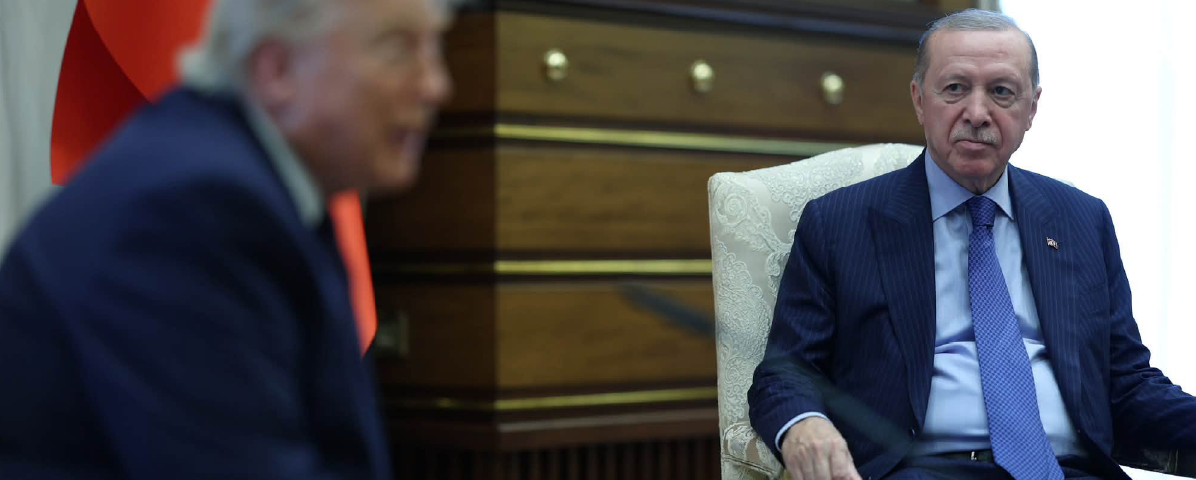
From Greenland to Spain: Trump Threatens Allies While Embracing Turkey at NATO Summit
At last week’s NATO Summit in Ankara, President Trump was hosted warmly by Turkish President Recep Erdogan. Trump, who generally attends NATO summits with a petulant attitude, reportedly said that he would not have attended this year’s summit had it not been for his close ties with Erdogan. Trump’s embrace of Erdogan is not just a personal affinity but reveals a shifted hierarchy within the NATO alliance: Turkey, the NATO member most allies distrust, may now have privileged access to Washington because Erdogan speaks Trump’s preferred language of strongman leverage, flattery, and transactional relationships.
Traditionally, NATO has been an institution supported by strong transatlantic ties and values, but under Trump those values have been eroded. Mark Rutte, Secretary General of NATO, has tried to salvage the US-NATO relationship by making appeals to Trump’s vanity. At a volatile press conference on Wednesday when Trump complained that the US had paid for all of NATO, Rutte interjected,“ You have been able to get Europe to step up…Grab the win.” Trump was not swayed.
Erdogan knows how to play this game too, meeting Trump at the base of the stairs to his new Air Force One and guiding him down a light blue carpet, flanked by rigid soldiers standing at attention. In the hours after the landing, Trump repeated his long-standing effort to sell Turkey the F-35 and to undo the sanctions Ankara earned when it purchased a Russian-made S-400 in 2017.
For most NATO members, the S-400 issue is an issue of existential alliance security that raised questions about Russian influence and the extent to which NATO member states could compromise Western weapons systems without consequence. For the past decade or so Turkey has occupied a tense and unusual place within the NATO alliance: it is one of NATO’s largest militaries and controls access to the Black Sea. At the same time, it has been a disruptive force, using NATO’s consensus rules to gain leverage.
After Russia’s invasion of Ukraine in 2022 prompted Finland and Sweden to seek NATO membership, Erdogan delayed the process by making demands about Kurdish groups, counterterrorism and arms restrictions. After a delay of Sweden’s accession by nearly 20 months, NATO was forced to broker a trilateral memorandum addressing Turkey’s security concerns and pair it with a US offer to sell Turkey more advanced F-16 jets. Turkey also retained a bargaining relationship with Moscow even after Russia’s invasion of Ukraine forced most NATO member states to sever all remaining ties with Moscow.
In contrast to his warm relations with Erdogan, Trump threatened and scolded longstanding US allies Denmark and Spain. On Wednesday Trump renewed his claims that Greenland “should be controlled by the US, not by Denmark.” Later, Trump called Spain “a terrible partner” and stated that he did not “want to do any trade with them” and is now reportedly exploring banning certain imports. He also called them “hopeless” and “bad people” over Spain’s refusal to commit to NATO’s new defense spending target of five percent of GDP.
NATO has spent years trying to manage the Turkey problem, but Trump’s view of Erdogan as a leader with a shared understanding of power should worry the rest of the alliance. Trump likes Erdogan not despite his preference for transactional relations and bald self-interest, but because of it. This reflects Trump’s worldview on NATO itself: an alliance is not based on trust and values, but rather through personal loyalty and leverage.
Yet, for all the flattery, Trump is going to have trouble following through on his promise and is dependent on Erdogan to meet him halfway on the S-400 issue. For all the ongoing issues with the centralization of power in the United States, Congress has sought to draw the line on this issue, insisting for more than a half-decade that Ankara find a way to give away the missile system to unlock the jet’s export. Any move to export the system would sour Ankara’s important relationship with Russia, a partner Ankara has strong interests in retaining. Erdogan has hinted he may finally be ready for compromise, but the road ahead is murky and any such offer from Turkey will have to satisfy more people than those that are now most enthusiastic about an agreement.
Stepping back, it is fitting that what was probably Trump’s last NATO summit as president happened outside Europe, and with a leader that frequently blames the European Union for treating him unfairly. Both Trump and Erdogan have this in common and, as NATO explores its future, the theatrics amongst its two most important non-European allies seems like a metaphor for the meeting’s symbolism.
In the end, the meeting was a success, Trump reaffirmed the US commitment to European defense, and any rash or manic decisions were avoided. Yet, the success came with threats, ranging from the takeover of Greenland to an embargo on Spanish goods, and once again underscored the uncertainty about the US commitment to European defense. In this respect, Trump’s embrace of non-European Turkey is fitting. He is thinking about a non-European future, a belief that he shares with Erdogan. As world leaders leave Ankara, it is hard not to think that the entente between the leaders of NATO’s two largest militaries, neither of which is in Europe, symbolizes just how uncertain the future of European defense has become.
Featured image: Republic of Türkiye Directorate of Communications/Facebook