 A Nation Must Think Before it Acts
Dark Eagle in the Desert: Considerations for Deploying LRHW to CENTCOM
A Nation Must Think Before it Acts
Dark Eagle in the Desert: Considerations for Deploying LRHW to CENTCOM

A nation must think before it acts.

Dark Eagle in the Desert: Considerations for Deploying LRHW to CENTCOM
At the end of April, Gerry Doyle at Bloomberg reported that CENTCOM had requested the deployment of Dark Eagle to the Middle East. Also known as the Long-Range Hypersonic Weapon (LRHW), Dark Eagle is the US military’s furthest progressed missile system delivering a hypersonic glide vehicle. The program has experienced several delays, but after several full range tests Lockheed Martin will begin delivering operational rounds to the Army “soon,” per a report from late March 2026. While the stated purpose for why Dark Eagle might be deployed to CENTCOM doesn’t hold up, the LRHW is probably a very capable missile that can hit Moscow from the Middle East. This makes the potential deployment worth a bit more scrutiny.
According to the Bloomberg report, CENTCOM wants to use Dark Eagle to target Iran’s mobile missile launchers should the ceasefire break down and conflict resume. The US government sources who spoke to Bloomberg said Iran has pulled its transporter erector launchers (TELs) back into the interior of the country, out of range of the Army’s PrSM missiles which can reach targets 500 km away. LRHW’s longer range would allow CENTCOM to hold TELs at risk promptly from longer ranges. At first brush this makes some sense.
But the idea of deploying Dark Eagle to CENTCOM falls apart under any scrutiny. The Wall Street Journal and CNN both reported that about half of Iran’s mobile missile launchers were destroyed or trapped underground, entombed in Iran’s missile cities. That still leaves half operational before Iran digs out those tunnel entrances, which they most certainly have been doing. While these kinds of precise numbers should always be taken with a hefty grain of salt, the Israel Defense Forces report that Iran had about 470 TELs before the war, so somewhere north of 200 are still operational and not buried if the reporting is to be believed.
Granted not all of those launchers will be for the longer-range missiles Iran fires out of bases like those at Yazd and Isfahan, but I think it’s safe to say that some dozens of those TELs are still active. Similarly, WSJ reported Israeli officials’ comments that Iran still had about 1000 medium-range ballistic missiles left from the stockpile of about 2500 MRBMs they started the war with.
Now, how many Dark Eagle rounds could CENTCOM have to target that force of operational longer-range TELs and about 1000 MRBMs? Well, if CENTCOM took the entire first batch of procured missiles (which again, have yet to be delivered) they would have… eight. While LRHW is probably a very capable system that would pose all sorts of issues for adversaries, eight additional destroyed Iranian TELs will not make or break the conflict should the ceasefire collapse. Even if twice as many Dark Eagle rounds were available, that still would not meaningfully move the needle.
Though it would have limited utility in this current conflict, it is worth thinking about the flexibility offered by Dark Eagle’s range. If Dark Eagle were deployed to the Middle East, say in US bases in Jordan, it would be able to easily hit Moscow. This is based on an estimate Jeffrey Lewis generated using Thrusty, a missile modeling tool he coded. Jeffrey’s calculations rely on comments about Dark Eagle’s range from Lt. Gen. Francisco Lozano, who is Director of Hypersonic, Directed Energy, Space and Rapid Acquisition, including a statement that the missile has a range of 2175 miles or about 3500 km. Lozano’s statement contradicts previous reports which pegged LRHW’s range at around 2800 km. Based on Jeffrey’s model, this 3500 km range probably includes some turns, so Dark Eagle may have a longer range on a minimum energy trajectory with no maneuvering. The reach of Dark Eagle from bases in the CENTCOM area of responsibility poses three problems for the Russians.
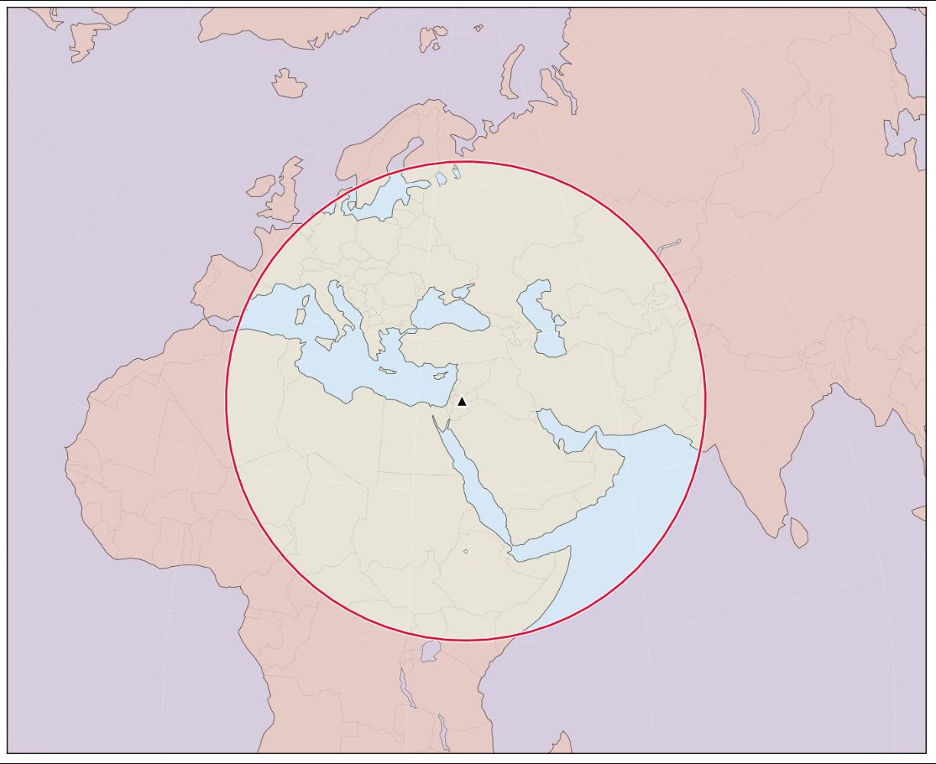
An estimate of Dark Eagle’s range from a US base in Jordan using the missile modeling calculator Thrusty.
First and most significant, is that it is a prompt and difficult-to-intercept capability that could hit leadership in Moscow. Aaron Stein and I wrote last October about the Russian fear of deployments of ground-based ballistic and cruise missiles like Pershing II and Tomahawk in Europe because the short time to target made it difficult for leadership to survive during a conflict. Dark Eagle is just another tool to hold those targets at risk, but this time with added maneuverability to make it harder to defend against. However, as Dark Eagle was previously going to be deployed to Germany as part of the Multi Domain Task Force (or at least it was until confusion emerged over the withdrawal of 5000 US troops from Germany due to the Trump administration’s frustration with European allies for not aiding in Operation Epic Fury), this type of threat was already somewhat priced-in for the Russians.
However, the second problem for the Russians is their anemic southern-facing early warning and detection capabilities. This has been a chronic problem for the Russians dating back to the 1960s and 1970s where gaps existed in Soviet early warning radars’ ability to detect missile launches from the Indian ocean and western Mediterranean. While these gaps were largely redressed by the end of the Soviet Union thanks to a more robust radar network complemented by space-based early-warning, first the Oko and then the Tundra satellites, the southern flank of the detection network remains thinner than that oriented over the pole towards the United States and towards Europe. This is particularly true of coverage for the Middle East, where the United States has many bases.
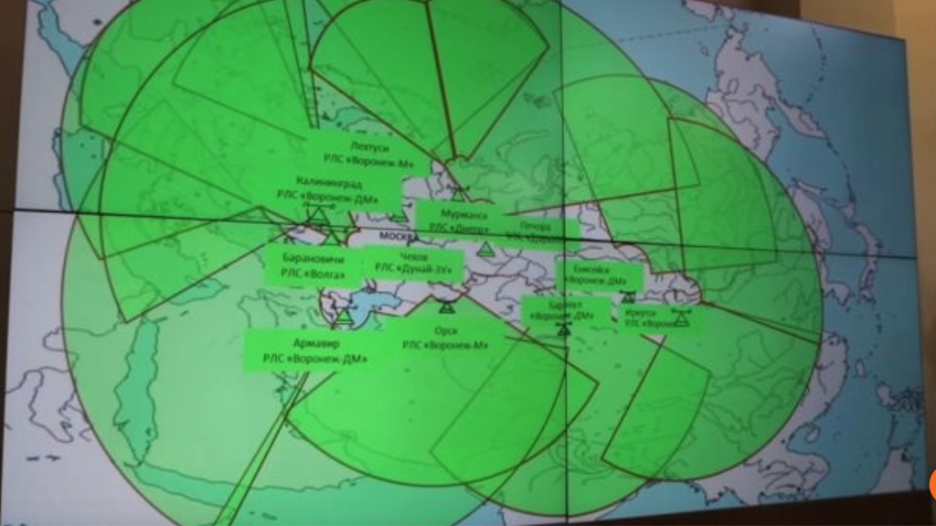
A depiction of the Russian early warning radar network, courtesy of Janes.
Using Pavel Podvig’s data on Russian early warning radars published earlier this year, it seems a missile launched from Saudi Arabia, for instance, would likely only be covered by three radars; the two Voronezh-DM radars in Aramvir and the Voronezh-M in Orsk. For launches from Jordan, only one of the Armavir radars would be positioned to detect them.
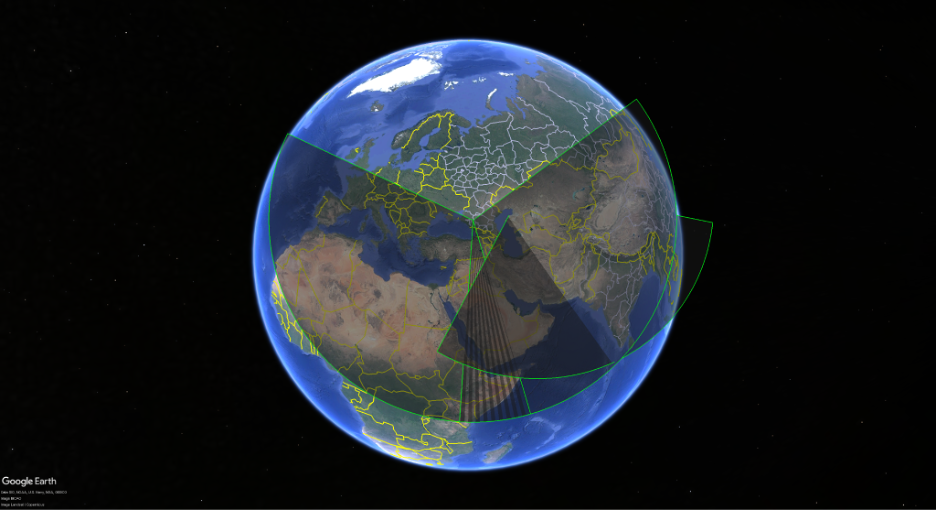
This limited coverage has been further embrittled by recent events. Ukrainian attacks on the Armavir radar site in 2024 damaged at least one, probably both, of the radars there. The extent of the damage was unclear but given the fragility of sensitive phased-array radars, it would not be surprising if their performance was compromised or long-term repairs were needed.
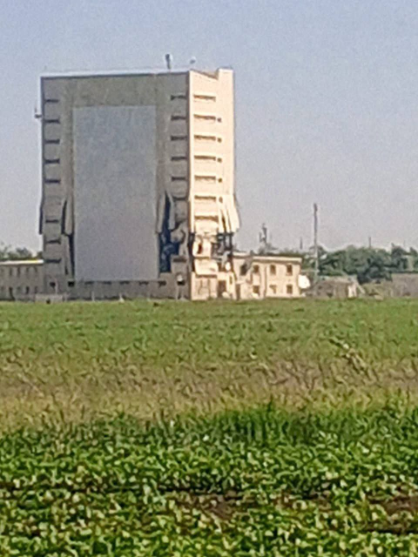
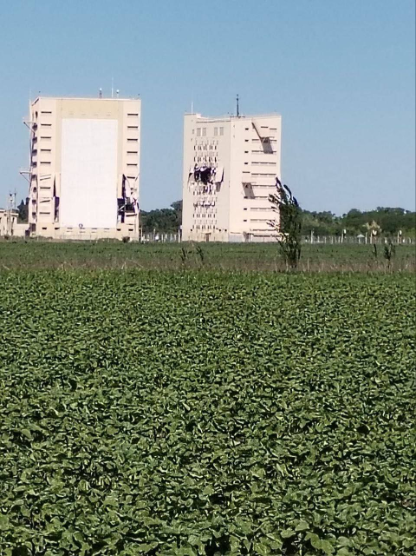
Photos of the damage to the Armavir radars after a Ukrainian attack in 2024, courtesy of @baklitskiy on Twitter.
Moreover, based on ground-truth and satellite images from after the attack, it looks like the west-facing Armavir radar which covers Jordan and much of Saudi bore the brunt of the damage.
If Dark Eagle were deployed to the CENTCOM AOR, say in Jordan or Saudi Arabia or in EUCOM further north in Turkey or (more likely) Romania, there would be very limited Russian early warning assets available to detect its launch. This is before the glider engaged in any maneuvers, which would further complicate tracking the HGV and predicting its impact point. The poor state of Russian capability to detect any Dark Eagle launches from the Middle East would only compound Russian anxieties about decapitation. This time, our latter-day Khrushchev may not be able to see this missile from his Dacha, nor on his radar screen, an even more frightening proposition.
Third, Dark Eagle could target much of Russia’s nuclear forces from CENTCOM. Several ICBM silo fields would be within range like those at Kozelsk or Tatishchevo, though those would likely not be the targets for a maneuvering prompt system like LRHW. More likely to fall in Dark Eagle’s sights would be mobile ICBM launchers like those operating out of Teykovo, Yoshkar-Ola, or Vypolzovo. If mobile ICBMs were to be detected, LRHW’s flight time, warhead, and accuracy would give it the best chance of killing those elusive targets. Additionally, several Russian Strategic Aviation bases such as Engels fall inside Dark Eagle range from the Middle East.
Especially interesting is that if Dark Eagle is based in Turkey, it might have enough range to hit targets on the Kola Peninsula like Olenya Airbase and the SSBN pens in Murmansk. While the United States has the capability to hit all of those targets already using either long-range bombers or missiles, a prompt capability from a less-monitored azimuth would make it a more unnerving threat to those targets.
A Dark Eagle deployment to CENTCOM can’t transform Operation Epic Fury into a strategic success. However, the flexibility offered by LRHW’s range means there are more factors to consider than merely whether plinking more Iranian TELs will turn the tide or reopen the Strait of Hormuz. Those additional factors mostly have to do with stability with Russia. The flexibility offered by long-range hypersonic missiles would allow the United States to hold Russian targets at risk from the Middle East and face fewer defensive fires. However, that would likely come at the cost of further eroded crisis stability with Russia as their leadership could become even more worried about decapitation. Exacerbated concerns about decapitation and detection amongst a regime that is already deeply paranoid is not a good combination. It could further erode crisis stability in Europe by encouraging Russian leadership to go bigger earlier during a conflict out of fear for their own lives. While certainly cause for concern, and another reason the deployment may be imprudent, it is difficult to muster much sympathy for the Russian government on this issue. They chose to begin INF-range deployments after starting to circumvent and violate the INF Treaty over a decade ago. Now they get to reap their rewards.
Featured image: US Army photo by Sgt. Perla Alfaro