 A Nation Must Think Before it Acts
The Evolution of Latvian Strategic Thinking through the Namejs Exercises

A nation must think before it acts.

The Evolution of Latvian Strategic Thinking through the Namejs Exercises
It is a truism that militaries can only do—effectively—what they are trained to do. If a military does not train to do it, it will not be able to do it well if and when it is called upon to do it for real—whatever “it” is. Even a small country like Latvia conducts many military exercises each year, some big, some small, some national, some international. What a military chooses to exercise is essentially a reflection of what it expects it may be called upon to do. Military exercises reflect broader strategic thinking about present and future security and warfare in the military, the defense ministry, and the government as a whole. By studying how this reflection has changed over time, it is possible to explore the evolution of that broader strategic thinking. Latvia’s annual Namejs exercise cycle has been the nation’s largest, cornerstone set of exercises since it began in 2014, and has aimed at developing a comprehensive national defense system. As such, it should reflect most clearly and comprehensively the Latvian armed forces’ evolving understanding of future warfare.
When Namejs began in May 2014, its timing in relation to the first twenty-first-century Russian invasion of Ukraine was a fluke; it had been in planning for two years and exercised 2,200 soldiers and National Guardsmen over the course of a single week. Namejs was a deliberate choice, reflecting both the thirteenth-century Semigallian leader who fiercely resisted invasion and his legendary ring—now a Latvian cultural symbol—whose three intertwined strands Defense Minister Raimonds Vējonis neatly reinterpreted in joint military terms: the land, sea, and air branches of the armed forces. Namejs 2014 involved command exercises at the brigade level and field exercises at the battalion level, with maritime and air components—including the use of three American RQ7-Shadow unmanned aerial vehicles operated by the 126th Cavalry Regiment of the Michigan National Guard. The field exercises were mostly around the Ādaži training ground, with the maritime component off the coast near Liepāja, but the Latvian military also exercised small-scale military mobility across the entire country. The overarching scenario for the exercises was a delaying action against a fictitious invading state, ending with a counterattack. In 2014, Namejs was anticipated to follow a four-year cycle, likely reflecting a need to absorb command, tactical, and planning lessons. However, Latvia did hold a “Mazais Namejs” (“Small Namejs”) exercise in 2017—which, at 2,700 participants, was actually larger than Namejs 2014.
Even before the August launch, Namejs 2018 was described as the most comprehensive military exercise in Latvia up until that point in time, involving approximately 10,000 National Guard, Border Guard, Police, and reservist personnel, as well as local government and economic resources, besides also American, Estonian, and Lithuanian troop contributions. A notable change from Namejs 2014 was the inclusion of an initial hybrid scenario based on insurrection in Jēkabpils and Valmiera with a significant cybersecurity element, after which the defending side transitions to conventional warfare focused on delaying and defensive operations. The 2nd Vidzeme National Guard Brigade also exercised partisan warfare in the rear of an invading enemy force, while the 4th Kurzeme NG Brigade uniquely exercised to draw the enemy into urban terrain and destroy them there. The exercise tested reservist and private-company mobilization; civil assistance in crisis scenarios; maritime security tasks; and newly procured weapon systems such as the American M109A5Oe 155mm self-propelled howitzer. Compared to Namejs 2014, the 2018 version was clearly more complex, drawing in a greater variety of pertinent actors and exercising a wider variety of scenarios for national defense.
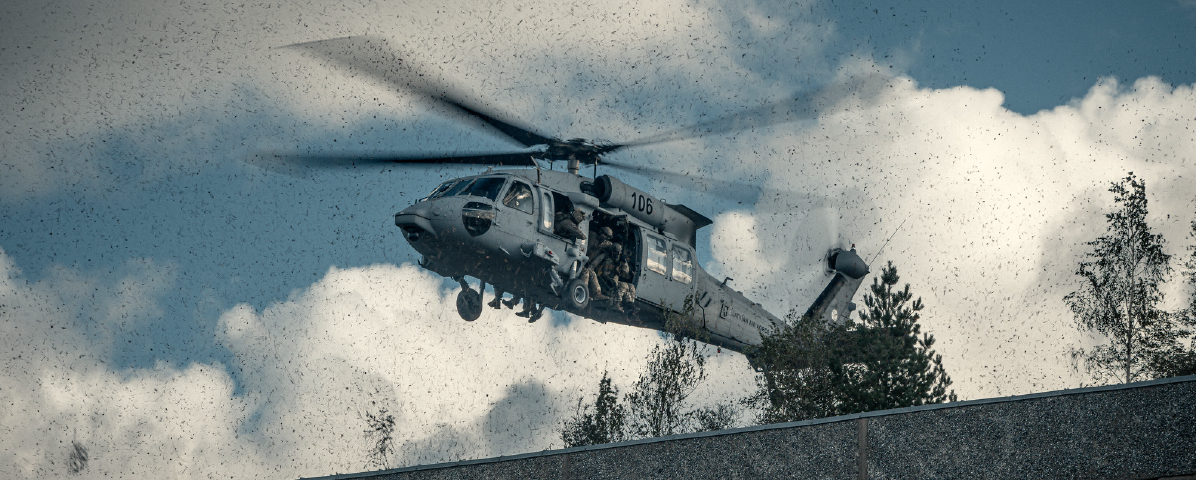
Namejs repeated in 2019 but appeared smaller, with about half as many participants, and made little impression even in Latvian military news. Exercise-wise, it followed in the tracks laid down by its predecessor. One lesson of the 2019 edition appears to have been the judgment that the original Ādaži training ground was no longer large enough, which probably helped prompt the eventual creation of the new Sēlija training ground. Namejs 2020 went ahead despite COVID-19, albeit at a slightly smaller scale than 2018, with estimates ranging from 7-9,000 participants, including allied contingents and civilians. The scenario again involved both defense against hybrid threats, involving close coordination not merely among military units but between them and other branches of national and local government, and also conventional fighting. Namejs 2020 saw perhaps the greatest combined arms integration yet, with self-propelled artillery, armored fighting vehicles, American UH-60 Black Hawks, and Italian Eurofighter Typhoons all taking part.
Namejs 2021 was about the same as previous years, with over 9,000 participants, but it saw even more widespread allied participation, including soldiers from the United States, Poland, the Netherlands, Norway, Estonia, and Denmark, as well as the NATO battlegroup based in Lithuania. It was also notable as being the first time that the exercises took place in the streets of Latvian cities, including Riga, directly among the population. This geographical expansion emphasized the urban dimensions of potential Russian hybrid warfare in particular. In 2022, Namejs had both spring and fall phases, which appears to be a novelty, as no previous year seems to have been two-phase in this way. It may have been an extraordinary response to the full-scale Russian invasion of Ukraine. The spring phase involved not just approximately 3,000 allied soldiers, but also the divisional level of command, as both Multinational Divisions (MND) North and North East participated—perhaps the first time that divisional command was involved in the Namejs exercises. The exercise scenario was a combined arms defense of railway infrastructure between Valka and Valmiera against Russian forces. This scenario was designed explicitly based on insights already learned even just a bare two months after Russia’s full-scale invasion of Ukraine. The spring phase also constituted a key—and successful—test of an agreement signed by the three Baltic States at the end of 2021 to establish a unified area of defense across all three countries to simplify the passage of allied forces over Baltic land borders. Perhaps because of the spring phase, the autumn phase was smaller than in previous years, with about 8,000 participants, though it still included divisional command participation with MND North. The autumn scenario remained similar to previous years, with hybrid and conventional phases.
The 2023 iteration of Namejs occurred again in a single, autumn phase. A bit larger than the previous year, it did not surpass 9,000 participants. Interestingly, it was described as the first Namejs conducted in coordination with MND North, which perhaps reflects a higher level of integration of the divisional headquarters into the exercises than in 2022. Belarus was singled out as another threat in 2023, as Namejs involved training to block the A6 highway coming in from Belarus through Krāslava to Daugavpils. Full-spectrum naval operations also attained higher priority in Namejs 2023, due to the perceived ease with which the Russians could hypothetically close the Suwalki Gap and force the Baltic States to rely purely on maritime lines of communication for supply and reinforcements. Another task given higher priority was the ability to deploy and fight in eastern Latvia.
Namejs 2024 maintained many familiar features, such as testing cooperation between military, civil, and civilian organizations; the involvement of MND North headquarters; exercises across Latvia, including in cities; and its large size, involving about 11,000 Latvian and allied soldiers and national guardsmen. Yet this year also had its innovations. It was apparently the second year in a row in which the Joint Expeditionary Force (JEF)—a coalition of the Baltic States, the Nordic States, Great Britain, and the Netherlands—supported the exercise, although no mention had been made of the JEF in the previous year’s exercise press releases. With the Baltic Defense Line having been announced at the beginning of 2024, it also featured in Namejs, as the military practiced placing down anti-mobility obstacles and digging fieldworks.
Namejs 2025 was slightly bigger still, with about 12,000 participants. Besides the familiar features, including MND North and support from the JEF, the Latvian Armed Forces began trying more actively to integrate what it has been learning about drones from observing their use in Ukraine, from combined-arms reconnaissance to direct strikes with FPV drones. The most recent Namejs has been its 2026 edition. Also involving approximately 12,000 participants, both drones and anti-drone capabilities were specifically tested, perhaps unsurprisingly given that it was apparent that anti-drone defensive failures brought down the then Minister of Defense Andris Sprūds in May 2026, followed by the whole government within a week. Of particular note, during Namejs 2026, the Riga City Council also held small-scale trainings for volunteers concerning the evacuation of civilians from the city, which appears to have been a first.
In tracing Latvian strategic thinking about future warfare through the evolution of the Namejs capstone exercises since 2014, a few conclusions emerge. Both scale and complexity have grown. From 2,200 to 12,000, the number of participants has multiplied by nearly six. Moreover, the overall level of command exercised has risen from battalion and brigade level to brigade and divisional level. The Latvians are simply thinking bigger about their own defense, in part a reflection of the NATO alliance and the bonds of collective defense. This trend appears likely to continue. With the 1 German-Netherlands Corps (1GNC) taking over responsibility for the defense of Estonia and Latvia from July 1, 2026, it should only be a matter of time before 1GNC is involved in the Namejs exercises as well. This would also improve cross-border cooperation with Estonia, a process that started in 2021. The growing complexity has also been reflected in increased cooperation between military and local civil and civilian actors in both hybrid and conventional warfare scenarios. Latvian strategic thinking, through exercises, reflects a changing world in which drones appear to be increasing in importance, defense lines are becoming more prominent, the relevant geographies of potential conflict with Russia are expanding into the cities and onto the sea, and civilian evacuation is emerging as a concern.
Images: Flickr | Latvijas armija