 A Nation Must Think Before it Acts
Taiwan Relations Act in a New Era of Security Cooperation
A Nation Must Think Before it Acts
Taiwan Relations Act in a New Era of Security Cooperation

A nation must think before it acts.

Taiwan Relations Act in a New Era of Security Cooperation
For a document intended to carefully outline relations with a key US partner while navigating a region’s complex history and geopolitical realities, eight pages seem brief. Enacted in 1979 in response to the US switch in recognition from the Republic of China to the People’s Republic of China, the Taiwan Relations Act (TRA) outlines US commitments to Taiwan in a new era of US foreign policy in the region. It seeks to maintain continuity of US ties with Taiwan, albeit on a nominally unofficial capacity in many instances, such as trade, security cooperation, and diplomatic representation. The brevity of the Taiwan Relations Act, then, is also a gift, establishing a set of baseline expectations for interactions with Taiwan but leaving plenty of freedom for the foreign and security policy officials of each administration to act as they saw fit.
One area that fell victim to the shift in recognition is security cooperation, as establishing formal diplomatic relations with the People’s Republic of China compelled the United States to terminate its 1955 mutual defense treaty with Taiwan’s Republic of China government. The Taiwan Relations Act, as a result, seeks to bridge this gap by providing “arms of a defensive character” to Taiwan through arms sales free of interference by the People’s Republic of China. The Six Assurances and the Shanghai Communiqué of 1982 of the Reagan administration reaffirmed this provision. In the subsequent decades, the term “arms of a defensive character” has been reduced to one with little technical meaning but imbued with significant political implications, as the same weapons platforms have been arbitrarily moved into or out of this category by the United States as it contemplates its posture toward China.
Until quite recently, it has been difficult to characterize what qualifies as “arms of a defensive nature.” The inclusion of this phrasing is, of course, by design and a part of the TRA’s openness to interpretation. The difficulty in establishing a concrete definition for what is acceptable for sale under the TRA also allows presidential administrations to sell to Taiwan anything they wish, but also bars sales of weapons under the auspices of not abiding by this guideline when US-China relations are warmer. For example, between the Reagan administration’s refusal to sell F-16s to Taiwan in 1982 and the successful sale by the Bush administration a decade later, it was not the F-16 that changed. Rather, US political considerations had changed, along with the cooling of ties with China. China’s rapid military modernization drive in the 2000s and 2010s has altered the military balance in the Taiwan Strait, making it no longer economical, or even possible, for Taiwan to match China in terms of sheer numbers of warships, tanks, or fighters. This development leads to Taiwan procuring weapons that are more easily survivable in the case of a hot war with China. Taiwan is making investments in platforms beyond traditional fighter aircraft, warships, and tanks. It is investing in survivable and mobile platforms, such as unmanned vehicles, wheeled fire support vehicles, and missile-armed fast attack craft.
This pivot toward small, survivable, and dynamic platforms is made possible by the effort of Taiwan’s defense contractors, such as Lung Teh Shipbuilding’s Tuo Chiang–class corvettes and the National Chung Shan Institute of Science and Technology’s Hsiung Feng-series anti–ship missiles. Taiwan’s domestic manufacturers will also be responsible for supplying the military’s drones. It is also further made possible by US security cooperation with Taiwan. Credible speculation from sources in Taiwan suggests that the shoulder-launched variant of the FIM-92 man-portable air defense systems, which debuted during Exercise Han Kuang 41, was acquired by Taiwan as part of President Joe Biden’s use of the Presidential Drawdown Authority (PDA). Although neither Taiwan nor the United States commented on most of the contents of Biden’s military aid to Taiwan, the systems in question were not deployed in Taiwan prior to Biden’s PDA, and Taiwan had not ordered sufficient quantities from the United States through foreign military sales to enable their deployment in such numbers.
While the provision of different equipment is a necessary acknowledgment of Taiwan’s new security situation, restrictions on the types of weapons sold to Taiwan to guide its doctrine into asymmetry restrict the kinds of weapons in ways that negate the TRA’s breadth and make it challenging to provide advanced weapons to Taiwan in the future. China protests essentially all US arms sales to Taiwan. These protests are rendered ineffective because of the TRA’s breadth. However, should the United States routinely decline Taiwan’s request for weapons that deviate from asymmetric defense, it would mark a significant normative shift in the American baseline and unilaterally narrow the scope of what is acceptable for foreign military sales to Taiwan. A paradox is created: in taking what it perceives as constructive steps to bolster Taiwan’s defense, the United States ties its hands in what it can provide to Taiwan. Simultaneously, China does not perceive the shift in arms sales as any less offensive, and Taiwan will see negative impacts on its ability to respond to gray zone aggression, which requires high-endurance traditional platforms, such as fighters and warships. The United States would simultaneously fail to bolster assurance for China and deterrence for Taiwan.
When it comes time for Taiwan to replace its current fighter fleet, the potential sale of F-35s to Taiwan will seem like a deviation from the backdrop of sales of man-portable systems, rather than the current backdrop of sales of diverse systems. A history of selling Javelin anti-tank guided missiles makes the diplomatic barrier for selling an F-35 much higher. Taiwan cannot effectively counter China’s gray zone aggression, which is characterized by low-intensity and long-duration tactics, using asymmetric weapons that are best suited for high-intensity and short-duration situations, such as a hot war between China and Taiwan. When shadowing Chinese vessels and aircraft near Taiwan’s airspace and waters, manned platforms provide Taiwan with the necessary peacetime abilities to contest Chinese presence over extended periods.
The insistence on asymmetry also jeopardizes one of the core tenets of the TRA: the continual maintenance of good relations between the United States and Taiwan. When the United States rejects the sales of specific systems to Taiwan on the grounds that they may contradict a strict adherence to asymmetric defense, maligned actors are likely to manipulate these stories as a US reluctance to engage with Taiwan’s military seriously. Favorability of the United States has cratered among the public in Taiwan after one hundred days of the Trump presidency, with only about a third of people in Taiwan viewing the United States favorably. A tick more, 37.5 percent, believe the US would intervene in the case of a Chinese invasion. These figures, collected in April 2025, represent a 20.8-point and a 7.9-point decrease from the July 2024 figures, respectively. In a time when skepticism of the United States is slowly back in vogue in an increasingly polarized Taiwan, the Taiwanese public is likely to believe domestic pan-Blue voices or those of Chinese origin promoting that skepticism. While asymmetry is a doctrine that takes time and certain types of equipment to cultivate, the public and pan-Blue media in Taiwan can very easily willfully misinterpret the reluctance to provide advanced platforms as an unwillingness to invest in Taiwan’s defense and a lack of trust in its military capabilities.
The frustration is felt not just by the public. In an exclusive interview with Liberty Times, Minister of National Defense Wellington Koo says that the second Trump administration is less open to selling traditional weapons to Taiwan than expected. Rather than the expected loosening of red tape surrounding arms sales, the Trump administration continues to decline Taiwan’s requests for more traditional platforms that are necessary to maintain air and maritime domain awareness, such as the E-2D Hawkeye and MH-60R Seahawk, citing their nonconformity to asymmetric doctrines.
The advancements of China’s People’s Liberation Army have made defending Taiwan’s independence a much more demanding task than ever before. Doing so requires Taiwan to be prepared for a wide range of possible scenarios, a task that can only be accomplished with heightened bilateral security cooperation. While missiles and drones allow Taiwan to efficiently and effectively strike Chinese targets during wartime, their ability to successfully monitor and deter peacetime Chinese advances is limited. The continued willingness to sell high-end platforms necessary for Taiwan’s defense, such as fighters and early warning aircraft, helps maintain Taiwan’s readiness and ability to monitor and counter peacetime Chinese operations. Combined with exchanges between the two militaries and governments, Taiwan and the United States should leverage the great range of options made available by the TRA rather than unilaterally establish barriers in a blind pursuit of asymmetry.
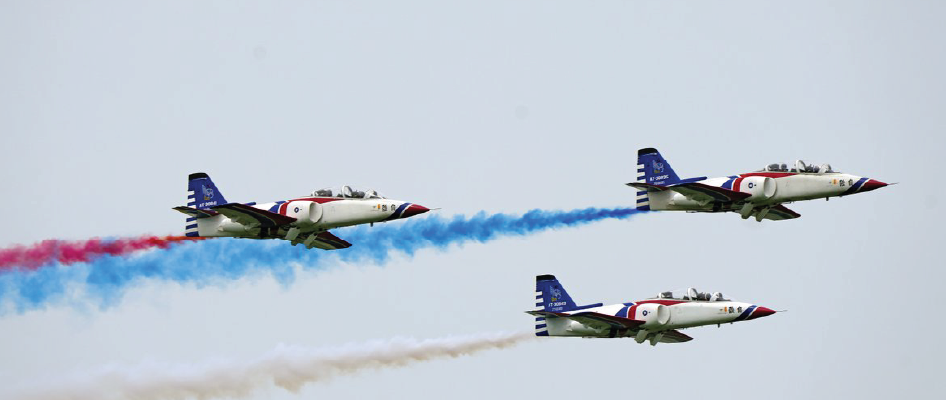
Image: X | @MoNDefense