 A Nation Must Think Before it Acts
Trump and the Special Operations Panacea
A Nation Must Think Before it Acts
Trump and the Special Operations Panacea

A nation must think before it acts.
Trump and the Special Operations Panacea
The recent raid to capture Venezuelan President Nicolas Maduro appears to have been a nearly flawlessly executed special operation. Conducted by the Joint Special Operations Command (JSOC) with interagency support, the raid demonstrated the professionalism and expertise of America’s special operations community and will likely be used as a case study in the training of future special operators. While the raid’s tactical success is unquestioned, its aftermath raises the same historical issues with not only the use of special operations forces, but US-sponsored regime change as well. Even in the hands of disciplined civilian policymakers, competent special operations forces can appear as a tempting panacea, available to solve national security woes without the full commitment of the US military.
In his 2006 book, To Dare & To Conquer: Special Operations and the Destiny of Nations, From Achilles to Al Qaeda, author Derek Leebaert warns against this temptation, noting that the misuse of special operations will place them “at the forefront of handling the years of fallout, paying a personal price for bureaucratic confusions and cabinet level incompetence.” He further cautions that policymakers must be aware of not only when, but when not to use special operations forces, concluding that “the worst danger of misuse comes from the fantasy-realist dream that these forces are the chosen instruments of ‘American empire’…”
In the hands of the current administration, the use of special operations forces is not only more likely, but also much more dangerous to the prospects of a stable national security environment. Their enamorment with special operations, combined with a lack of disciplined policy making and strategy, result in the false conclusion that special operations alone can shape the world in their desired manner.
The Ever-Present Temptation of Special Operations
Since their official inception, special operations forces have always served as a temptation to civilian decision makers. President John F. Kennedy, the man who authorized US Army Special Forces to wear their now-famous green berets, was fascinated by the concept of special operations, and viewed them as the front-line solution to communist expansion in east Asia. The aftermath of Jimmy Carter’s decision to use the newly formed Delta Force for a hostage rescue in Iran helped lead to the establishment of US Special Operations Command and the professionalization of special operators. Similar to Kennedy, Ronald Reagan saw them as a low-visibility bulwark against communist expansion in Central America, while Bill Clinton tried to solve his Somalia problem with a rapidly deployed special operations task force. In more recent history, one of Barack Obama’s most touted national security accomplishments was Operation Neptune Spear, the successful raid that killed Osama bin Laden at his compound in Pakistan. While a raid itself is not a special operation, the context in which it is conducted may elevate it to that status. Neptune Spear helps illustrate why certain raids are the purview of specially selected and trained special operations forces, given the strategic importance of the target and the politically sensitive nature of the target location.
Donald Trump has shown that he is no exception to the history of US presidents looking to special operations to solve their national security problems. Within weeks of taking office in his first term, Trump authorized a JSOC-led raid in Yemen that resulted in the death of a US special operator, while failing to kill or capture Qasim al-Raymi, the leader of Al Qaeda in the Arabian Peninsula and the reported target of the raid. Reporting soon emerged that indicated the raid had been previously planned during the Obama administration but was never given approval for execution. In a sharp departure from the overly burdensome, process-driven approach of Obama’s National Security Council, Trump was presented with the raid plan over his evening meal by his national security team. After encouragement from then-National Security Advisor Mike Flynn, Trump approved the raid. In the aftermath, Trump quickly distanced himself from his decision, shifting blame to his general officers, saying “this is something they wanted to do.”
Several years later, with an almost entirely different national security team, Trump once again had the opportunity to authorize a high-profile special operations mission, a raid to capture or kill Islamic State leader Abu Bakr al-Baghdadi. Following the raid, reporting indicated a much more deliberate planning and approval process. Shortly after the raid was initiated, al-Baghdadi detonated a suicide vest in a tunnel underneath his compound. In what appeared to be a carbon copy of Obama’s actions after the bin Laden raid, Trump held a nationwide press conference to announce al-Baghdadi’s death, in addition to quickly releasing his own version of the famous “The Situation Room” photograph.
Special Operations in the Second Trump Administration
Trump’s actions one year into his second term indicate that he and his national security team do indeed view special operations forces as the chosen instrument for implementing their foreign policy vision. The current administration inherited perhaps the most capable and competent formations of special operations forces in history. In the nearly 25 years since the 9/11 attacks, JSOC in particular has honed its ability to relentlessly “find, fix, and finish” terrorist networks, using information from each raid it conducted to further drive its targeting operations against national security threats. Comparing pre-9/11 special operations forces capabilities to today’s formations is like comparing a 1980s-era Formula One car to the modern, technological behemoths that now circle racetracks.
After months of escalation, the first kinetic strike against a Venezuelan boat was carried out on Sept. 2, 2025. Later reporting would indicate that the administration had once again turned to JSOC for the targeting and execution of the strike. Nearly two dozen more strikes would follow, before it was later learned that the Sept. 2 strike resulted in two survivors, who were then killed in a subsequent strike. The Department of Defense showed footage of this strike to lawmakers behind closed doors but has so far refused to release the video publicly, despite having released videos of nearly every other strike conducted.
As lawmakers and policy wonks struggled to understand what strategy was being pursued against Venezuela, Trump began 2026 by authorizing the raid that captured Maduro on Jan. 3. The stunning capabilities of American special operations were on full display. From the intelligence gathering that pinpointed Maduro’s location, to the assault itself by operators from the Army’s Delta Force, it calls into question whether there are any other countries in the world who can utilize their special operations forces to snatch a head of state from his own bedroom in the middle of the night.
Despite the success of the raid, within hours of the operation the lack of a coherent strategy became apparent. While senior cabinet officials tried to tout the raid as a law enforcement action, designed to bring an indicted “narcoterrorist” to justice, Trump undermined the explanation almost immediately by gloating over the seizure and control of Venezuelan oil resources. The lack of coherence has continued in the days following the raid. In an interview with the New York Times, Trump insisted that the United States would control Venezuela and its oil production, perhaps for years, while his Justice Department was still actively drawing up new legal justifications for the raid, focusing again on calling it a law enforcement operation.
And so, as Leebaert captures in the title of his book, a special operations force has once again been unleashed by its political masters to change the destiny of nations. The future of Venezuela was instantly and radically altered by this daring special operation. But Leebaert’s caution from 2006 seems prescient 20 years later:
A few overworked, underinformed officials in Washington are not about to “manage” or “run” an even more complex and not easily transformed world dense with new technologies and six billion people. And including the special operators as one key means of implementing such ambition carries with it the risk of initially small involvements that yet again metastasize into vast, sticky commitments.
“Underinformed officials in Washington” neatly summarizes current American decision-makers. As the commander-in-chief, Trump is ultimately responsible for the final decision to commit special operations forces anywhere. But his lack of interest in details has been well documented through both his first and second terms of office. In the aftermath of the Venezuelan raid, he continues to focus on Venezuelan oil and the potential profits associated with it. In an interview with the New York Times, he confidently declared that the only limit to his global power as president was, “My own morality. My own mind. It’s the only thing that can stop me . . . I don’t need international law.” Trump achieved the presidency in part by decrying George W. Bush and Obama’s long-term, large-scale troop commitments in Iraq and Afghanistan. Special operations forces offer him the possibility to still try to shape the world to his liking—limited apparently only by his own morality—without the negative press of deploying hundreds of thousands of troops to implement American policy objectives.
A Counterproductive Supporting Cast
While Trump’s first term cabinet officials contained a myriad of foreign policy professionals that helped provide a level of constraint to his worst impulses, his second term does not. While possessing different motivations, his top two foreign policy officials seem to be fully on board with the continued use of special operations as a policy tool.
Defense Secretary Pete Hegseth served as a National Guard infantry officer before his stint as a Fox News host, but never led above the platoon level. He has a known affinity for special operations forces, often choosing to conduct physical training with special operations units and then posting pictures of the event on his social media accounts. But his lack of strategic understanding is best encapsulated by his decision to summon nearly 800 general and flag officers to Quantico. Speaking to the most experienced, highest ranking men and women in the US military, Hegseth began his speech by invoking the clichéd motto of his first platoon, a formation he led at the most junior of officer ranks. His rhetoric continues to mimic that of a junior officer who always knows better than his superior officers, and whose vision is limited by an obsession with “lethality,” convinced that unrestricted warfare alone will serve as the long-term solution to any conflict. All of this combines to make Hegseth even more likely to continue to lean on special operations for any given problem set. Like Trump, he appears to view them as a way to project military power without the complications and domestic fallout over conventional troop deployments.
Hegseth’s counterpart at the State Department, Marco Rubio, also concurrently serves as Trump’s National Security Advisor. A more traditional politician, Rubio has a long-established track record in Florida politics and the US Senate. Confirmed in a 99-0 vote by his former Senate colleagues, there was clearly bipartisan expectation that Rubio would act in many ways like the traditional foreign policy members of the first Trump administration. Instead, Rubio has shown willingness to abandon previously held principles in order to more closely align with the Trump “America First” foreign policy view. After over a decade of supporting USAID and its mission during his time as a senator, he oversaw its dismantlement in the opening months of the second Trump administration.
However, none of Trump’s pressure campaign on Venezuela conflicts with Rubio’s well-documented antipathy for authoritarian leftist governments in Latin America. Rubio is an experienced enough politician to understand that American public opinion won’t support a large-scale troop commitment for regime change purposes in Latin America, but that launching special operations raids to decapitate those heads of government won’t carry the same political price. But in a classic case of “be careful what you wish for,” Rubio has emerged as the face of the administration policy for the future of Venezuela, now directly responsible for what comes next after a successful special operation.
Special Operations Require a Disciplined Approach
While some policy wonks have argued that Trump’s foreign policy might simply be an incoherent “bunch of stuff in the Western Hemisphere,” it is at least increasingly clear that the Western Hemisphere will remain the focus of this administration for the near future. The White House recently released a readout of Rubio’s remarks to the media, entitled “This is Our Hemisphere.” The commander-in-chief and his top two foreign policy cabinet members want to assert American strength—albeit for differing reasons—while avoiding the large-scale military involvement that has become a political non-starter after more than 20 years in Iraq and Afghanistan. This is why special operations are so attractive to this administration and will likely serve as a primary option for future policy objectives. Thus far, the administration has not signaled that it cares about the second and third term effects of launching such operations. If the immediate goal is satisfied by the special operation, the tricky parts like “transition” can be figured out at a later time. It represents a naive understanding of how special operations fit into the grand strategy of a nation, and a clear misuse of special operations forces in the pursuit of unclear policy objectives. The operators deserve better.
Special operations forces are capable of many things. But what they cannot do is create the long-term strategy for their own use in executing American foreign policy objectives. That is the responsibility of civilian leaders, and it must be done with a level of humility and discipline that is sorely lacking in the second Trump administration. Special operators are extraordinarily talented men and women. They come from all walks of life and political belief systems, brought together by equally diverse motivations. As two of the “SOF Truths” point out, they cannot be mass produced, nor can competent special operations forces be created after emergencies occur. And that is exactly why their use must be judicious, and part of a coherent foreign policy strategy. America should be in awe of the discipline and professionalism recently displayed by its special operations forces in the capture of Maduro. But it should also recognize the limits of special operations and demand the same discipline and professionalism from the civilian leadership responsible for their use.
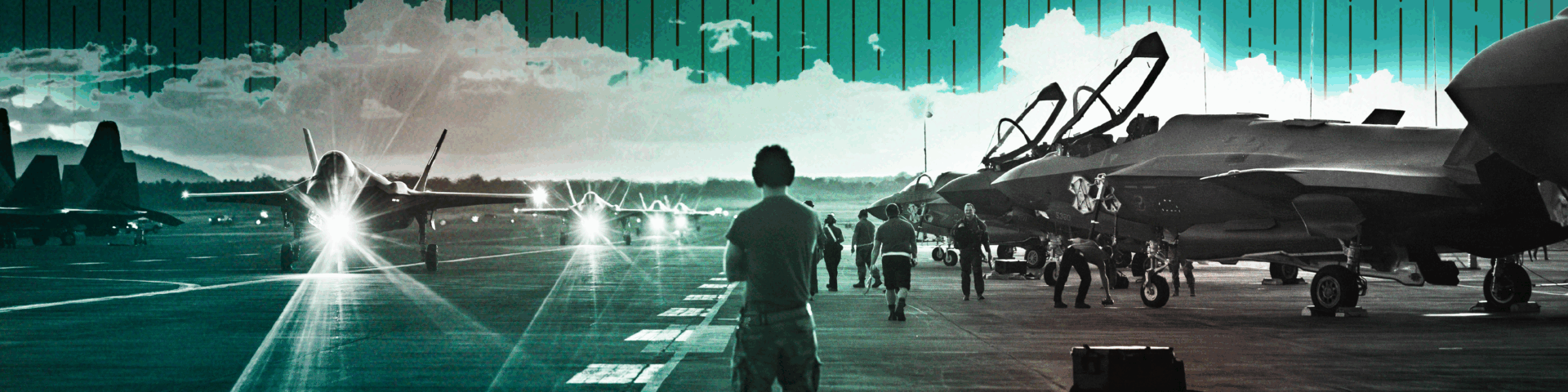
Image credit: US Air Force crew chiefs watch as F-35A Lightning II’s taxi following military actions in Venezuela in support of Operation Absolute Resolve, Jan. 3, 2026. (US Airforce)