 A Nation Must Think Before it Acts
Latvia at the UN Security Council
A Nation Must Think Before it Acts
Latvia at the UN Security Council

A nation must think before it acts.
Latvia at the UN Security Council
In the Shadow of War and the Threat of International Law
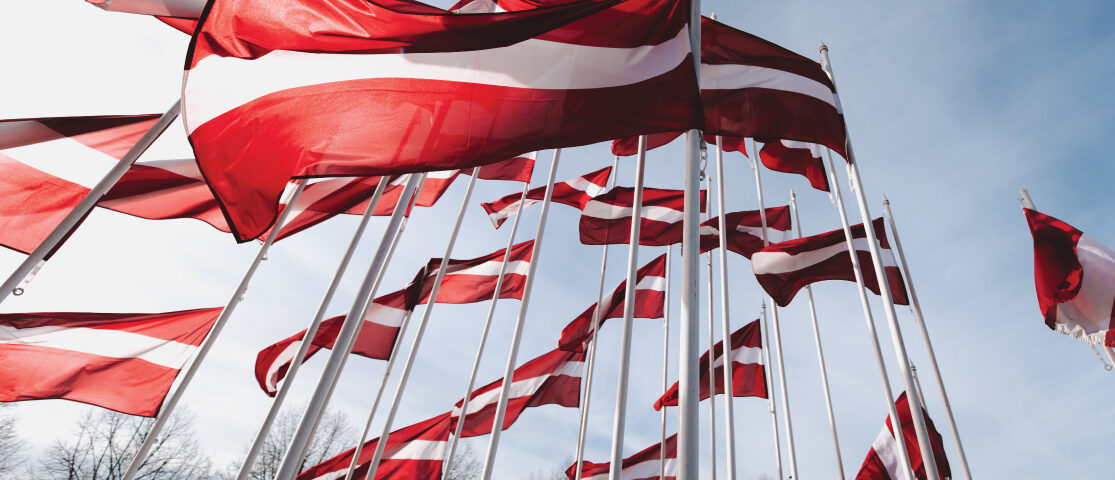
Starting in 2026, Latvia will serve as a non-permanent member of the UN Security Council (UNSC) for a two-year term. This will be a first in the country’s history. Latvia was elected to the UN Security Council on June 3, 2025, with 178 votes. However, the path to this seat began in 2011, when the Latvian government officially approved its candidacy for a seat on the UNSC.
At that time, the international situation, and consequently Latvian foreign policy, was radically different. The Russian invasion of Georgia (August 2008) had already occurred, revealing the tendencies of Russia’s assertive policy, but the invasion of eastern Ukraine (late February to early March 2014) had not yet begun, and the annexation of Crimea had not yet taken place (March 16, 2014).
The situation has undergone a fundamental change in 15 years. On Feb. 24, 2022, the Russian invasion of Ukraine intensified, and the war is not yet over. On the contrary, it is having a growing impact on Europe, and many experts predict that it could spread beyond Ukrainian territory and affect other European countries.
In Belarus, another country neighboring Latvia, the grip of long-time dictator Alexander Lukashenko has also tightened since August 2020. It is worth mentioning the migration organized by Minsk, primarily of residents from Middle Eastern countries, toward the Latvian (and also Lithuanian and Polish) border. These hybrid attacks in Latvia have sparked debates about the security (or lack thereof) of the country’s eastern borders, particularly in the event of a Russian military attack.
The opinion of some organizations that migrants should be allowed to enter Latvia based on their refugee status has also fueled the discussions. This position has been rejected by some members of civil society and by the authorities.
The world is also experiencing turbulent times: Israel and Gaza, the war in Sudan, sporadic fighting in Mali, tensions between Taiwan and China, changes in the South Caucasus, relations between Armenia and Azerbaijan, and so on. Latvia, as a country that will become a member of the UNSC, will have to take an interest in and express its opinion on what is happening in traditionally less important regions as well.
Why Is International Law a Priority for Latvia?
Latvian political leaders and diplomats emphasize that they will insist on respect for international law. This will be the primary objective of their work at the UNSC. Latvian Foreign Minister Baiba Braže stressed that Latvia will seize every opportunity offered by the multilateral format to defend Ukraine’s territorial integrity. Latvia will highlight the global consequences of the Russian invasion of Ukraine, recall the crimes against humanity committed in Ukraine, and combat Russian disinformation.
Membership in the UNSC is one of the many tools Latvia has at its disposal to resist the erosion of democracy and threats to international security. Therefore, Latvia also insists on the international order and rights in other contexts: the European Union, international courts, various international organizations, including in the fields of sports (Latvia opposes the participation of Russian athletes in international competitions) and culture. In other words, the UNSC is not limited to Latvian and international security, but also concerns the quality and strength of democracy at a time when cracks are appearing in many parts of the world.
For Latvia, as a state and nation that experienced Soviet occupation and Russification, international law, which recognizes the right to self-determination, is of fundamental importance. Participation in the UNSC is a contribution to Latvia’s security, adds Braže.
As a small state, Latvia is committed to maintaining the international order based on international law. As Gert Auväärt, Estonia’s Deputy Permanent Representative to the United Nations, stated: “For small states, international law is an existential issue… A rules-based, multilateral world order suits us. It is a matter of security. Our entire existence rests on international law.” This is especially true given that two of its four neighboring countries—Russia and Belarus—have displayed an unfavorable attitude toward Latvia and the Baltic states in general. Since the Russian invasion of Ukraine in 2022, Latvia has significantly increased its defense budget. By 2026, it is expected to reach five percent of GDP.
However, “small states” are characterized not only by their population size and economic power, but also by their sense of their place in the world—in other words, by their understanding of their security, independence, and future. Adam Lupel, Vice President of the International Peace Institute, adds that large countries can rely on economic and military resources, while smaller ones place greater emphasis on international laws and norms. From this perspective, Latvia’s priorities regarding security and international norms align with the positions of a “typical” small state.
Following in the Footsteps of Lithuania and Estonia
Latvia is the third and final Baltic state to become a member of the UNSC. Lithuania served in 2014 and 2015, and Estonia in 2020–2021. A comparison with the other Baltic states is relevant. First, all three represent the United Nations’ Eastern European Group of States, composed of 23 countries. While countries within this group do not always share the same views, the three Baltic states adopt common positions, particularly regarding their relations with Ukraine, the European Union, Russia, and the United States.
Lithuania was a member of the UNSC at the time of Russia’s annexation of Crimea. Russia’s 2014 invasion of Ukraine thus became a priority for Lithuania. For example, Lithuania was one of the authors of Resolution 68/262 on the territorial integrity of Ukraine. Lithuania’s experience demonstrates that the international community expects concrete, large-scale results from UNSC member states. The international order was also a priority for Lithuania in its relations with other regions of the world, such as North Korea and Yemen. Estonia’s experience unfolded at a time when the world was grappling with COVID-19. However, this Baltic nation also emphasized security: “Participation in the UN Security Council strengthens Estonia’s security. Our recent and tragic history underscores the importance of international law for the fate of small states.”
Estonia described its participation in the UNSC as an investment in defending its national interests. This translates into broader foreign policy scope, increased visibility, and new contacts. At the same time, Estonia’s priorities highlight another characteristic of “small states” within international organizations: their focus on specific issues, namely the rights of women and children, the link between climate change and the international security environment, limitations on the UNSC’s veto power in cases of genocide, and cybersecurity.
The power and influence of small states can be expressed through expertise in limited and specific areas. They prioritize problems strategically and strive to get to the heart of the matter, thus developing specialized expertise, as the experiences of Lithuania and Estonia have already demonstrated.
Latvia’s Objectives and Niches
Latvia is also pursuing this path, focusing on niche areas where it seeks to strengthen its expertise. While the priority remains the preservation of international law and, consequently, the strengthening of Ukraine’s territorial integrity and Latvia’s security, these niche issues can potentially enhance Latvia’s authority.
Latvia’s ambassador to the United Nations, Sanita Pavļuta-Deslandes, describes this experience as “eye-opening.” This upcoming experience will offer Latvia an unprecedented opportunity to voice its views on issues in which it already possesses expertise and to which it has been reluctant to engage. For example, cybersecurity (linking it to Estonia, which has also made cybersecurity a priority) and climate change, particularly the rights of countries losing territory due to rising sea levels, will be addressed. Latvia will also focus on gender equality, education, and opportunities for women. It also commits to fighting for the prevention of sexual violence in armed conflicts. The choice of these priorities is based on Latvia’s experience and financial capacity. Latvia has provided financial support to non-governmental organizations working to educate women in African countries. At the same time, Latvia will need to develop the necessary skills to address conflicts or migration processes that are geographically distant from Latvia and have thus far received little attention.
Historically, Latvia’s path to UNSC membership reflects its growth. Initially—in the 1990s, until its accession to the European Union and NATO in 2014—Latvia benefited more from international assistance. For example, several United Nations agencies were present in Latvia. Currently, Latvia is itself an investor, both through its investments and its willingness to share its experience with others. The most striking example of these financial, intellectual, and organizational skills is that of the development cooperation projects in Africa, already mentioned.
The UN Security Council: Not a Magic Wand, but a Diplomatic Tool
In Latvian public opinion, it is common to question the role of the United Nations, highlighting its inability to prevent the Russian attack on Ukraine and recalling its weakness in addressing other global issues. Latvian diplomats, as well as current and former employees of UN institutions, respond that the United Nations cannot solve all the world’s problems. Moreover, many concrete actions are needed. These can include political issues related to human rights, such as the release of a political prisoner. Consequently, the news of Latvia’s accession to the status of a non-permanent member of the UNSC was met with caution and even doubts about its usefulness.
Latvia’s intentions within the UNSC are similar to those of other small countries that have faced a similar task. Firstly, it will insist on existing norms of international law, particularly in the context of the Russian invasion of Ukraine. Secondly, it continues to highlight its expertise in more specific areas: cybersecurity, women’s rights and education, small island states whose territories are threatened by climate change, and so on. In other words, like other small (or similar in population) countries, Latvia considers international law the foundation of its existence, while niche issues are a means of increasing its authority.
Former Latvian Ambassador-at-Large Andrejs Pildegovičs divides Latvia’s experience at the United Nations into three phases. The first, from 1991 to 1998, saw Latvia consolidate its status as a state; the second, from 1998 to 2008, saw Latvia join the European Union, NATO, and other international organizations. The third stage, beginning in 2008, saw Latvia actively engage in international developments, not only by applying international law but also by strengthening it. The most obvious example is the defense of Ukraine’s territorial integrity and independence. Cybersecurity is also linked to international security, while statehood is the right of small island states to maintain their legal existence even if their land disappears beneath the ocean.
Latvia’s status as a non-permanent member of the UNSC represents an attempt to become more involved in international issues, particularly international security. This step alone is unlikely to strengthen the security of the Baltic states, the territorial integrity of Ukraine, the rise of democracy, or the defeat of the anti-democratic Russian regime. However, it is one of the many ways Latvia can resist the erosion of democracy and threats to international security. Moreover, if Latvia does not do it itself, others might do the opposite.
Image: Adobe Stock
