 A Nation Must Think Before it Acts
Rising Lion’s Air Offensive: Part I
A Nation Must Think Before it Acts
Rising Lion’s Air Offensive: Part I

A nation must think before it acts.

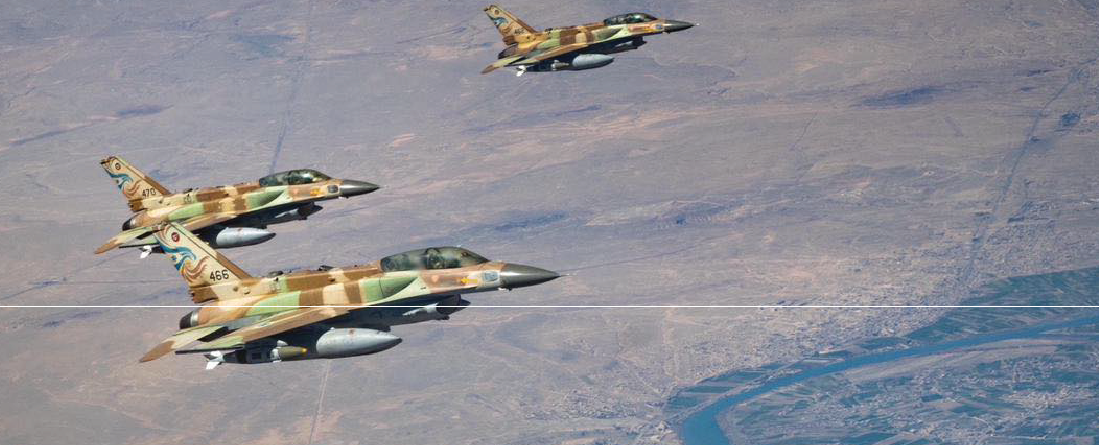
Rising Lion’s Air Offensive: Part I
Following the 12-day war in late June 2025, the Foreign Policy Research Institute (FPRI) immediately began a project to understand how the region has changed and what the military action could mean for future combat. The project and its contributors believed that war would resume and that the pause in combat in June 2025 could be a prelude to a major, wider, and longer-lasting conflict. That day has now come. This chapter is the first of two parts that examine the Israeli Air Force’s operations in June 2025 and the immediate lessons learned. The second part is forthcoming. As expected, FPRI will also begin its own assessment of Operation Epic Fury and the implications for US and allied air power operations.
Operation Rising Lion, initiated in response to the potentially existential threat posed by the Islamic Republic of Iran’s ballistic missile and nuclear programs, constitutes the most complex and ambitious air offensive ever undertaken by the state of Israel. Executed to great effect by the Israel Defense Forces’ (IDF’s) Air and Space Arm (popularly known as simply the Israeli Air Force or IAF), Aman (the IDF’s Military Intelligence Directorate), and Mossad (the Institute for Intelligence and Special Operations), the meticulously planned offensive highlighted Israel’s continued qualitative edge in manpower and technology over its enemies. Within a period of less than two weeks in June 2025, and without suffering any combat or operational losses of manned aircraft, Israel was able to rapidly establish air superiority and supremacy over relevant parts of Iran, heavily degrade the Iranian regime’s ballistic missile capabilities, and significantly set back its nuclear program. These accomplishments—and the execution of Rising Lion more broadly—have been the subject of much international attention. While information is necessarily fragmentary, the current chapter represents an attempt at providing an operational account of the Israeli air offensive.
Based exclusively on open sources, the chapter consists of two parts, each comprising three sections. The first opens with a concise, non-exhaustive chronology of Israeli air operations during Rising Lion before proceeding to discuss strikes against Iranian nuclear sites, including those conducted by the US military as part of Operation Midnight Hammer, in greater detail. It ends with a select overview of some of the fighter aircraft and air-to-surface weapons employed by the IAF.[1] The second part commences with a discussion of Israel’s offensive counterair (OCA) effort, including the prompt achievement of air superiority and the hunt for Iranian surface-to-surface missile (SSM) transporter-erector-launchers (TELs). It then proceeds to look at the challenges posed by the distances between Israel and Iran and the vastness of the latter’s territory, which greatly contributed to the complexity of Rising Lion. Lastly, the second part concludes with a preliminary assessment of the accomplishments and shortcomings of the Israeli air offensive. Meanwhile, the equally impressive joint Israel-US defensive counterair (DCA) effort against Iranian SSMs and one-way attack unmanned aerial vehicles (OWA-UAVs) is not covered herein as it merits its own dedicated chapter and has been discussed at length in various other articles and reports.
The Air Offensive at a Glance: Chronology of Operations
In the early hours of June 13, at approximately 0300 Israel time, the first wave of IAF fighter aircraft commenced precision strikes against Iran, marking the beginning of Operation Rising Lion’s 12-day air offensive.[2] By 0625 hours, the IAF had reportedly carried out five attack waves,[3] which focused on eliminating the Iranian regime’s military leadership and degrading its air defense, nuclear, and ballistic missile capabilities. In total, some 200 fighters participated in the initial attacks, employing over 330 air-to-surface weapons of various types against over 100 targets in the western, northwestern, and central parts of the country, including the capital Tehran, which lies approximately 1,500 kilometers from Israel.[4] Supported by Aman and Mossad, the IAF’s large-scale surprise attack proved devastatingly effective. Many high-ranking military commanders as well as key scientists with expertise in nuclear weaponization and ballistic missile systems were swiftly eliminated (Iran’s political leadership was deliberately not targeted).[5] Notably, among those killed were the regime’s three most senior military officials: Mohammad Bagheri (Chief of the General Staff of the Iranian Armed Forces), Hossein Salami (Commander-in-Chief of the Islamic Revolutionary Guard Corps [IRGC]), and Gholam-Ali Rashid (Commander of the Khatam-al Anbiya Central Headquarters).[6] Also eliminated were, inter alia, the Commander of the IRGC Aerospace Force (IRGC-AF), Amir Ali Hajizadeh, along with key subordinates, including the commanders of the IRGC-AF’s missile, UAV, and air defense commands.[7] Israel’s surprise attack and subsequent day-one strikes also damaged and destroyed, inter alia, numerous Iranian air defense, nuclear-related, and SSM assets. IAF operations against some of these, as well as other select elements of the nuclear and OCA target sets, are covered in greater detail further below and in the second part of this chapter.
With the completion of the initial attacks, the IAF proceeded to execute further air strikes against various Iranian targets. These included additional nuclear-related and ground-based air defense (GBAD) assets, as well as SSMs, OWA-UAVs, and related infrastructure such as storage facilities and fixed and mobile launchers. Runways, taxiway, hardened aircraft shelters (HAS), and buildings at the Islamic Republic of Iran Air Force’s (IRIAF’s) 2nd and 3rd Tactical Air Bases (TABs) in Tabriz and Hamadan (northwestern and western Iran) were also struck.[8] “[T]he IAF completed a series of strikes and blows against targets across Iran … striking over 150 targets and over 400 separate assets,” stated IDF spokesman Brig. Gen. Effie Defrin while summarizing the first 24 hours of operations during a press briefing on the afternoon of June 14. Offering insights on the night of June 13–14, he further noted:
Overnight, the IAF launched a massive attack executed by over 70 fighter jets, striking targets in Tehran, deep in the heart of the country. The road to Tehran is open. We struck over 40 missile-related targets and advanced air defense systems across Iran, as well as additional command and launch infrastructure. Our fighter jets flew for about two and a half hours in the skies of Tehran, together with UAVs that [are present in the air] around the clock … controlling the airspace, providing intelligence, and assisting in the strike.[9]
June 14 saw additional fighter and unmanned combat aerial vehicle (UCAV) strikes against SSM TELs and launch and storage sites (including an underground site), as well as GBAD-related targets, in (north)western Iran.[10] Further, in retaliation for ballistic missile attacks on Israel, the IAF struck Iranian energy infrastructure for the first time. Targets included the Fajr-e-Jam gas refinery in Bushehr province (southwestern Iran) and another refinery at the South Pars gas field.[11] Subsequently, on the night of June 14, the Shahran fuel depot and Shahr Rey oil refinery in Tehran province were also struck.[12] At 2245 hours Israel time, the IAF commenced a large-scale wave of attacks that concluded in the early hours of June 15.[13] The attack wave focused primarily on sites associated with the military dimension of the Iranian regime’s nuclear program, including the headquarters of the Ministry of Defense and Armed Forces Logistics (MODAFL) and a number of other facilities in and near the country’s capital. In total, “throughout the night, Israeli Air Force aircraft [struck] more than eighty targets across Tehran.” Additional Iranian SSM-related capabilities in the (north)western parts of the country were also attacked during this time period.
By 0800 hours Israel time on June 15, the IAF had launched and completed another attack wave.[14] It, too, targeted SSM TELs and launch and storage infrastructure, as well as surface-to-air missile (SAM) systems, early-warning radars, and other GBAD equipment. Various additional targets were struck later in the day as well, among them an IRIAF KC-707 aerial refueling aircraft at the dual-use Mashhad International Airport in northeastern Iran—some 2,300 kilometers from Israel.[15]
A production site belonging to Iran Electronic Industries (SAIRAN)—a subsidiary of MODAFL[16]—in the southwestern city of Shiraz also came under air attack,[17] as did Tehran’s dual-use Mehrabad International Airport.[18] Additionally, Israel reportedly targeted the headquarters of the Iranian regime’s Law Enforcement Command (FARAJA) and buildings belonging to the Ministry of Foreign Affairs, Ministry of Justice, and the notorious Ministry of Intelligence and Security (MOIS) in Tehran.[19]
On the night of June 15–16, the IAF carried out a wave of attacks against more than 20 Iranian Armed Forces command centers in Tehran. The attacks notably eliminated four high-ranking IRGC intelligence officials: Mohammad Kazemi and Mohammad Hassan Mohaqiq (respectively the head and deputy head of the Intelligence Organization of the Islamic Revolutionary Guard Corps [IO-IRGC]), as well as Mohsen Bakri and Abu al-Fadl Nikouei (respectively the head and deputy head of the IRGC Quds Force’s intelligence directorate).[20] Commenting on the matter in a press briefing on the morning of June 16, Defrin summarized that:
Last night’s wave of strikes began with precision strikes on aerial defense systems that protected core strongholds of the Iranian military and Quds Force in central Iran. After we struck the air defenses, we targeted the command centers using dozens of aircraft simultaneously. These included command centers of the Iranian nuclear project. The headquarters were deliberately placed in civilian buildings and high-rises. The regime’s leaders believed that doing so would hide them and keep them immune. They were mistaken. The Intelligence Directorate located them, and the Israeli Air Force struck them with precision and accuracy.[21]
Defrin also revealed that, among other operations that night, over 50 IAF aircraft participated in strikes against Iranian SSM TELs and storage sites. In total, “the Air Force completed several waves of attacks … striking approximately 100 military targets in central Iran’s Isfahan [province].”[22] A number of Iranian SSM- and GBAD-related production sites, including, inter alia, a facility for producing missile navigation systems and a site containing planetary mixers for the production of solid propellant for ballistic missiles, were also struck.[23]
Air operations on June 16 targeted additional mobile SSM, SAM, and OWA-UAV launchers and related assets in the (north)western and central parts of the country.[24] A facility in Tehran belonging to Iran Helicopter Support and Renewal Industries (PANHA), as well as two unserviceable or dummy F-14A fighter aircraft at the above-mentioned Mehrabad International Airport, were also hit.[25] Among other targets struck by Israel that day was the headquarters building of the state-controlled Islamic Republic of Iran Broadcasting (IRIB) corporation in Tehran. Besides propagating regime propaganda and disinformation, the IRIB “was used by the [Iranian] armed forces to promote military operations under civilian cover.”[26] During the night of June 16–17, the IAF executed a number of attack waves in (north)western Iran, striking dozens of military targets.[27] “[W]e struck surface-to-surface and surface-to-air missile launchers, UAV storage facilities, and missile production and storage sites,” explained Defrin in a press briefing on the morning of June 17.[28] He further revealed that, during the same night, following intelligence received by Aman, the IAF struck a command center in Tehran, eliminating Iran’s wartime chief of staff, Ali Shadmani, who had replaced Gholam-Ali Rashid as Commander of the Khatam-al Anbiya Central Headquarters just four days prior.[29]
By late afternoon on June 17, the IAF had launched and completed at least one more wave of attacks, striking dozens of SSM TELs and related assets in (north)western Iran.[30] IAF aircraft also attacked a number of Iranian SAM and radar sites. This was followed later in the day by another attack wave, which was completed by 2100 hours Israel time. Some 60 combat aircraft participated in the latter, striking 12 SSM launch sites and storage facilities in central Iran, including Isfahan province.[31] Iranian GBAD assets at the sites were struck as well. Also attacked on June 17 were various other targets, including the Iran Aircraft Manufacturing Industrial Company (HESA) in Shahinshahr (Isfahan province).[32] A subsidiary of MODAFL, HESA produces, inter alia, OWA-UAVs and other drone types.[33]
June 18 saw the IAF execute at least three large-scale attack waves. The first, which commenced at roughly 0200 hours Israel time,[34] comprised three waves of strikes and lasted approximately three hours.[35] Over 50 combat aircraft participated in the first wave, striking some 40 targets in and near Tehran. The targets included, inter alia, nuclear-, SSM-, and SAM-related production facilities.[36] A production site for anti-tank guided missiles (ATGMs)—hundreds of which were supplied by the Iranian regime to Hezbollah and other Iranian-backed terror groups operating against Israel—was also struck.[37] Additionally, the IRGC-affiliated Imam Hussein University—a site associated with the military dimension of Iran’s nuclear program—was reportedly struck during this time as well.[38] The second wave of attacks was conducted later that morning (possibly lasting into the afternoon) and focused on Iranian SSM-related capabilities in the (north)western parts of the country.[39] An IDF press release published following the completion of the second wave notes that “approximately 25 fighter jets struck over 40 missile infrastructure components directed toward the State of Israel, including missile storage sites and military operatives of the Iranian Regime.”[40] The third attack wave took place in the evening and, like the first, targeted nuclear-, SSM-, and GBAD-related production sites.[41] Some 60 IAF aircraft participated in the third wave, striking over 20 targets in and around the Iranian capital.[42] Aside from these three attack waves, IAF aircraft also hit various additional Iranian military assets. Among others, these included eight Islamic Republic of Iran Army Aviation (IRIAA) AH-1J attack helicopters at the 1st Combat Air Base (co-located with Kermanshah Airport in western Iran), which appear to have been struck by UCAVs.[43]
At approximately 0400 hours Israel time on June 19, the IAF launched another large-scale attack wave,[44] which lasted several hours and comprised three waves of strikes.[45] Forty combat aircraft participated in the attack, employing over 100 air-to-surface weapons against dozens of targets in Tehran and other parts of Iran. Among the targets struck were sites associated with the military dimension of the Iranian regime’s nuclear program, as well as “military production sites … including factories producing raw materials, components used in assembling ballistic missiles, and sites for the production of Iranian air defense systems and missiles.”[46] Additionally, the IAF hit SSM storage sites and GBAD assets, including SAM batteries and early-warning radars. The aforementioned FARAJA headquarters in central Tehran was also struck by Israeli fighters,[47] as was the headquarters of FARAJA’s Special Units (likewise located in the Iranian capital).[48] At least one more, smaller wave of attacks appears to have been carried out on June 19 as well. It involved the participation of some 20 combat aircraft and focused on SSM launch and storage infrastructure in (north)western Iran.[49] As part of, and separately from, this attack wave, IAF fighters and UCAVs struck, inter alia, “combat engineering equipment involved in the restoration of missile launch sites” and “soldiers of the Iranian Armed Forces operating in the area,” as well as “trucks carrying surface-to-surface missiles.”[50] In this regard, the IAF’s fleet of UCAVs, which maintained a constant presence over relevant parts of Iran during Rising Lion, proved invaluable to the operation’s broader OCA effort, actively locating and striking numerous mobile SSM and SAM launchers (in some cases, shortly before the former were about to launch their ballistic missiles against Israel), as well as various other Iranian military assets—a topic discussed in greater detail in part two of this chapter.
On the night of June 19–20, over 60 IAF aircraft employed some 120 air-to-surface weapons against dozens of targets in and near Tehran. The overnight strikes focused on facilities associated with the military dimension of Iran’s nuclear program and on SSM-related production sites, the latter including “sites producing missile components and facilities manufacturing raw materials used in casting missile engines.”[51] Separately, in the early hours of June 20, the IAF also completed a wave of attacks against SSM launch and storage infrastructure in western and northwestern Iran. More than 25 combat aircraft participated in the attack wave, striking over 35 SSM-related assets in Kermanshah province and in the vicinity of Tabriz.[52] June 20 also saw fighter and UCAV strikes against various additional military assets, including, inter alia, SSM TELs and operators in western Iran, an IRGC regional headquarters (Operational Base Karbala) in the western city of Ahvaz, SAM batteries in the southwestern part of the country, and, reportedly, an SSM storage site in the southwestern province of Bushehr.[53] Notably, one of the June 20 strikes eliminated Amin Pour Joudaki—an IRGC-AF drone unit (“Second Brigade”) commander who oversaw the launch of hundreds of OWA-UAVs against Israel from the vicinity of Ahvaz.[54]
Air operations on the night of June 20–21 targeted Iranian nuclear facilities in Isfahan province and a wide range of military assets in several parts of the country. The latter includes, inter alia, SSM launch and storage infrastructure in central Iran, which was struck by IAF aircraft during a wave of attacks that commenced at approximately 0300 hours Israel time.[55] Strikes were also carried out against mobile SSM and OWA-UAV launchers in Isfahan province.[56] Further, the IAF, acting on intelligence from Aman, eliminated Saeed Izadi and Behnam Shahriyari, who commanded the IRGC Quds Force’s Palestine Corps and Unit 190, respectively. The former, killed in a hideout in the city of Qom (north-central Iran), served as the principal link between the Iranian regime and the Hamas terrorist organization, and was a key figure behind the brutal terror attack of Oct. 7, 2023, against Israel.[57] The latter, responsible for overseeing the transfer of funds and weapons to, inter alia, Hezbollah, Hamas, and the Houthi terrorist regime in Yemen, was eliminated in an air strike while on the move in his vehicle in western Iran.[58]
Various Iranian targets were also struck by IAF fighters and UCAVs later in the day on June 21. In the afternoon, for example, approximately 30 combat aircraft employed over 50 air-to-surface weapons against dozens of military targets in the vicinity of Ahvaz.[59] As an IDF press release summarizing the attacks notes, these included “a site where missile launchers were stored, some of which had launched missiles in the past toward the State of Israel. IAF fighter jets also struck radar detection system sites used for detection and aerial intelligence gathering, and military infrastructure belonging to the Iranian regime.”[60] The afternoon attacks were followed by strikes in the evening hours against targets in other parts of the country. “This evening we attacked with about sixty fighter jets and with the help of intelligence guidance deep inside Iran,” noted Defrin in a press briefing,[61] later elaborating that targets included an IRGC SSM engine production site in north-central Iran’s Semnan province, at which “planetary mixers and critical machinery for the production of missile engines” were hit.[62]
The IDF spokesman further revealed that, shortly prior to the briefing, three IRIAF F-14As (some of which may have been unserviceable) were struck by an IAF aircraft (seemingly a UCAV)[63] in central Iran—namely at the 8th TAB (located adjacent to Isfahan International Airport). According to an IDF press release, runways were also targeted to prevent use of the base and airport by the IRIAF.[64] Additionally, the IAF struck dozens of other targets in central Iran at night. These included “a military site containing components to produce explosive materials,” weapons storage and production facilities, and Iranian GBAD assets.[65] Also at night, at approximately 2200 hours Israel time, the IAF attacked (OWA-)UAV storage facilities and a weapons depot in southern Iran’s Bandar Abbas.[66]
IAF operations on June 22 focused on several parts of Iran. An IDF press release summarizing some of these operations notes that approximately 30 combat aircraft employed over 60 air-to-surface weapons against dozens of military targets, including, inter alia:
The “Imam Hussein” Strategic Missile Command Center in the Yazd area, where … Khorramshahr [medium-range ballistic] missiles were stored … In parallel, missile launchers were struck in Isfahan, Bushehr, and Ahvaz. Strikes were also conducted on military sites involved in the production of aerial defense batteries, the ‘Third Brigade’ UAV command center, and a UAV storage facility near the command center. [Additionally, d]uring the strikes, an IAF aircraft identified Iranian Armed Forces soldiers loading missile launchers and eliminated them.[67]
Aside from the above, various additional Iranian military assets were targeted by the IAF on June 22 as well. Among others, these included two IRIAF F-5E fighter aircraft at the 4th TAB in Dezful (western Iran), and multiple SSM TELs at an unspecified location, which appear to have been struck by UCAVs in the morning hours.[68] Additionally, at night, some 20 combat aircraft employed over 30 air-to-surface weapons against targets in Kermanshah and Hamedan provinces, including SSM launch and storage infrastructure and early-warning radar sites. An unspecified Iranian SAM launcher in Tehran was also struck.[69]
On the morning of June 23, over 15 IAF aircraft again attacked Iranian military assets in Kermanshah province, striking a number of SSM launch and storage sites.[70] The strikes were followed later that morning by a large-scale wave of attacks against various targets in and near the Iranian capital, which continued into the afternoon. Described by Defrin as the IAF’s “most extensive set of strikes to date in Tehran,” over 50 combat aircraft participated in the attack wave, employing more than 100 air-to-surface weapons.[71] Among the targets struck were the FARAJA Intelligence Organization and a number of IRGC sites (including the Thar-Allah headquarters, Basij headquarters, Information Protection Organization, and bases belonging to the 10th Operational Division Seyyed ol Shohada and other IRGC units)—all responsible for, inter alia, the suppression of internal dissent.[72] The main entrance area of the notorious Evin prison compound, where the Iranian regime incarcerated dissidents, was also hit with the aim of facilitating their escape.[73] Additionally, the IAF struck missile and radar production facilities and missile storage infrastructure.[74] Meanwhile, elsewhere in Iran, air strikes were conducted against other targets, among them a nuclear site in Qom province and SSM TELs in the central part of the country. At least one more attack wave was carried out later on June 23. Some 15 combat aircraft participated in the latter, striking missile and (OWA-)UAV storage sites in (north)western Iran,[75] including an underground facility used by the IRGC-AF for storing SSMs and TELs.[76] In total, by the late evening, the IAF executed at least five waves of attacks, employing some 200 air-to-surface weapons in the process.[77]
The night of June 23–24 saw IAF aircraft employ over 100 air-to-surface weapons against dozens of targets in and near Tehran.[78] Among the targets struck were weapons development and production facilities, including a building linked to the military dimension of the Iranian regime’s nuclear program. A statement by the office of the Israeli Prime Minister notes that the attacks also “eliminated hundreds of Basij and Iranian security forces personnel.”[79] Separately, in the early hours of June 24, a senior Iranian scientist associated with the military dimension of the regime’s nuclear program was eliminated in an air strike in northern Iran’s Gilan province.[80] Other Iranian military assets targeted by the IAF included multiple SSM TELs that were preparing to launch ballistic missiles at Israel from the (north)western part of the country.[81] The latter appear to have been struck by UCAVs in the hours leading up to the ceasefire that was due to take effect on the morning of June 24 at 0700 hours Israel time.[82] Following Iran’s violation of the ceasefire in the form of several ballistic missile launches against Israel, the IAF retaliated by striking a radar installation near Tehran.[83] This appears to have been the final air strike of Operation Rising Lion, as Israeli Prime Minister Benjamin Netanyahu subsequently accepted President Donald Trump’s request to refrain from conducting further attacks.
According to statistics released by the IDF following the conclusion of Operation Rising Lion, the IAF generated approximately 1,500 sorties over the course of the air offensive.[84] While no formal breakdown of this figure is provided, a report published by the Jewish Institute for National Security of America (JINSA), the authors of which interviewed Israeli pilots and senior security officials, notes that a total of “1,495 manned strike sorties” were flown.[85] The same report also elaborates that IAF crews “dropped 3,709 bombs on 2,879 Iranian targets” during the sorties,[86] though it is not entirely clear whether the figure given for “bombs” in this case refers strictly to unpowered munitions or includes other weapons such as missiles as well. IDF statistics, meanwhile, further state that Israeli fighters and UCAVs conducted approximately 1,400 and 500 strikes, respectively,[87] employing a total of some 4,300 air-to-surface weapons against 900 targets in the process.[88] Additional figures pertaining to the quantities and types of Iranian assets struck during the air offensive are covered in the second part of this chapter. Prior to proceeding, however, it should be noted that the reasons for some of the discrepancies between the officially published statistics and the JINSA report are not entirely clear either. It may be that, for example, the figure provided for “Iranian targets” in the latter refers to discrete targets or aimpoints. Similarly, the number given for “strike sorties” may actually refer to individual strikes (a single sortie may involve more than one strike).
Striking Iran’s Nuclear Sites
Natanz Fuel Enrichment Complex
As part of the air offensive’s initial attacks, IAF aircraft, including F-16I Sufa two-seat, single-engine multirole fighters from “The Bat” Squadron, struck multiple aimpoints at the Natanz Fuel Enrichment Complex in central Iran’s Isfahan province—the country’s largest uranium enrichment site, located approximately 1,500 kilometers from Israel.[89] The complex’s Pilot Fuel Enrichment Plant (PFEP), which consists of above- and below-ground centrifuge cascade halls, had its above-ground part, where Iran was enriching uranium to 60 percent purity, destroyed.[90] The strikes also heavily damaged and destroyed electrical infrastructure at the site, including an electrical sub-station, the main electric power supply building, and emergency power supply and back-up generators.[91] Commenting on the matter that same day, the Director General of the International Atomic Energy Agency (IAEA), Rafael Grossi, stated that “[t]here is no indication of a physical attack on the underground cascade hall containing part of the PFEP and the main Fuel Enrichment Plant” (FEP), but “the loss of power to the cascade hall may have damaged the centrifuges there.”[92] The IAEA later revised its initial assessment, noting that “based on continued analysis of high-resolution satellite imagery collected after the attacks … the Agency has identified additional elements that indicate direct impacts also on the underground enrichment halls at Natanz.”[93] Grossi subsequently provided further information, stating that “the main cascade hall appears to have been attacked using ground-penetrating munitions,” and that “the strikes on the underground cascade halls were seriously damaging.”[94] This assessment is consistent with remarks made by Defrin in a press briefing on the afternoon of June 13. “We struck the underground area and targeted additional critical infrastructure on-site that enables its continued functioning,” he said, underscoring that the strikes “inflicted significant damage.”[95]
The Isfahan Site
Another major complex that was struck on the first day of the air offensive is the Isfahan site in central Iran.[96] Four facilities at the Isfahan Nuclear Technology Center (INTC) were damaged to varying degrees, including the Fuel Plate Fabrication Plant (FPFP), the central chemical laboratory, a uranium conversion plant, and the enriched uranium metal processing facility.[97] The IAF struck the INTC again on the night of June 20–21, damaging/destroying a further six structures.[98] These were identified by the IAEA as “a natural and depleted uranium metal production facility which had not yet begun operations, a fuel rod production facility, a building with low-enriched uranium pellet production as well as a laboratory and nuclear material storage, another laboratory building, a workshop handling contaminated equipment and an office building with no nuclear material.”[99] Additionally, both the IDF spokesman and the IAEA reported that a centrifuge manufacturing workshop had also been hit that night.[100] In a press release issued on June 21, the agency clarified that this facility, too, was part of the Isfahan site.[101]
Sites In and Near Tehran
The centrifuge manufacturing workshop at Isfahan was the third such facility struck since the commencement of Operation Rising Lion, the other two being the Iran Centrifuge Technology Company (TESA) complex in Karaj (near Tehran) and the Tehran Research Center. According to the IAEA, at the latter site, “one building, where advanced centrifuge rotors were manufactured and tested, was hit,” while at Karaj “two buildings, where different centrifuge components were manufactured, were destroyed.”[102] Satellite imagery of the TESA complex from June 17 shows that, in addition to the two large buildings that were destroyed, two other smaller structures at the site sustained damage.[103]
Aside from the Tehran Research Center and the TESA complex, other sites in and around the Iranian capital were also targeted. These include at least four major ones associated with the military dimension of Iran’s nuclear program, among them the headquarters of the Organization of Defensive Innovation and Research (SPND). The SPND is the direct successor organization to the country’s pre-2004 nuclear weapons program, known as the AMAD Project.[104] SPND’s headquarters, described in an IDF press release from June 20 as being “used for research and development of advanced technologies and weapons supporting the Iranian regime’s military capabilities,” appears to have been struck on three separate occasions.[105] A video released by the IDF shows that the headquarters building was first hit and damaged by an air strike on the night of June 14–15.[106] According to the IDF, it was then struck again on the nights of June 19–20 and June 23–24.[107]
Also struck by the IAF on the night of June 14–15 was the site of the SPND-subordinate Shahid Meisami Group in Karaj. Satellite imagery from June 15 shows that the strikes destroyed multiple buildings.[108] Described in an IDF press release as a “central research and development facility for chemical materials,” the site was “used to produce raw materials for the development of nuclear weapons.”[109] It was attacked again between June 15 and 16, resulting in the destruction of a large hangar-type structure, which possibly housed “plastic explosives and advanced materials used in nuclear detonation testing.”[110] The third and final strike on the site appears to have taken place between June 17 and 18, causing damage to what is likely the “main building of a small Administration/Laboratory complex” in the southern part of the site.[111]
The two other facilities in and near the city of Tehran that are known to have been attacked are the Mojdeh and Sanjarian sites, respectively. At the Mojdeh site, three structures appear to have been hit early on in the air offensive. A post-attack assessment of Israeli strikes on Iranian nuclear facilities by the Institute for Science and International Security (ISIS) notes that these include “the onsite security building and the building housing [the] Shahid Karimi Group”—an SPND subordinate group working on missile and explosives-related projects.[112] Damage to both buildings is clearly visible in satellite imagery from June 16. Additionally, as the institute’s assessment observes, the imagery also shows that “[a]n annex to the building housing the Institute of Applied Physics was completely destroyed.”[113] The Mojdeh site was subsequently struck again by the IAF, causing further damage to the security and suspected Shahid Karimi Group buildings. Satellite imagery from June 20 shows that the air strikes also heavily damaged the Institute of Applied Physics building and destroyed a warehouse or workshop.[114]
The Sanjarian site, meanwhile, appears to have been struck at a later time in the war. Located in Tehran province, Sanjarian was a key facility in the AMAD Project, engaged in the development and testing of a multi-point initiation (MPI) system or “shock wave generator” and production of PETN explosive, which is used in MPI channels.[115] Approximately nine months prior to Operation Rising Lion, in September 2024, Western intelligence officials disclosed to the ISIS that the Iran restarted and accelerated activities at the site in the preceding one-and-a-half years, and that these activities were being carried out by SPND personnel who previously conducted nuclear weaponization work as part of the AMAD Project.[116] According to the ISIS’ above-mentioned assessment, the Sanjarian site was attacked twice during the operation. The first attack was seemingly carried out on the night of June 18–19 (or earlier).[117] The IAF then struck the site again on the night of June 19–20.[118] Post-attack satellite imagery shows that the air strikes destroyed a number of buildings, among them “a former AMAD building that contained two chambers used to develop shockwave generators, nuclear weapons components, and diagnostic equipment.”[119]
Arak Nuclear Complex
Other nuclear-related sites struck during the air offensive include the Arak Nuclear Complex in central Iran. The IAF attacked the complex on the morning of June 19, striking the unfinished Khondab Heavy-Water Research Reactor (KHRR), which the Iranians intended to begin operating in 2026.[120] Commenting on the strikes in a press briefing later that day, Defrin explained that the facility “is not currently operational but holds the potential to produce enriched plutonium used to develop the core of a nuclear weapon.”[121] Post-attack satellite imagery of Arak clearly shows that the strikes breached the reactor’s containment dome, though the extent of the damage sustained by the reactor pool is not known.[122] The adjacent Arak Heavy Water Production Plant was also hit, resulting in key structures—including distillation towers—being heavily damaged or destroyed.
Footage released by the IDF of the strikes on the KHRR’s containment dome appears to show the use of Popeye air-to-surface missiles.[123] Powered by a solid-propellant rocket motor, the Israeli-developed Popeye[124] has a launch weight of approximately 3,000 pounds and a standoff range of roughly 90 kilometers. Warhead options include a 750-pound blast-fragmentation or 770-pound penetrator warhead. The missile uses inertial midcourse guidance and features a TV or imaging infrared (IIR) seeker and a two-way datalink capability for “man-in-the-loop” (MITL) target acquisition and aimpoint control in the terminal phase of flight. At present, the Popeye likely remains in use only with the IAF’s fleet of F-15B/D Baz two-seat, twin-engine fighter aircraft.
Operation Midnight Hammer: US Strikes on Iranian Nuclear Sites
On June 22, between 0210 and 0235 hours Iran time, the US military struck three Iranian nuclear sites as part of Operation Midnight Hammer.[125] The operation marked the combat debut of the 30,000-pound class GPS-aided Massive Ordnance Penetrator (MOP), an air-delivered weapon designed to defeat hard, deeply buried targets (HDBTs). Twelve GBU-57 series MOPs were employed by six US Air Force B-2A stealth bombers against the Fordow Fuel Enrichment Plant (FFEP)—the Iranian regime’s primary site for enriching uranium to 60 percent purity, located deep inside a mountain in north-central Iran’s Qom province. A seventh B-2A dropped two such weapons on the main FEP at Natanz. Additionally, over two dozen UGM-109 series Tomahawk Land-Attack Missiles (TLAMs) were launched by a US Navy submarine against above-ground structures at the Isfahan site.
Post-attack satellite imagery of the Isfahan site shows that the TLAM strikes damaged and destroyed multiple buildings at the INTC. “Affected buildings include some related to the uranium conversion process,” explained Grossi in a briefing to the UN Security Council later that day, adding that, “[a]lso at this site, entrances to tunnels used for the storage of enriched material appear to have been hit.”[126] The tunnel entrances in question lead to an underground facility located just north of the main INTC complex. Of the four entrances visible in satellite imagery, at least two—the southernmost and northernmost ones—were struck.[127] Experts cited by the BBC in late June assessed that these entrances “probably sustained ‘moderate’ structural damage.”[128] In total, Operations Rising Lion and Midnight Hammer damaged or destroyed over 20 structures at the Isfahan site.[129]
Due to their underground nature, the extent of the damage inflicted on the FFEP and the main FEP at Natanz cannot be ascertained using commercial satellite imagery alone. However, given what is publicly known about the two facilities and the attacks against them, it is likely that, as the aforementioned ISIS assessment concludes, both were severely damaged or destroyed. This conclusion is consistent with various other expert assessments and with statements made by senior US officials following Operation Midnight Hammer.[130] “[I]nitial battle damage assessments indicate that all three sites sustained extremely severe damage and destruction,” said the Chairman of the Joint Chiefs of Staff, Gen. Dan Caine, during a press conference held on June 22.[131] Similarly, in a post made on social media several days later, Director of National Intelligence Tulsi Gabbard disclosed that “[n]ew intelligence confirms … Iran’s nuclear facilities have been destroyed.”[132] Notably, some Iranian regime officials, too, have since conceded that, in the words of foreign minister Abbas Araghchi, “our facilities have been seriously damaged.”[133] Araghchi’s comments on June 26 echoed those expressed by Iran’s foreign ministry spokesman, Esmaeil Baghaei, during a TV interview the previous day. Commenting on US and Israeli strikes, the spokesman likewise admitted that “our nuclear installations have been badly damaged, that’s for sure.”[134]
Fordow Fuel Enrichment Plant
The IAF, lacking penetrator weapons capable of effectively prosecuting HDBTs such as the FFEP, does not appear to have targeted Fordow prior to Operation Midnight Hammer,[135] opting instead to hit above-ground infrastructure at the site following the US strikes against the underground facility. Indeed, the deeply buried facility was beyond the reach of even the most powerful penetrator weapons available to the IAF, namely its US-supplied 5,000-pound class GBU-28 series “bunker busters,” which are capable of penetrating over 22 feet of steel-reinforced concrete or 100 feet of earth.[136] “This afternoon, we struck the access routes to the Fordow enrichment site in order to prevent regime forces from reaching the area,” explained Defrin in a press briefing on the evening of June 23.[137] The IAEA, too, subsequently reported that “access roads close to the underground facility and one of its entrances were hit.”[138] The agency’s assessment is consistent with satellite imagery of Fordow from June 24, which shows that the Israeli strikes destroyed an entrance building at the site, as well as causing damage to at least two access roads and a tunnel entrance.[139]
Fighters and Weapons: A Select Overview
Aside from the aforementioned fighters and ordnance, Operation Rising Lion involved the use of a wide range of other IAF aircraft and weapons. While an exhaustive discussion of each of these assets is beyond the scope of the current chapter, a select number are mentioned or described to a limited degree herein with the aim of providing a better understanding of IAF capabilities and, by extension, a more holistic overview of the air offensive. Specifically, this section focuses on air-to-surface weapons and fighters. Several other manned aircraft and air-to-surface weapons, as well as UCAVs, are mentioned or covered to a limited extent in the second part of this chapter.
JDAMs, SDBs, SPICEs, and Others
The initial waves of attacks saw IAF fighter aircraft employ various direct-attack and standoff precision-guided weapons. These include, inter alia, US-supplied GBU-31 series Joint Direct Attack Munitions (JDAMs) and GBU-39/B Small Diameter Bombs (SDBs), which are designed to defeat a variety of stationary targets in day, night, and adverse weather conditions. Known in IAF service as Barad Kaved, meaning “Heavy Hail,” a GBU-31 series weapon consists of a 2,000-pound class warhead combined with an appropriate fuze system and guidance set.[140] The latter includes a tail assembly comprised of, inter alia, a GPS-aided inertial navigation system (INS), mission computer, wire harness, tail actuator system, tail fairing and control fins, and a set of mid-body aerosurfaces (strakes).[141] Variants of the GBU-31 family employed by the IAF include GBU-31(V)1/B and GBU-31(V)3/B series weapons. These respectively use the MK 84 series of low-drag general-purpose bombs and the BLU-109/B series of hard-target-penetrator bombs as their warheads. Designed to penetrate over six feet of reinforced concrete, the latter feature a one-piece, high-strength forged steel body, which has approximately one-inch-thick sidewalls.[142] The rear of the body is sealed with a closure plate, which has a central well that can be fitted with a number of fuze types. The smaller and lighter SDB all-up round, or Barad Had (“Sharp Hail”) as it is known in IAF service, is a 250-pound class GPS-aided glide weapon equipped with a multi-purpose (penetrating blast-fragmentation) warhead, which is capable of defeating over three feet of steel-reinforced concrete.[143] To achieve standoff range, the GBU-39/B uses deployable wings that extend following release from the aircraft.
Footage and photos published by the IDF of fighters departing for strikes against Iran during the early hours of Rising Lion show JDAMs and SDBs loaded on F-15C/D and F-16I aircraft, respectively.[144] The latter include multiple F-16Is from “Knights of the Orange Tail” Squadron (the first Sufa unit qualified to use the SDB[145]), each of which is seen carrying a total of eight GBU-39/Bs on a pair of BRU-61/A four-weapon smart pneumatic carriage systems.[146] Subsequent footage released by the IDF also shows SDB-armed BRU-61/As being loaded onto F-15I Ra’am aircraft.[147] Ra’am, meaning “Thunder,” is the Hebrew name for the Israeli variant of the F-15E Strike Eagle two-seat, twin-engine strike fighter. A highly versatile platform, the F-15I can be armed with a broad range of munitions, many of them in large quantities—including, for example, up to 20 SDBs or seven GBU-31 series weapons. The Ra’am is operated by “The Hammers” Squadron, notable for being the first frontline unit in the IAF qualified to employ the GBU-39/B.[148] Both the SDB and the aforementioned JDAM variants appear to have seen extensive use during Rising Lion. Indeed, the latter, which are compatible with all fighter types operated by the IAF, feature prominently in numerous IDF photos and videos from various stages of the air offensive, where they are seen carried by a wide range of platforms. These include, among others, Baz, Ra’am, Sufa, and Block 40 F-16C and Block 30 F-16D Barak aircraft.[149]
Other ordnance that appear to have been widely employed during the air offensive include the SPICE 1000 precision-guided glide weapon, referred to in IAF service as Barad Kal, meaning “Light Hail.” An acronym for “Smart, Precise-Impact, and Cost Effective,” the SPICE 1000[150] is an Israeli-developed guidance kit for 1,000-pound class low-drag general-purpose bombs such as the MK 83 series and MPR 1000. Equipped with four rear control fins (arranged in an X-tail configuration) and two deployable mid-body wings, the kit provides a standoff range of 125 kilometers when released from high-altitude. Guidance is provided by a GPS-aided INS and an electro-optical (EO) scene-matching system. The former enables SPICE to navigate autonomously to the target area following release from the aircraft. The latter system, which commences operation as the weapon approaches the target area, uses a scene-matching algorithm to correlate real-time seeker images with mission reference data stored on a weapon mission cartridge that is loaded onto the SPICE 1000 prior to take-off. Once scene matching is completed and the target automatically acquired, the SPICE 1000 homes in on the intended aimpoint to strike in accordance with pre-defined impact parameters (azimuth and impact angle). The inclusion of scene-matching guidance makes SPICE well-suited for standoff precision strikes in GPS-degraded and -denied environments. Videos and photos published by the IDF from the nights of June 13–14, 14–15, and 17–18 show a number of aircraft departing their bases in Israel for strikes against Iran armed with two SPICE 1000s each.[151] These include F-16Is and F-15A/C/Ds assigned to “The Bat” and “Knights of the Twin Tail” Squadrons, respectively. Also featured in the photos are several F-15Is from “The Hammers” Squadron, each armed with 2-4 such weapons.[152]
Another weapon seen in IDF footage and photos from the first days of Rising Lion is the GPS-aided RAMPAGE[153] supersonic air-to-surface missile, which likewise provides a day, night, and adverse-weather capability against stationary targets.[154] One of the photos, for example, shows an F-16I from the “Knights of the Orange Tail” Squadron armed with two such missiles being readied for a sortie during the initial hours of the air offensive.[155] A relatively recent addition to the IAF’s arsenal, the Israeli-developed RAMPAGE is powered by a solid-propellant rocket motor and is reported to have a standoff range in excess of 150 kilometers.[156] The missile is designed to be launched at high subsonic speeds from altitudes of 3,000–40,000 feet. It has a launch weight of approximately 1,250–1,280 pounds and is fitted with a multi-purpose (penetrating blast-fragmentation) warhead.[157] Photos published by the IDF prior to June 2025 indicate that the RAMPAGE is also operational with at least one other Sufa unit, namely “The One” Squadron.[158]
In addition to the above-mentioned ordnance, and as noted earlier, various other weapons were also employed by the IAF during Operation Rising Lion. Among them, presumably, were Israeli-developed ROCKS and AIR LORA single-stage, solid-propellant, air-launched ballistic missiles (ALBMs). Both are designed to provide a survivable, rapid, long-range standoff precision-strike capability against a variety of stationary targets in day, night, and adverse weather conditions. Their high speeds and quasi-ballistic trajectories increase interception difficulty and allow for shortened engagement times, making the two missiles well-suited for defeating high-value, time-sensitive targets in contested environments. ROCKS[159] is a GPS-aided weapon with optional EO scene-matching terminal guidance. It can also be equipped with long-range communications equipment for battle damage indication (BDI), and an anti-radiation homing seeker for homing in on radiating targets such as SAM system engagement radars. Warhead options include a 250-, 500- or 1,000-pound class blast-fragmentation or penetrator warhead. When fitted with the heaviest of these warhead classes, ROCKS provides a standoff range of 250 kilometers. The AIR LORA[160] is a derivative of the GPS-aided LORA[161] (“LOng-Range Artillery”) SSM, which has an operational range of 90–430 kilometers. LORA is approximately 17 feet long, with a diameter of just over 2 feet and a launch weight of roughly 3,500 pounds. Warhead options for its ALBM derivative include a blast-fragmentation or penetrator warhead. To date, very little has been revealed about AIR LORA and ROCKS in IAF service. Official marketing brochures for the two weapons indicate that both have been integrated on the F-16I, with ROCKS being shown carried by a Sufa assigned to “The One” Squadron, suggesting that the type is operational with this unit.[162] One or both of these ALBMs may have also been integrated on one or more other platforms, for example the F-15I.
Adir: The Game-Changer
Aside from F-15s and F-16s, which make up the bulk of the IAFs fixed-wing tactical combat aircraft fleet, the F-35I Adir also features prominently in IDF footage and photos from both the early hours and later stages of the air offensive.[163] Adir, meaning “Mighty One,” is the Hebrew name for the Israeli variant (“I” for Israel) of the F-35A Lightning II single-seat, single-engine, conventional takeoff and landing (COTL), very low-observable (stealth) multirole fighter. Among its many notable features are two internal weapons bays, which allow the carriage of stores without increasing the aircraft’s radar cross section. Each bay contains two weapons stations: one for air-to-surface or air-to-air weapons (outboard station), the other exclusively for the latter (inboard station). When low-observability is not required, additional stores can be carried on up to six under-wing stations (three per wing: two for air-to-surface or air-to-air weapons [inboard and mid-board stations], and one only for the latter [outboard station]). Another notable feature of the Lightning II is the aircraft’s state-of-the-art integrated mission systems suite. The suite comprises an AN/APG-81 active electronically scanned array (AESA) multi-function radar system; Barracuda electronic warfare (EW) suite; Electro-Optical Targeting System (EOTS); Electro-Optical Distributed Aperture System (EODAS); Communications, Navigation and Identification (CNI) suite; Helmet Mounted Display System (HDMS); and Integrated Core Processor (ICP).[164] Among other functions, the latter processes and fuses onboard sensor data and integrates it with off-board information (received via tactical datalinks from friendly assets), thereby, inter alia, enabling superior situational awareness and reduced pilot workload. Compared with the original Lightning II, the Adir’s integrated mission systems suite incorporates an undisclosed number of changes that optimize the fighter to IAF operational requirements. These include Israeli-developed “command, control, communications and computing (C4) systems,” though further details remain scarce.[165]
The combination of advanced stealth, avionics, and mission systems makes the F-35I an invaluable asset, one which has endowed the IAF with unprecedented penetrating ISTAR (intelligence, surveillance, target acquisition, and reconnaissance) and precision-strike capabilities. A testament to this is the extensive role played by the F-35I-equipped “Lions of the South” and “The Golden Eagle” Squadrons in Rising Lion. As one IDF press release later summarized, the Adir, which entered service in the second half of the previous decade, “stood at the center of the first stages of the operation.”[166] According to the aforementioned JINSA report, other manned IAF aircraft did not enter Iranian airspace “unless [they were] led by F-35s, which could include the F-35 escorting formations of F-15s and F-16s from dozens of miles away.”[167] Significantly, the Adir’s integrated mission systems suite “meant that [it] could operate at greater distances and did not require tight formation flying, as [its] extended detection range allowed for broader coverage. Rather than relying on visual contact or closely coordinated flight patterns, the F-35 was able to guide and direct other aircraft across the battlespace.”[168]
Indeed, in addition to independently completing kill chains, the Adir served as an important force multiplier, disseminating relevant tactical information—generated through the processing and fusion of large amounts of data gathered by its onboard sensors—to friendly fighters in near real-time, thereby enhancing the latter’s situational awareness, mission effectiveness and survivability. “F-35 missions … gave us a lot of information that other planes like the F-16I don’t have,” noted Lt. Col. I., a Sufa weapon systems officer (WSO), in a July 2025 interview with The War Zone. Elaborating further, he explained that:
They have a lot of equipment that helps them determine which missiles are heading towards us. And they actually can say to the F-16I, be aware you’re going to meet this kind of missile or another kind. And after we get this information, we do our attack mission that is more precise and more specific. So what we do in our formation is let the F-35 go first, see what’s going on, gather the intelligence and information and give it to us and to the other planes, and then we take this information and attack.[169]
Among other targets, such tactics were effectively utilized by IAF aircrews to target Iranian SAM systems and other GBAD assets. Indeed, as discussed in part two of this chapter, the Adir was crucial to the rapid establishment of air superiority and supremacy over relevant parts of Iran.
[1] Approved by the IDF Censorship Bureau.
[2] IDF Updates, “How Did the Historic Operation in Iran Begin?,” June 16, 2025, YouTube, https://www.youtube.com/watch?v=eb65V7Jy_ro.
[3] Emanuel Fabian, “Israel Has So Far Carried Out 5 Waves of Strikes in Iran, Military Official Says,” Times of Israel, June 13, 2025, https://www.timesofisrael.com/liveblog_entry/israel-has-so-far-carried-out-5-waves-of-strikes-in-iran-military-official-says/.
[4] Israel Defense Forces, “Press Briefing by IDF Spokesperson, BG Effie Defrin—June 13, 2025,” June 13, 2025, https://www.idf.il/en/mini-sites/israel-at-war/briefings-by-idf-spokesperson-bg-effie-defrin/june-25-press-briefings/press-briefing-by-idf-spokesperson-bg-effie-defrin-june-13-2025/.
[5] “Iranian Political Leadership Is Not a Target of Israel’s Strikes, NSC Chief Says,” Ynetnews, June 13, 2025, https://www.ynetnews.com/article/h16rtmfxlg.
[6] Israel Defense Forces, “The IDF Eliminated the Three Most Senior Military Commanders of the Iranian Regime,” June 13, 2025, https://www.idf.il/en/mini-sites/idf-press-releases-israel-at-war/june-25-pr/the-idf-eliminated-the-three-most-senior-military-commanders-of-the-iranian-regime/.
[7] Israel Defense Forces, “The IDF Eliminated the Commander of the Air Force of the Islamic Revolutionary Guards Corps.”
[8] Israel Defense Forces, “War Diary – 13 June 2025,” IDF War Diary, June 13, 2025, https://www.idf.il; Brady Africk (@bradyafr), “Satellite imagery of Iran’s Tabriz air base shows how Israeli strikes cratered taxiways that link hangars to the runway, stifling Iranian aircraft at the site,” X, June 15, 2025, https://x.com/bradyafr/status/1934260300603129942; Brady Africk (@bradyafr), “As @detresfa_ points out, damage to several hangars is also visible in imagery of Iran’s Tabriz Air Base following Israeli strikes,” X, June 15, 2025, https://x.com/bradyafr/status/1934319033396150414; Institute for the Study of War (@TheStudyofWar), “MORE: Israel struck the Artesh Air Force 2nd Tactical Airbase (TAB) in Tabriz on the night of June 12 to 13, as CTP-ISW previously reported. The strikes destroyed several buildings north of Artesh Air Force aircraft hangars and cratered the approaches from the hangars to the runway,” X, June 15, 2025, https://x.com/TheStudyofWar/status/1934099446582698048; Damien Symon (@detresfa_ ), “Imagery from Iran’s Hamdan Airbase reveals significant damage after Israel’s recent airstrikes – multiple aircraft shelters are compromised alongside cratering on the taxiway & runway,” X, June 15, 2025, https://x.com/detresfa_/status/1934192731280072725.
[9] Israel Defense Forces, “Press Briefing by IDF Spokesperson, BG Effie Defrin—June 14, 2025,” June 14, 2025, https://www.idf.il/en/mini-sites/israel-at-war/briefings-by-idf-spokesperson-bg-effie-defrin/june-25-press-briefings/press-briefing-by-idf-spokesperson-bg-effie-defrin-june-14-2025/.
[10] Israel Defense Forces, “War Diary – 14 June 2025,” IDF War Diary, June 14, 2025, https://idf.il; Israel Defense Forces, “The IDF Struck an Underground Site in Western Iran,” June 14, 2025, https://www.idf.il/en/mini-sites/idf-press-releases-israel-at-war/june-25-pr/the-idf-struck-an-underground-site-in-western-iran/.
[11] Ben Rezaei et al., “Iran Update Special Report, June 14, 2025, Evening Edition,” Institute for the Study of War, June 14, 2025, https://understandingwar.org/research/middle-east/iran-update-special-report-june-14-2025-evening-edition/.
[12] Farnaz Fassihi, “Two Major Energy Facilities in Tehran Hit in Israeli Strikes,” New York Times, June 14, 2025, https://www.nytimes.com/2025/06/14/world/middleeast/iran-israel-energy-facility-strikes-tehran.html.
[13] Israel Defense Forces, “Press Briefing by IDF Spokesperson, BG Effie Defrin—June 15, 2025,” June 15, 2025, https://www.idf.il/en/mini-sites/israel-at-war/briefings-by-idf-spokesperson-bg-effie-defrin/june-25-press-briefings/press-briefing-by-idf-spokesperson-bg-effie-defrin-june-15-2025/; Israel Defense Forces, “War Diary – 15 June 2025,” IDF War Diary, June 15, 2025, https://www.idf.il
[14] Israel Defense Forces, “War Diary – 15 June 2025.”
[15] Emanuel Fabian (@manniefabian), “The IDF Confirms It Bombed an Iranian Refueling Plane at Mashhad Airport in Northeast Iran,” X, June 15, 2025, https://x.com/manniefabian/status/1934267896504385991.
[16] “Iranian Entities: Shiraz Electronics Industries (SEI),” Iran Watch, last modified February 13, 2018, https://www.iranwatch.org/iranian-entities/shiraz-electronics-industries-sei; “Iran Electronics Industries (IEI),” Iran Watch, last modified January 29, 2025, https://www.iranwatch.org/iranian-entities/iran-electronics-industries-iei.
[17] Fabian Hinz (@fab_hinz), “Strike against Iran Electronics Industries (SAIran),” X, June 15, 2025, https://x.com/fab_hinz/status/1934189418652283040.
[18] Andie Parry et al., “Iran Update Special Report, June 15, 2025, Evening Edition,” Institute for the Study of War, June 15, 2025, https://understandingwar.org/research/middle-east/iran-update-special-report-june-15-2025-evening-edition/.
[19] Parry et al., “Iran Update Special Report, June 15, 2025, Evening Edition.”
[20] Israel Defense Forces, “The IDF Eliminated Four Senior Iranian Intelligence Officials, Including the IRGC’s Head of Intelligence,” June 16, 2025, https://www.idf.il/en/mini-sites/idf-press-releases-israel-at-war/june-25-pr/the-idf-eliminated-four-senior-iranian-intelligence-officials-including-the-irgc-s-head-of-intelligence/.
[21] Israel Defense Forces, “Press Briefing by IDF Spokesperson, BG Effie Defrin—June 16, 2025 (1),” June 16, 2025, https://www.idf.il/en/mini-sites/israel-at-war/briefings-by-idf-spokesperson-bg-effie-defrin/june-25-press-briefings/press-briefing-by-idf-spokesperson-bg-effie-defrin-june-16-2025-1/.
[22] Israel Defense Forces, “Nearly 100 Military Targets Attacked: IDF Destroys One-Third of the Iranian Regime’s Missile Launchers,” June 16, 2025,https://www.idf.il.
[23] Israel Defense Forces, “The IDF Has Completed a Wide-Scale Wave of Strikes To Degrade the Iranian Regime’s Weapons Production Capabilities,” June 15, 2025, https://www.idf.il/en/mini-sites/idf-press-releases-israel-at-war/june-25-pr/the-idf-has-completed-a-wide-scale-wave-of-strikes-to-degrade-the-iranian-regime-s-weapons-production-capabilities/.
[24] Israel Defense Forces, “Press Briefing by IDF Spokesperson BG Effie Defrin—June 16, 2025,” June 16, 2025, https://www.idf.il/en/mini-sites/israel-at-war/briefings-by-idf-spokesperson-bg-effie-defrin/june-25-press-briefings/press-briefing-by-idf-spokesperson-bg-effie-defrin-june-16-2025/.
[25] Andy Novy (@andynovy), “Iranian Helicopter Support and Maintenance Company (Penha) Strike,” X, June 16, 2025, https://x.com/andynovy/status/1934641538786619887; Israel Defense Forces, “Two Iranian F14 Fighter Jets Were Struck and Neutralized by the IAF at an Airport in Tehran,” June 16, 2025, https://www.idf.il/en/mini-sites/idf-press-releases-israel-at-war/june-25-pr/two-iranian-f14-fighter-jets-were-struck-and-neutralized-by-the-iaf-at-an-airport-in-tehran/
[26] Israel Defense Forces, “War Diary – 16 June 2025,” IDF War Diary, June 16, 2025, https://www.idf.il.
[27] Israel Defense Forces, “The IAF Completed Several Extensive Strikes on Military Targets of the Iranian Regime in Western Iran,” June 16, 2025, https://www.idf.il/en/mini-sites/idf-press-releases-israel-at-war/june-25-pr/the-iaf-completed-several-extensive-strikes-on-military-targets-of-the-iranian-regime-in-western-iran/.
[28] Israel Defense Forces, “Press Briefing by IDF Spokesperson BG Effie Defrin—June 17, 2025,” June 17, 2025, https://www.idf.il/en/mini-sites/israel-at-war/briefings-by-idf-spokesperson-bg-effie-defrin/june-25-press-briefings/press-briefing-by-idf-spokesperson-bg-effie-defrin-june-17-2025/.
[29] Israel Defense Forces, “For the Second Time: The IDF Has Eliminated Iran’s War-Time Chief of Staff, the Regime’s Top Military Commander,” June 17, 2025, https://www.idf.il/en/mini-sites/idf-press-releases-israel-at-war/june-25-pr/for-the-second-time-the-idf-has-eliminated-iran-s-war-time-chief-of-staff-the-regime-s-top-military-commander/.
[30] Israel Defense Forces, “War Diary – 17 June 2025,” IDF War Diary, June 17, 2025, https://www.idf.il.
[31] Israel Defense Forces, “IDF Spokesperson Update,” June 17, 2025, https://idf.il; Israel Defense Forces, “The IDF Has Completed a Wave of Strikes on Surface-To-Surface Missile Launch and Storage Sites in the Heart of Iran,” June 17, 2025, https://www.idf.il/en/mini-sites/idf-press-releases-israel-at-war/june-25-pr/the-idf-has-completed-a-wave-of-strikes-on-surface-to-surface-missile-launch-and-storage-sites-in-the-heart-of-iran/.
[32] Kelly Campa et al., “Iran Update Special Report, June 17, 2025, Evening Edition,” Institute for the Study of War, June 18, 2025, https://understandingwar.org/research/middle-east/iran-update-special-report-june-17-2025-evening-edition/.
[33] US Department of the Treasury, “Treasury Sanctions Global Network Supporting Iran’s Military UAV Program,” July 31, 2025, https://home.treasury.gov/news/press-releases/sb0217.
[34] Israel Defense Forces, “War Diary – 18 June 2025,” IDF War Diary, June 18, 2025, https://idf.il.
[35] Israel Defense Forces, “IDF Spokesperson Midday Update – 18 June 2025,” June 18, 2025, https://www.idf.il.
[36] Israel Defense Forces, “The IDF Struck a Centrifuge Production Site and Multiple Weapons Manufacturing Facilities Belonging to the Iranian Regime,” June 18, 2025, https://www.idf.il/en/mini-sites/idf-press-releases-israel-at-war/june-25-pr/the-idf-struck-a-centrifuge-production-site-and-multiple-weapons-manufacturing-facilities-belonging-to-the-iranian-regime/.
[37] Israel Defense Forces, “IDF Strikes Anti-Tank Missile Production Site in Iran Used to Arm Hezbollah,” June 18, 2025, https://www.idf.il/en/mini-sites/idf-press-releases-israel-at-war/june-25-pr/the-iaf-destroyed-aidf-strikes-anti-tank-missile-production-site-in-iran-used-to-arm-hezbollah-additional-attack-helicopters-in-a-military-base-in-the-area-of-kermanshah-1/.
[38] “Explosions rock Tehran after warnings of Israeli strike,” Times of Israel, June 18, 2025, https://www.timesofisrael.com/liveblog_entry/explosions-rock-tehran-after-warnings-of-israeli-strike/.
[39] Israel Defense Forces, “War Diary – 18 June 2025.”
[40] Israel Defense Forces, “Approximately 25 Fighter Jets Struck Over 40 Military Targets Belonging to the Iranian Military in Western Iran,” June 18, 2025, https://www.idf.il/en/mini-sites/idf-press-releases-israel-at-war/june-25-pr/approximately-25-fighter-jets-struck-over-40-military-targets-belonging-to-the-iranian-military-in-western-iran/.
[41] Israel Defense Forces, “War Diary – 18 June 2025.”
[42] Israel Defense Forces, “The IDF Completed a Series of Strikes in Tehran,” June 18, 2025, https://www.idf.il/en/mini-sites/idf-press-releases-israel-at-war/june-25-pr/the-idf-completed-a-series-of-strikes-in-tehran/.
[43] See videos in Israel Defense Forces, “The Israeli Air Force Identified and Struck Five Attack Helicopters at a Military Base in the Kermanshah Area,” June 18, 2025, https://www.idf.il/en/mini-sites/idf-press-releases-israel-at-war/june-25-pr/the-israeli-air-force-identified-and-struck-five-attack-helicopters-at-a-military-base-in-the-kermanshah-area/; and Israel Defense Forces, “The IAF Destroyed Three Additional Attack Helicopters in a Military Base in the Area of Kermanshah,” June 18, 2025, https://www.idf.il/en/mini-sites/idf-press-releases-israel-at-war/june-25-pr/the-iaf-destroyed-three-additional-attack-helicopters-in-a-military-base-in-the-area-of-kermanshah/.
[44] Israel Defense Forces, “War Diary – 19 June 2025,” IDF War Diary, June 19, 2025, https://www.idf.il.
[45] Israel Defense Forces, “IDF Spokesperson’s Update – Morning Briefing, 19 June 2025,” June 19, 2025, https:www.idf.il.
[46] Israel Defense Forces, “The IAF Struck Dozens of Military Targets Including an Inactive Nuclear Reactor in the Area of Arak,” June 18, 2025, https://www.idf.il/en/mini-sites/idf-press-releases-israel-at-war/june-25-pr/the-iaf-struck-dozens-of-military-targets-including-an-inactive-nuclear-reactor-in-the-area-of-arak/.
[47] Israel Defense Forces, “The IDF Struck the Internal Security Headquarters of the Iranian Regime in Tehran,” June 20, 2025, https://www.idf.il/en/mini-sites/idf-press-releases-israel-at-war/june-25-pr/the-idf-struck-the-internal-security-headquarters-of-the-iranian-regime-in-tehran/.
[48] Avery Borens, Ben Rezaei, Johanna Moore, and Brian Carter, “Iran Update Special Report, June 20, 2025, Morning Edition,” Institute for the Study of War, June 20, 2025, https://understandingwar.org/research/middle-east/iran-update-special-report-june-20-2025-morning-edition/.
[49] Israel Defense Forces, “War Diary – 19 June 2025.”
[50] Israel Defense Forces, “The IDF Struck Several Launch Sites in Western Iran After Identifying Attempts by the Iranian Regime to Rehabilitate Them,” June 19, 2025, https://www.idf.il/en/mini-sites/idf-press-releases-israel-at-war/june-25-pr/the-idf-struck-several-launch-sites-in-western-iran-after-identifying-attempts-by-the-iranian-regime-to-rehabilitate-them/; Israel Defense Forces, “Approximately 20 IAF Fighter Jets Completed a Series of Intelligence-Based Strikes in Western Iran,” June 19, 2025, https://www.idf.il/en/mini-sites/idf-press-releases-israel-at-war/june-25-pr/approximately-20-iaf-fighter-jets-completed-a-series-of-intelligence-based-strikes-in-western-iran/.
[51] Israel Defense Forces, “The IDF Completed a Series of Strikes in the Heart of Tehran,” June 20, 2025, https://www.idf.il/en/mini-sites/idf-press-releases-israel-at-war/june-25-pr/the-idf-completed-a-series-of-strikes-in-the-heart-of-tehran/.
[52] Israel Defense Forces, “Over 25 IAF Fighter Jets Struck and Neutralized Over 35 Missile Storage and Launch Infrastructure Components in the Areas of Tabriz and Kermanshah in Iran,” June 20, 2025, https://www.idf.il/en/mini-sites/idf-press-releases-israel-at-war/june-25-pr/over-25-iaf-fighter-jets-struck-and-neutralized-over-35-missile-storage-and-launch-infrastructure-components-in-the-areas-of-tabriz-and-kermanshah-in-iran/.
[53] Israel Defense Forces, “The IAF Struck Ready-To-Fire Launchers and an Iranian Military Cell, Thwarting a Missile Barrage Toward Israel Overnight,” June 20, 2025, https://www.idf.il/en/mini-sites/idf-press-releases-israel-at-war/june-25-pr/the-iaf-struck-ready-to-fire-launchers-and-an-iranian-military-cell-thwarting-a-missile-barrage-toward-israel-overnight/; Andy (@andynovy), “Iranian Revolutionary Guard bases, including the Karbala base in Ahwaz, have been hit now,” X, June 20, 2025, https://x.com/andynovy/status/1936067683792908554; Israel Defense Forces, “The IDF Struck Military Infrastructure in Southwestern Iran,” June 20, 2025, https://www.idf.il/en/mini-sites/idf-press-releases-israel-at-war/june-25-pr/the-idf-struck-military-infrastructure-in-southwestern-iran/; Johanna Moore et al., “Iran Update Special Report, June 20, 2025, Evening Edition,” Institute for the Study of War, June 20, 2025, https://understandingwar.org/research/middle-east/iran-update-special-report-june-20-2025-evening-edition/.
[54] Israel Defense Forces, “War Diary – 21 June 2025,” IDF War Diary, June 21, 2025, https://www.idf.il.
[55] Israel Defense Forces, “War Diary – 21 June 2025.”
[56] Israel Defense Forces, “The IAF Intercepted 40 UAVs Overnight and Struck UAV Launchers That Were Ready for Launch toward the State of Israel,” June 21, 2025, https://www.idf.il/en/mini-sites/idf-press-releases-israel-at-war/june-25-pr/the-iaf-intercepted-40-uavs-overnight-and-struck-uav-launchers-that-were-ready-for-launch-toward-the-state-of-israel/.
[57] Israel Defense Forces, “Press Briefing by IDF Spokesperson, BG Effie Defrin – June 21, 2025,” June 21, 2025, https://www.idf.il/en/mini-sites/israel-at-war/briefings-by-idf-spokesperson-bg-effie-defrin/june-25-press-briefings/press-briefing-by-idf-spokesperson-bg-effie-defrin-june-21-2025/.
[58] Israel Defense Forces, “While Traveling Approximately 1,000 Kilometers From the State of Israel, the Commander of the Iranian Quds Force’s Weapons Transfer Unit Was Eliminated,” June 21, 2025, https://www.idf.il/en/mini-sites/idf-press-releases-israel-at-war/june-25-pr/while-traveling-approximately-1-000-kilometers-from-the-state-of-israel-the-commander-of-the-iranian-quds-force-s-weapons-transfer-unit-was-eliminated/.
[59] Israel Defense Forces, “War Diary – 21 June 2025.”
[60] Israel Defense Forces, “The IDF Completed a Series of Strikes in Southernwestern Iran: A Military Site Containing Missile Launchers Was Struck,” June 21, 2025, https://www.idf.il/en/mini-sites/idf-press-releases-israel-at-war/june-25-pr/the-idf-completed-a-series-of-strikes-in-southernwestern-iran-a-military-site-containing-missile-launchers-was-struck/.
[61] Israel Defense Forces, “IDF Spokesperson Update,” June 21, 2025, https://www.idf.il.
[62] Israel Defense Forces, “IDF Spokesperson Update,” June 22, 2025, https://www.idf.il.
[63] See video in Israel Defense Forces, “The IDF Struck F-14 Fighter Jets Belonging to the Iranian Armed Forces,” June 21, 2025, https://www.idf.il/en/mini-sites/idf-press-releases-israel-at-war/june-25-pr/the-idf-struck-f-14-fighter-jets-belonging-to-the-iranian-armed-forces/.
[64] Israel Defense Forces, “The IAF Struck Dozens of Military Targets in Iran Yesterday,” June 22, 2025, https://www.idf.il/en/mini-sites/idf-press-releases-israel-at-war/june-25-pr/the-iaf-struck-dozens-of-military-targets-in-iran-yesterday/; Israel Defense Forces, “The IDF Struck Six Airports in Iran: Remotely Piloted Aircraft Destroyed 15 Iranian Regime Fighter Jets and Attack Helicopters,” June 23, 2025, https://www.idf.il/en/mini-sites/idf-press-releases-israel-at-war/june-25-pr/the-idf-struck-six-airports-in-iran-remotely-piloted-aircraft-destroyed-15-iranian-regime-fighter-jets-and-attack-helicopters/.
[65] Israel Defense Forces, “War Diary – 22 June 2025,” IDF War Diary, June 22, 2025,https://www.idf.il.
[66] Israel Defense Forces (@idfonline), “The IDF continues to strike the UAV array. The IDF is currently striking warehouses of unmanned aerial vehicles and a weapons warehouse in southwestern Iran, in the Bandar Abbas area”, X, June 21, 2025, https://x.com/idfonline/status/1936499518507503734.
[67] Israel Defense Forces, “The IAF Struck Missile and UAV Sites in Isfahan, Bushehr, Ahvaz, and—for the First Time—Yazd,” June 22, 2025, https://www.idf.il/en/mini-sites/idf-press-releases-israel-at-war/june-25-pr/the-iaf-struck-missile-and-uav-sites-in-isfahan-bushehr-ahvaz-and-for-the-first-time-yazd/.
[68] Israel Defense Forces, “The IAF Struck Dozens of Military Targets in Iran Yesterday,” June 22, 2025, https://www.idf.il/en/mini-sites/idf-press-releases-israel-at-war/june-25-pr/the-iaf-struck-dozens-of-military-targets-in-iran-yesterday/.
[69] Israel Defense Forces, “Approximately 20 IAF Fighter Jets Conducted Intelligence-Based Strikes Using Over 30 Munitions on Military Targets in Iran,” June 22, 2025, https://www.idf.il/en/mini-sites/idf-press-releases-israel-at-war/june-25-pr/approximately-20-iaf-fighter-jets-conducted-intelligence-based-strikes-using-over-30-munitions-on-military-targets-in-iran/.
[70] Israel Defense Forces, “War Diary – 23 June 2025,” IDF War Diary, June 23, 2025, https://www.idf.il.
[71] Israel Defense Forces, “Press Briefing by IDF Spokesperson, BG Effie Defrin – June 23, 2025 (1),” June 23, 2025, https://www.idf.il/en/mini-sites/israel-at-war/briefings-by-idf-spokesperson-bg-effie-defrin/june-25-press-briefings/press-briefing-by-idf-spokesperson-bg-effie-defrin-june-23-2025-1/.
[72] “Israel Strikes Multiple IRGC and Security Installations,” Iran International, June 23, 2025. https://www.iranintl.com/en/202506233432; Andie Parry et al., “Iran Update Special Report, June 23, 2025, Evening Edition,” Institute for the Study of War, June 23, 2025, https://understandingwar.org/research/middle-east/iran-update-special-report-june-23-2025-evening-edition/.
[73] Emanuel Fabian, “In Tehran, IDF Strikes IRGC Sites, Gate of Evin Prison, ‘Destruction of Israel’ Clock,” Times of Israel, June 23, 2025, https://www.timesofisrael.com/in-tehran-idf-strikes-irgc-sites-gate-of-evin-prison-destruction-of-israel-clock/.
[74] Israel Defense Forces, “Over 50 Israeli Air Force Fighter Jets Struck Military Targets in Tehran,” June 23, 2025, https://www.idf.il/en/mini-sites/idf-press-releases-israel-at-war/june-25-pr/over-50-israeli-air-force-fighter-jets-struck-military-targets-in-tehran/.
[75] Israel Defense Forces, “The IDF Completed a Series of Strikes in Western Iran: Missiles and UAV Storage Sites Were Struck,” June 23, 2025, https://www.idf.il/en/mini-sites/idf-press-releases-israel-at-war/june-25-pr/the-idf-completed-a-series-of-strikes-in-western-iran-missiles-and-uav-storage-sites-were-struck/.
[76] Israel Defense Forces, “The IAF Completed a Series of Strikes in Western Iran: Underground Military Infrastructure Used to Store Missiles and Launchers Targeted,” June 23, 2025, https://www.idf.il/en/mini-sites/idf-press-releases-israel-at-war/june-25-pr/the-iaf-completed-a-series-of-strikes-in-western-iran-underground-military-infrastructure-used-to-store-missiles-and-launchers-targeted/.
[77] Emanuel Fabian, “IDF Says It Dropped 200 Munitions in Five Waves of Strikes against Iran,” Times of Israel, June 23, 2025, https://www.timesofisrael.com/liveblog_entry/idf-says-it-dropped-200-munitions-in-five-waves-of-strikes-against-iran/.
[78] Israel Defense Forces, “IDF Spokesperson: ‘We Met All the Objectives of the Operation.’ Watch the Update,” June 24, 2025, https://www.idf.il/.
[79] Ministry of Foreign Affairs (Israel), “Prime Minister’s Office Statement – 24 June 2025,” June 24, 2025, https://www.gov.il/en/pages/pmo-statement-24-jun-2025.
[80] David Gritten, “Iran Nuclear Scientist Killed in Israeli Strike Before Ceasefire, State TV Says,” BBC News, June 24, 2025, https://www.bbc.com/news/articles/c0m81jg8k4no.
[81] Israel Defense Forces, “IDF Spokesperson: ‘We Met All the Objectives of the Operation.’”
[82] See video in Israel Defense Forces, “The IAF Struck Missile Launchers Ready to Fire Toward Israeli Territory in Western Iran,” June 24, 2025, https://www.idf.il/en/mini-sites/idf-press-releases-israel-at-war/june-25-pr/the-iaf-struck-missile-launchers-ready-to-fire-toward-israeli-territory-in-western-iran/.
[83] Ministry of Foreign Affairs (Israel), “Prime Minister’s Office Statement – 24 June 2025.”
[84] Israel Defense Forces, “3 Key Nuclear Sites, 1,500 Flights and 6 Airports Attacked: The Numbers, Documentation, and All Information Behind the Special Operation in Iran,” June 27, 2025, https://www.idf.il.
[85] Charles Wald, Mark Fox, and Robert Ashley, “Operation Rising Lion: Insights from Israel’s 12-Day War Against Iran,” Jewish Institute for National Security of America, November 2025, 22, https://jinsa.org/wp-content/uploads/2025/11/Rising-Lion-Insights-From-the-12-Day-War-November-2025-1.pdf.
[86] Wald, Fox, and Ashley, “Operation Rising Lion.”
[87] Israel Defense Forces, “3 Key Nuclear Sites, 1,500 Flights and 6 Airports Attacked.”
[88] Emanuel Fabian, “‘The Stars Aligned’: Why Israel Set Out for a War Against Iran, and What It Achieved,” Times of Israel, June 27, 2025, https://www.timesofisrael.com/the-stars-aligned-why-israel-set-out-for-a-war-against-iran-and-what-it-achieved/.
[89] KAN News, “I Changed My Children’s Lives”: After Two Weeks Without Sleep—The Pilots Who Bombed in Iran Speak,” June 28, 2025, YouTube, https://www.youtube.com/watch?v=Dp9LUndJk5M; Israel Defense Forces, “The IDF Struck Iran’s Largest Uranium Enrichment Site in the Natanz Area,” June 13, 2025, https://www.idf.il/en/mini-sites/idf-press-releases-israel-at-war/june-25-pr/the-idf-struck-irans-largest-uranium-enrichment-site-in-the-natanz-area/.
[90] David Gritten, “Centrifuges at Iran’s Natanz Site Likely Destroyed, Nuclear Watchdog Says,” BBC News, June 16, 2025, https://www.bbc.com/news/articles/cn9yll5yjx5o.
[91] International Atomic Energy Agency “IAEA Director General Grossi’s Statement to UNSC on Situation in Iran,” June 20, 2025, https://www.iaea.org/newscenter/statements/iaea-director-general-grossis-statement-to-unsc-on-situation-in-iran-20-june-2025.
[92] International Atomic Energy Agency “Director General Grossi’s Statement to UNSC on Situation in Iran,” June 13, 2025, https://www.iaea.org/newscenter/statements/director-general-grossis-statement-to-unsc-on-situation-in-iran-13-june-2025.
[93] International Atomic Energy Agency, “Update on Developments in Iran,” June 19, 2025, https://www.iaea.org/newscenter/pressreleases/update-on-developments-in-iran; Also see Geoff Brumfiel (@gbrumfiel), “Fascinating: the latest @Maxar imagery of Natanz shows multiple craters above the buried centrifuge facility,” X, June 15, 2025, https://x.com/gbrumfiel/status/1934396921449152541.
[94] International Atomic Energy Agency “IAEA Director General Grossi’s Statement to UNSC on Situation in Iran.”
[95] Israel Defense Forces, “Press Briefing by IDF Spokesperson, BG Effie Defrin—June 13, 2025 (3),” June 13, 2025, https://www.idf.il/en/mini-sites/israel-at-war/briefings-by-idf-spokesperson-bg-effie-defrin/june-25-press-briefings/press-briefing-by-idf-spokesperson-bg-effie-defrin-june-13-2025-3/.
[96] Israel Defense Forces, “The IDF Struck the Nuclear Site in the Isfahan Area,” June 13, 2025, https://www.idf.il/en/mini-sites/idf-press-releases-israel-at-war/june-25-pr/the-idf-struck-the-nuclear-site-in-the-isfahan-area/.
[97] International Atomic Energy Agency “IAEA Director General Grossi’s Statement to UNSC on Situation in Iran.”
[98] See video in Israel Defense Forces, “Press Briefing by IDF Spokesperson, BG Effie Defrin – June 21, 2025.”
[99] International Atomic Energy Agency, “Update on Developments in Iran (3),” June 21, 2025, https://www.iaea.org/newscenter/pressreleases/update-on-developments-in-iran-3.
[100] Israel Defense Forces, “Press Briefing by IDF Spokesperson, BG Effie Defrin – June 21, 2025”; International Atomic Energy Agency, “Update on Developments in Iran (2),” June 21, 2025, https://www.iaea.org/newscenter/pressreleases/update-on-developments-in-iran-2.
[101] International Atomic Energy Agency, “Update on Developments in Iran (3).”
[102] International Atomic Energy Agency “IAEA Director General Grossi’s Statement to UNSC on Situation in Iran.”
[103] David Albright and Spencer Faragasso, “Post-Attack Assessment of the First 12 Days of Israeli and US Strikes on Iranian Nuclear Facilities,” Institute for Science and International Security, June 24, 2025, https://isis-online.org/isis-reports/post-attack-assessment-of-the-first-12-days-of-israeli-strikes-on-iranian-nuclear-facilities.
[104] US Department of State, “US Sanctions Related to Iranian Nuclear-Related Research with Potential Military Applications,” May 12, 2025, https://www.state.gov/releases/office-of-the-spokesperson/2025/05/u-s-sanctions-related-to-iranian-nuclear-related-research-with-potential-military-applications.
[105] Israel Defense Forces, “The IDF Completed a Series of Strikes in the Heart of Tehran.”
[106] Israel Defense Forces, “Approximately 50 Fighter Jets Struck Infrastructure and Targets of the Iranian Nuclear Project in Tehran,” June 15, 2025, https://www.idf.il/en/mini-sites/idf-press-releases-israel-at-war/june-25-pr/approximately-50-fighter-jets-struck-infrastructure-and-targets-of-the-iranian-nuclear-project-in-tehran/.
[107] Israel Defense Forces, “The IDF Completed a Series of Strikes in the Heart of Tehran”; Israel Defense Forces, “IDF Spokesperson Update,” June 24, 2025, https://www.idf.il.
[108] Fabian Hinz (@fab_hinz), “Between 15 and 16 June, Israel struck Shahid Meisami Group which has been sanctioned by the United States for alleged chemical weapons research and work on pharmaceutical-based agents,” X, June 16, 2025, https://x.com/fab_hinz/status/1934727911883342267.
[109] Israel Defense Forces, “Following the Statement by the IDF Spokesperson, BG Effie Defrin,” June 15, 2025, https://www.idf.il/en/mini-sites/idf-press-releases-israel-at-war/june-25-pr/following-the-statement-by-the-idf-spokesperson-bg-effie-defrin/.
[110] David Albright and Sarah Burkhard, “Post-Attack Assessment of Shahid Meysami Research Center,” Institute for Science and International Security, July 10, 2025, https://isis-online.org/isis-reports/post-attack-assessment-of-shahid-meysami-research-center.
[111] Albright and Burkhard, “Post-Attack Assessment of Shahid Meysami Research Center.”
[112] Albright and Faragasso, “Post-Attack Assessment of the First 12 Days of Israeli and US Strikes on Iranian Nuclear Facilities”; Also see US Department of the Treasury, “US Government Sanctions Organizations and Individuals in Connection with an Iranian Defense Entity Linked to Iran’s Previous Nuclear Weapons Effort,” press release, March 22, 2019, https://home.treasury.gov/news/press-releases/sm634.
[113] Albright and Faragasso, “Post-Attack Assessment of the First 12 Days of Israeli and US Strikes on Iranian Nuclear Facilities.”
[114] David Albright, Sarah Burkhard, and Spencer Faragasso, “Imagery Shows Sanitization Effort at the Attacked Mojdeh Site a.k.a. the ‘Lavisan 2’ Campus,” Institute for Science and International Security, August 27, 2025, https://isis-online.org/isis-reports/imagery-shows-sanitization-effort-at-the-attacked-mojdeh-site-a-k-a-the-lavisan-2-campus.
[115] Raphael Ofek, “What the Smuggled Archive Tells Us About Iran’s Nuclear Weapons Project,” Begin-Sadat Center for Strategic Studies, July 22, 2019, https://besacenter.org/smuggled-iran-nuclear-archive/.
[116] David Albright and Spencer Faragasso, “Renewed Activity at the Sanjarian and Golab Dareh Amad Sites,” Institute for Science and International Security, September 12, 2024, https://isis-online.org/isis-reports/renewed-activity-at-the-sanjarian-and-golab-dareh-amad-sites.
[117] David Albright (@DAVIDHALBRIGHT1), “Following more imagery analysis of Sanjarian, we see that four buildings inside Sanjarian were completely destroyed,” X, June 19, 2025, https://x.com/DAVIDHALBRIGHT1/status/1935780838157041673.
[118] Israel Defense Forces, “IDF Spokesperson Update,” June 20, 2025, https://www.idf.il.
[119] Albright and Faragasso, “Post-Attack Assessment of the First 12 Days of Israeli and US Strikes on Iranian Nuclear Facilities.”
[120] Emanuel Fabian (@manniefabian), “The IDF releases footage showing its strike this morning on Iran’s Arak heavy water reactor,” X, June 19, 2025, https://x.com/manniefabian/status/1935632190659776556; International Atomic Energy Agency, “IAEA Director General Grossi’s Statement to UNSC on Situation in Iran”; David Gritten, “Israel Strikes Unfinished Arak Heavy Water Reactor in Iran,” BBC News, June 19, 2025, https://www.bbc.com/news/articles/c8rpd6p7v0po.
[121] Israel Defense Forces, “Press Briefing by IDF Spokesperson, BG Effie Defrin – June 19, 2025 (1),” June 19, 2025, https://www.idf.il/en/mini-sites/israel-at-war/briefings-by-idf-spokesperson-bg-effie-defrin/june-25-press-briefings/press-briefing-by-idf-spokesperson-bg-effie-defrin-june-19-2025-1/.
[122] “Satellite images show Iran’s ‘inactive’ Arak nuclear facility following Israeli strikes,” CNN, June 20, 2025, https://edition.cnn.com/world/live-news/israel-iran-conflict-06-19-25-intl-hnk#cmc3j4mnc00133b6n59teq7od; Albright and Faragasso, “Post-Attack Assessment of the First 12 Days of Israeli and US Strikes on Iranian Nuclear Facilities.”
[123] Emanuel Fabian (@manniefabian), “The IDF releases new footage of its strike this morning on Iran’s Arak heavy water reactor,” X, June 19, 2025, https://x.com/manniefabian/status/1935750482326114799; For comparison, see Popeye (AGM-142) video in Guy Plopsky (@GuyPlopsky), “For reference, here is an old video of an AGM-142 Have Nap striking a target,” X, June 19, 2025, https://x.com/GuyPlopsky/status/1935766757102567832.
[124] “AGM-142 Raptor / Have Nap / Popeye,” FAS Military Analysis Network, https://man.fas.org/dod-101/sys/smart/agm-142.htm.
[125] US Department of Defense, “Secretary of Defense Pete Hegseth and Chairman of the Joint Chiefs of Staff General Dan Caine Hold a Press Conference,” June 22, 2025, https://www.defense.gov/News/Transcripts/Transcript/Article/4222543/secretary-of-defense-pete-hegseth-and-chairman-of-the-joint-chiefs-of-staff-gen/.
[126] International Atomic Energy Agency, “IAEA Director General Grossi’s Statement to UNSC on Situation in Iran,” June 22, 2025, https://www.iaea.org/newscenter/statements/iaea-director-general-grossis-statement-to-unsc-on-situation-in-iran-22-june-2025.
[127] See images in Mike Eckel (@Mike_Eckel), “Images 5-6: tunnel entrances, at Isfahan nuclear/fuel complex, taken June 20 (before bombings), Image 7: tunnel entrances, Isfahan, taken June 22,” X, June 25, 2025, https://x.com/Mike_Eckel/status/1937754050289860979.
[128] Shayan Sardarizadeh and Thomas Spencer, “Satellite Images Reveal New Signs of Damage at Iranian Nuclear Sites,” BBC News, June 25, 2025, https://www.bbc.com/news/articles/cdr3xxdrynko.
[129] Damien Symon (@detresfa_), “Maxar imagery shows the impact of IDF/US strikes on Iran’s nuclear facilities,” X, June 22, 2025, https://x.com/detresfa_/status/1936827158351184078.
[130] For examples, see “Experts Agree: Iran’s Nuclear Facilities Have Been Obliterated,” The White House, June 26, 2025, https://www.whitehouse.gov/articles/2025/06/experts-agree-irans-nuclear-facilities-have-been-obliterated/.
[131] US Department of Defense, “Secretary of Defense Pete Hegseth and Chairman of the Joint Chiefs of Staff General Dan Caine Hold a Press Conference.”
[132] Tulsi Gabbard (@DNIGabbard), “New intelligence confirms what @POTUS has stated numerous times: Iran’s nuclear facilities have been destroyed,” X, June 25, 2025, https://x.com/DNIGabbard/status/1937934899710710170.
[133] Farnaz Fassihi, “Iran’s Foreign Minister Says Nuclear Facilities ‘Seriously Damaged’,” New York Times, June 26, 2025, https://www.nytimes.com/2025/06/26/world/middleeast/iran-foreign-minister-nuclear-facilities-seriously-damaged.html.
[134]Rapid Response 47 (@RapidResponse47), “Iran Foreign Ministry spokesman: ‘Yes, our nuclear installations have been badly damaged — that’s for sure — because it has come under repeated attacks.’,” X, June 26, 2025, https://x.com/RapidResponse47/status/1938039424211623985.
[135] International Atomic Energy Agency, “IAEA Director General’s Introductory Statement to the Board of Governors,” June 16, 2025, https://www.iaea.org/newscenter/statements/iaea-director-generals-introductory-statement-to-the-board-of-governors-16-june-2025; Rob Picheta and Thomas Bordeaux, “Israel’s strikes zeroed in on Iran’s nuclear program. How much damage was done?,” CNN, June 16, 2025, https://edition.cnn.com/2025/06/14/middleeast/iran-israel-nuclear-facilities-damage-impact-intl.
[136] Defense Science Board, Enhancing Adaptability of US Military Forces – Part B: Appendices (Office of the Under Secretary of Defense for Acquisition, Technology, and Logistics, January 2011), 38, https://dsb.cto.mil/wp-content/uploads/reports/2010s/EnhancingAdaptabilityOfUSMilitaryForcesB.pdf.
[137] Israel Defense Forces, “Press Briefing by IDF Spokesperson, BG Effie Defrin – June 23, 2025 (1).”
[138] International Atomic Energy Agency, “Update on Developments in Iran (6),” June 24, 2025, https://www.iaea.org/newscenter/pressreleases/update-on-developments-in-iran-6.
[139] Mike Eckel (@Mike_Eckel), “newly released satellite imagery of Iran’s nuclear facilities (post-US bombing) at Fordow, Isfahan, and Natanz,” X, June 25, 2025, https://x.com/Mike_Eckel/status/1937749477269340339.
[140] “Joint Direct Attack Munition (JDAM),” Boeing, https://www.boeing.com/content/dam/boeing/boeingdotcom/defense/weapons-weapons/images/jdam_product_card.pdf.
[141] “Joint Direct Attack Munition (JDAM),” GlobalSecurity.org, https://www.globalsecurity.org/military/systems/munitions/jdam.htm.
[142] “BLU-109 / I-2000 / HAVE VOID,” GlobalSecurity.org, https://www.globalsecurity.org/military/systems/munitions/blu-109.htm.
[143] “Small Diameter Bomb (SDB),” Boeing, https://www.boeing.com/content/dam/boeing/boeingdotcom/defense/weapons-weapons/images/small_diameter_bomb_product_card.pdf.
[144] See video and images in Israel Defense Forces, “Israeli Air Force Activity as Part of Operation ‘Rising Lion’,” June 13, 2025, https://www.idf.il/en/mini-sites/idf-press-releases-israel-at-war/june-25-pr/israeli-air-force-activity-as-part-of-operation-rising-lion/.
[145] Israeli Air Force, “Deadly Hail,” October 30, 2015, https://web.archive.org/web/20180318020128/https://www.iaf.org.il/8504-45561-he/IAF.aspx.
[146] See images in Israel Defense Forces (@idfonline), “New documentation of the Air Force’s activities as part of Operation ‘Rising Lion’,” X, June 13, 2025. https://x.com/idfonline/status/1933398023561683242.
[147] Guy Plopsky (@GuyPlopsky), “IAF personnel transport a BRU-61/A four-place smart pneumatic carriage system, equipped with four 250-pound class GPS-aided GBU-39/B Small Diameter Bombs (SDBs), for loading onto an F-15I Ra’am strike fighter,” X, June 21, 2025, https://x.com/GuyPlopsky/status/1936463698488619422.
[148] Israeli Air Force, “Deadly Hail.”
[149] For example, see Johnny Mandel, “From the Takeoffs to Iran, to the Chief of Staff: All the Photos from ‘Rising Lion’ So Far,” Israel Defense Forces, https://www.idf.il; IDF Updates, “Documentation of Fighter Jet Takeoffs for Attacks in Iran,” June 20, 2025, YouTube, https://www.youtube.com/watch?v=9nxKlexcFs8; and Israeli Air Force (@israeli_air_force), “New documentation of the Air Force’s activities during ‘Rising Lion’,” Telegram, June 27, 2025, https://t.me/israeli_air_force/8465.
[150] “SPICE: Smart, Precise-Impact, Cost-Effective Guidance Kits,” Rafael Advanced Defense Systems, https://www.rafael.co.il/wp-content/uploads/2024/09/spice-1000-and-spice-2000.pdf.
[151] IDF Updates, “Preparations of aircrews and technical teams for the attack,” June 14, 2025, YouTube, https://www.youtube.com/watch?v=-U8WHx5w8qE; See video and images in Israel Defense Forces, “Approximately 50 Fighter Jets Struck Infrastructure and Targets of the Iranian Nuclear Project in Tehran”; IDF Updates, “Takeoffs and landings of Air Force fighter jets for strikes in Iran,” June 18, 2025, YouTube, https://www.youtube.com/watch?v=ypQqEJWV-ng.
[152] See images in Israel Defense Forces (@idfonline). “The IDF continues to intensify the damage to the Iranian nuclear threat, to strike at its core, and to deprive it of critical capabilities and components for weapon production,” X, June 15, 2025. https://x.com/idfonline/status/1934198989068345521.
[153] “RAMPAGE: Long-Range Precise Supersonic Weapon,” Israel Aerospace Industries, https://www.iai.co.il/sites/default/files/2025-10/MLM%20-%20Rampage%20Brochure.pdf.
[154] For example, see IDF Updates, “Words from the commander of a fighter squadron, Lt. Col. Shin,” June 15, 2025, YouTube, https://www.youtube.com/watch?v=NYs448j0RSU.
[155] See bottom left image in Israel Defense Forces (@idfonline), “New documentation of the Air Force’s activities as part of Operation ‘Rising Lion’,” X, June 13, 2025, https://x.com/idfonline/status/1933397991123022224.
[156] David C. Isby, “Israel Tests Rampage Missile,” Key.Aero, September 27, 2018, https://www.key.aero/article/israel-tests-rampage-missile.
[157] “RAMPAGE: Long-range precise air-to-ground supersonic missile,” Elbit Systems, https://www.elbitsystems.com/sites/default/files/2026-01/rampage_25_web.pdf.
[158] For example, see images in Israeli Air Force (@IAFsite), “The IDF Will Continue to Operate with Intensity and Strike Anyone Who Poses a Threat to the Citizens of the State of Israel, at Any Distance Required,” X, January 10, 2025, https://x.com/IAFsite/status/1877721531289100770; and Israel Defense Forces, “60 Bombs at a Distance of 2,000 km from Israel: Documentation and Communications from Air Force Strikes Against the Houthi Regime in Yemen,” December 19, 2024, https://www.idf.il.
[159] “ROCKS: Air-Launched Ballistic Missile,” Rafael Advanced Defense Systems, https://www.rafael.co.il/wp-content/uploads/2024/03/ROCKS-Brochure.pdf.
[160] “AIR LORA: Deep Stand-Off Air-Launched Ballistic Missile,” Israel Aerospace Industries, https://www.iai.co.il/p/air-lora.
[161] “LORA – Long Range Artillery: Precision-Strike Tactical Missile,” Israel Aerospace Industries, https://www.iai.co.il/p/lora.
[162] See images in “ROCKS: Air-Launched Ballistic Missile”; and “AIR LORA: Extended Range Precise Massive Supersonic Weapon,” Israel Aerospace Industries, https://www.iai.co.il/sites/default/files/2025-12/MLM%20-%20Air%20LORA%20Brochure_0.pdf.
[163] For example, see Israel Defense Forces (@idfonline), “New documentation of the Air Force’s activities as part of Operation ‘Rising Lion’”; Mandel, “From the Takeoffs to Iran, to the Chief of Staff”; IDF Updates, “Air Force fighter jets take off for strikes in Iran,” June 14, 2025, YouTube, https://www.youtube.com/watch?v=qXNKCNgw-Qg.
[164] For further details, see Greg Lemons et al., “F-35 Mission Systems Design, Development, and Verification,” paper presented at the AIAA Aviation Technology, Integration, and Operations Conference, Atlanta, June 25–29, 2018, https://sustainability.lockheedmartin.com/content/dam/lockheed-martin/eo/documents/webt/F-35_Mission_Systems_Design_Development_and_Verification.pdf.
[165] Israel Aerospace Industries, “Israel’s F-35I Fighter’s C4 Systems Enter Production at IAI,” April 4, 2016, https://www.iai.co.il/israels-f-35i-fighters-c4-systems-enter-production-iai.
[166] Israel Defense Forces, “Adir, Baz, Barak or Storm? These Are the Aircraft That Attacked the Most in Iran: The List and Ranking,” July 3, 2025, https://www.idf.il.
[167] Wald, Fox, and Ashley, “Operation Rising Lion,” 26.
[168] Wald, Fox, and Ashley, “Operation Rising Lion,” 26.
[169] Howard Altman, “Israeli F-16I Navigator Opens Up About Striking Iran,” The War Zone, July 24, 2025, https://www.twz.com/air/flying-and-fighting-in-the-israeli-air-forces-f-16i-sufa.
This report is part of the six-part series Operation Rising Lion: A Military and Regional Perspective.
Image:(Facebook | Israeli Air Force)