 A Nation Must Think Before it Acts
Japan and the Quest for Its New Normal
A Nation Must Think Before it Acts
Japan and the Quest for Its New Normal

A nation must think before it acts.

Japan and the Quest for Its New Normal
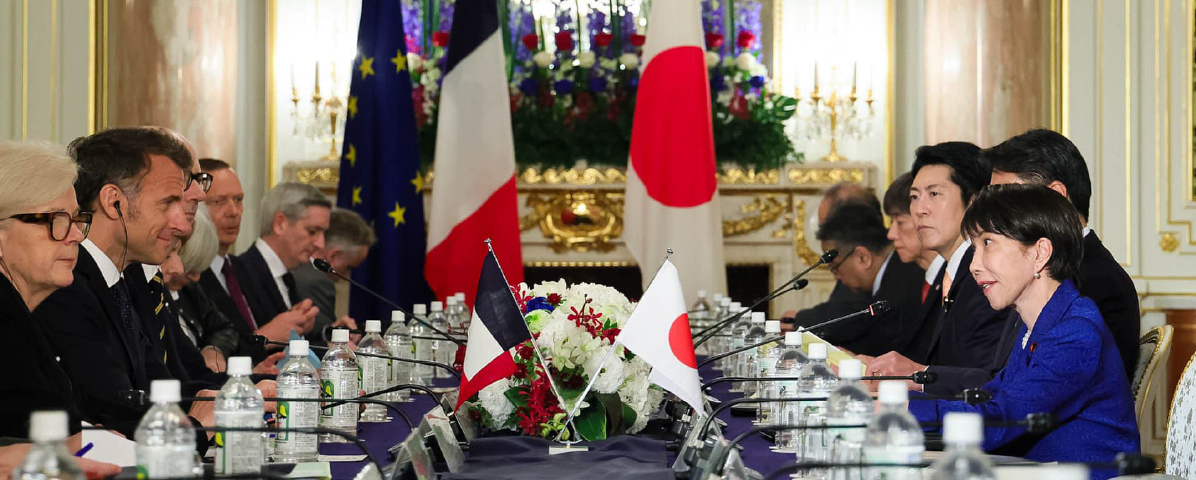
Japan’s hands have been tied militarily since it embraced a pacifist constitution in 1947, and the national debate to reassess its defense capabilities is intensifying amid the sweeping shifts in the global security landscape. Prime Minister Sanae Takaichi took further steps toward unshackling Japan’s defense capabilities when she did not shy away from asserting Japan’s national interest in case of a Taiwan contingency. The question is whether her March 19 summit with President Donald Trump fit into Japan’s longstanding quest for normalcy. The answer depended not only on Takaichi but also on Trump’s handling of their meeting.
Given the resolute Japanese resistance to China, Russia, and North Korea, along with strong support for ties to US allies in the Indo-Pacific region, Japan already appears to be defending its national interests in Asia quite normally. Even so, the record of recent decades suggests that it has not been easy for Japan to reach these outcomes, as challenges still await. If the White House mismanages this relationship, Japan’s pursuit of enhancing its security capabilities, which is ultimately in Washington’s interest, becomes harder.
Tightly clinging to the United States, unambiguously attendant to threats to its security, and governed by the Liberal Democratic Party (LDP) after it garnered an overwhelming mandate, Japan under Takaichi would appear to be a rare exemplar of stability in a world racked with uncertainty.
Yet Japan continues to face two key foreign policy challenges in becoming a so-called normal country. First, being a “normal country” is widely equated with both proving to the United States that Japan can carry its weight on matters of international security and standing up to Japan’s principal ally by gaining a voice on such matters. Second, it is understood to mean playing a large role in shaping how Asia is being transformed. At times, there have been signs of hubris: gaining equality with the United States and taking leadership of East Asia, as if those prospects were within reach.
Japan was defeated in World War II, but its memories of glory have inspired it to seek a new status in the world of nations, and it is looking to the United States for validation and to Asia for leadership. By calling this quest “becoming a normal nation,” the Japanese have built their case on at least four dimensions: geopolitics, regionalism, soft power, and national identity. Usually, this quest is seen through the lens of bilateral relations in Asia. Here the focus is on balancing the United States and Asia, putting today’s challenges in the context of the previous fifty years.
A chronological approach to meeting those challenges is reflected through the course of five decades: (1) the hubris of the last decade of the Cold War; (2) the highs and lows of opportunism in the 1990s; (3) the jolts of reality in the 2000s to 2012; (4) the Abe recalibration of the 2010s; and (5) the Biden and Trump impact of 2021 to 2025.
The Hubris of the Last Decade of the Cold War
From the late 1970s, the Japanese openly articulated their ambitions for becoming a leader in Asia and an equal to the United States. Confidence was rising rapidly, revealing new views of great power relations, heightened desire for regional leadership, optimism for spreading Japanese culture to positive effect, and a reconstructed national identity as the basis for a “normal” nation.
Japan’s two paramount international goals of the last decade of the Cold War were to gain equality with the United States and to assume leadership in East Asia. The former required recognition of its unique role on all four dimensions above, including Yasuhiro Nakasone’s geopolitical assertion of it becoming an “unsinkable aircraft carrier.” The latter gathered momentum with the Fukuda Doctrine, centering on Southeast Asia. Both assigned a major role to China, Russia, and the “four little tigers.” Neither was yet a fulsome assertion of the ascendant goals of a country rapidly growing in confidence; they served as stepping-stones.
Japan’s geopolitical reasoning in the late 1980s treated Russia and China differently from prevailing US thinking. Washington saw a chance to transform the Grand Strategic Triangle by capitalizing on Mikhail Gorbachev’s “new thinking” while embedding China in the international economy with attendant political transformation. Japan viewed Russia more cynically; it counted on boosting its value to the United States through a greater role in deterring Russia as it also gained leverage with the United States and China as a bridge between the two. Thus, the Grand Strategic Triangle in East Asia became a kind of quadrangle. With the collapse of the Soviet Union and the Tiananmen massacre, the Japanese had to rethink their geopolitical ambitions.
Regional leadership also had to be reconceptualized. With Japan’s economy booming and the “flying geese model” convincing it of a long-term, favorable division of labor in Asia, it expected regional leadership to follow, particularly as the United States continued to lose economic vitality. Many spoke of the coming “Pacific Century.” Yet extrapolation of recent growth rates came to a crashing halt at the start of the 1990s, as the economic “bubble” burst and China’s reform direction had shifted. The aim of regionalism needed adjustment.
Japanese optimism about soft power—admiration for its harmonious society, eagerness to study Japanese, and fascination with its culture—proved to be unexpectedly rooted in the spillover from its “economic miracle.” When the bubble economy turned to stagnation, the soft power of Japan went into a downward spiral. Its neighbors proved most resistant. No longer was soft power appeal, as autonomous regionalism, a way to win US validation.
National identity also took a big hit by the early 1990s. Shelves of books on “Nihonjinron,” or the theory of Japanese distinctiveness (superiority), lost any appeal. The Japanese understood the need to “internationalize” but coupled that with more intense claims of distinctiveness rooted in history. China and South Korea would quickly turn the history lens against Japan.
The Highs and Lows of Opportunism in the 1990s
On the one hand, the Japanese doubled down on aspirations of the 1980s given the openings made available after the end of the Cold War. On the other, they experienced frustrations far beyond those felt earlier. Geopolitical shifts raised hopes, regionalism appeared much more promising, barriers to soft power projection seemed to have fallen, and limitations on national identity imposed by the Cold War were receding. Uncertainty fueled rethinking, at first by both conservatives and progressives and later by the former newly emboldened.
The Grand Strategic Triangle shifted with Russia, a weak offshoot of the Soviet Union, seen as vulnerable to autonomous Japanese diplomacy, and China, alienated from the United States, seen as amenable to enhanced ties to Japan. Even more than Washington, Tokyo was confident that the Grand Strategic Triangle was no more. Indeed, its leadership role in Asia created the possibility of a new great power triangle of the United States–European Union–Japan, privileging economics over security in national power. It could press Moscow, desperate for money, and Beijing, anxious to recover from post-Tiananmen pariah status. Although the Gulf War damped enduring hopes about the primacy of economics, geopolitical optimism prevailed.
Expectations for regionalism rose sharply. East Asia appeared ripe for a “community” (kyodotai), freed of the Cold War. As the European Union solidified and North America forged its own free trade agreement, the Japanese were confident that they could steer their region in the same direction. If Seoul and Beijing were resistant and some in Southeast Asia too insistent that Washington be excluded, causing a backlash in Japan’s essential ally, hopes remained to the 2000s. In the aftermath of the Asian financial crisis of 1997, Tokyo pressed for a regional approach, to US dismay. It struggled to find a suitable balance between globalization and regionalism.
Soft power did not advance as expected in the 1990s. Economic stagnation reverberated in loss of interest in the Japanese model and even in Japan’s cultural products. Moreover, in both China and South Korea, the focus shifted to historical memory, diminishing soft power. US soft power proved resilient, widening the divide with Japan contrary to expectations. If interest in Japanese culture—traditional and innovative—survived, it was of a lesser order.
Japanese national identity was in flux after the boundless rhetoric of the 1980s. Apologies to reassure neighbors came from a coalition government, peaking with the 1995 Murayama statement. Revisionist defiance came from some LDP officials, fueled by anger toward the leaders of South Korea and Jiang Zemin’s rude behavior toward the emperor. Relying more on the United States by decade’s end, the Japanese focused on identity gaps with neighbors. If many on the right grew emboldened, little separation with US identity defied their ambition.
The 1990s witnessed flux beyond any other decade, both the highs of heady expectations and the lows of unexpected disappointments. The left lost clout as it clung to idealistic hopes. The right overreached in geopolitics, regionalism, and especially national identity. At the end of the decade, there was still optimism about breakthroughs with Russia, China, and even North Korea as well as leadership in regionalism, despite fast-changing realities.
The Jolts of Reality in the 2000s to 2012
The low point in Japanese confidence over the post–Cold War period came in the 2000s, as ties to neighbors deteriorated amid frequent leadership turnover. Responses included: new dependence on Washington, sporadic spikes in hope for Asian partners, and competitive balancing versus China. Junichiro Koizumi did the most to boost US ties. Yukio Hatoyama raised hopes for Asian regionalism the most. No sustained strategy could be developed. By 2012, idealistic regionalism had been discredited, and stronger leadership was sought for an energetic geopolitical approach and a more alliance-centered approach to regionalism.
Japanese soft power fell to its nadir in the 2000s. Interest shifted to South Korean soft power, notably in Japan, and even Chinese soft power, burnished by Hu Jintao. Political instability compounded economic stagnation to lower the allure of Japanese soft power.
The Japanese national identity shifted from optimism to pessimism over the 2000s. Junichiro Koizumi briefly boosted optimism, assertedly piggybacking on US leadership, openly challenging Chinese, Russian, South Korean, and North Korean moves, and insisting that stagnation was over. Shinzo Abe and Taro Aso went further, but leadership turnover and the about-face after the LDP lost power left a muddled impression. On history, Asian and US ties, and recovery from stagnation, there was no blueprint for how to reassert confidence. Jolted by marginalization from Northeast Asian neighbors and the futility of cooperative appeals, Japan was ready for a new approach but not for abandoning the lingering hubris.
The Abe Recalibration of the 2010s
The second Abe stint as prime minister carried an abiding message, although it was split into three distinct phases. The main message was that Japan had renewed its pursuit of becoming a “normal” nation after the recent hiatus. In 2013–14, that was accompanied by revisionist defiance of other states. In 2015–17, it shifted to more pragmatic accommodation to boost diplomatic results. In Abe’s final years, 2018–20, there was a residue of defiance, further pragmatism, and increased recognition of operating in the shadow of US assertiveness. In all three phases, Abe’s diplomacy in Asia tested the degree to which Japan was realistic.
From stage to stage, Abe steered Japan closer to joining the West, even as he reasserted hubris at odds with that objective. On geopolitics, he refused to accept the accumulating evidence of Russia drawing closer to China, as if Japan could dissuade it, and of the United States gearing up to resist their aggressive partnership. Again, the Grand Strategic Triangle dynamics were not fully to Japan’s liking, and it fought a futile battle to transform them.
On regionalism, Abe proved to be a forward thinker, leading the United States in envisioning the “Free and Open Indo-Pacific.” His overtures to India and Australia served US interests, recognizing Japan’s supportive role, although Abe’s impatience with South Korea failed to serve the goal of regionalism, which the Barack Obama administration had started to conceptualize.
Did Abe’s personalized style boost soft power? Japanese diplomacy drew greater attention, perhaps reverberating in cultural appeal. After a period of marginality, Japan seemed to be back. Yet there was little effect from “Abenomics” and none of the allure seen in the 1980s.
Abe’s biggest impact was on national identity, replacing the pacifist legacy of the postwar era with talk of a security-oriented, realist power. Although some progress in that direction had been made since Nakasone’s time in office, this was the decisive breakthrough. Even so, some identity issues remained in flux: the quest for autonomous identity as an Asian power, historical revisionism versus neighbors, and identity symbols driving diplomacy. By 2020, all had receded somewhat in the shadow of bipolarity, but none had disappeared. Summitry with Vladimir Putin and Xi Jinping still loomed with uncertain alliance effects, history was again damping ties with South Korea, and powerful symbols still clouded realist diplomacy.
The Biden and Trump Impact of January 2021 to February 2025
Joseph Biden’s mini-lateralism facilitated a rebalancing of Japanese foreign policy amid growing threats, while Trump’s unilateralism in 2025 had a sobering effect on autonomous ideals. In 2021, Japan both felt elevated as the paramount US partner in the Indo-Pacific framework and prioritized on an initiative for which Japan took credit, and it fell in line on an agenda joining military security, economic security, and “universal values.” With Fumio Kishida’s response to Russia’s war on Ukraine and US-led sanctions on both Russia and China, Japan closed ranks with its ally as never before in the interregnum. If Trump’s flaunting of US unilateral power marginalized Japan at times, it further recognized the necessity of offering support.
On geopolitics, the reality of the Grand Strategic Triangle finally sunk in, leaving no role for Japan as an independent force. Abe’s “honeymoon” with Putin was put in the rearview mirror. A Xi Jinping “cherry blossom” state visit to Japan had faded into dire warnings of a virulent Chinese response to Japanese involvement in a “Taiwan contingency.” If Trump’s diplomacy with Xi left Japan squirming on the sidelines, no autonomous path was in sight.
On regionalism, Japan could not revert to leadership ambitions and had to sit back as the US approach left the Quad and trilateralism with South Korea in limbo. It tried to sustain the gains of recent years despite lukewarm US interest, anticipating future US leadership. A bright spot was continuity in Japan–Republic of Korea ties. With many states in Asia troubled by Trump’s tariff onslaught and arbitrary security thinking, they looked to Japan more as a stabilizer.
Soft power could only be an afterthought at a time of military and economic coercion. As US soft power deteriorated, Japan’s weakness was exposed in being unable to fill the gap.
Uncertain at the beginning of Takaichi’s tenure was how national identity would fare. Is a staunch rightist prepared to reassert historical revisionism? Can relations with South Korea be kept on an even keel? Will Trump’s dalliance with Putin, goodwill toward Xi, and possible renewed “bromance” with Kim Jong-un prove manageable given Japan’s sharp breaks with these countries? Can Takaichi remain strategic until a new US president rights the course? This is not only a matter of policies. It is also a test of normalcy in abnormal circumstances.
The Takaichi-Trump Summit
Trump’s decision to launch a war on Iran put Japan in a difficult situation for at least five reasons: (1) it diverted focus from the Indo-Pacific, supposedly the shared priority; (2) it ran down the resources necessary for defense in the Indo-Pacific, even leading to transfers away from Japan; (3) it drove up energy prices, cutting supplies on which Japan counted; (4) it played into the interests of Russia and China; and (5) it turned a summit Japan expected to be about solidarity versus China into one mostly about pressuring Japan to aid the US war. Thus, it exposed Japan’s biggest weakness as an ally—lingering constitutional restrictions on participating in a war that did not threaten Japan’s sovereignty—rather than its strengths as an ally.
On the geopolitical front, recent upgrading of Japan’s image in facing China, Russia, and North Korea was overshadowed by Trump disparaging its failure to commit assets to the Strait of Hormuz. Japan seemed to be further away from “normalcy.”
Conclusion
The legacy of defeat in 1945 remains not yet swept fully aside at the beginning of the third era since World War II. In the Cold War period, the Japanese focused on economic power as the initial pathway to becoming a “normal nation.” Over the interregnum, security power came to be the foremost test of normalcy. Reshaping the Grand Strategic Triangle, establishing an East Asian regional community, overpromising Japan’s soft power, and overselling national identity distinctive for history and autonomy proved problematic.
Japan has advanced a long way toward its goal of becoming a “normal nation,” but it is not confidently there yet, nor are final steps yet clear. Resisting threats to regional and global order, standing side-by-side with US leadership, and taking initiative in partnerships across Asia are all hallmarks of a mature approach to the challenges Japan is facing. Takaichi’s summit with Trump signals another step along this trajectory. In rejecting a demand that other US allies are resisting, Japan is acting normally too.
On the four dimensions, Japan struggled to grasp challenging realities. For geopolitics, it was slow to recognize the paramount role and durability of the Grand Strategic Triangle of Washington-Beijing-Moscow with little room for Tokyo to maneuver. As for regionalism, it had to grasp the priority of internationalization and futility of outmaneuvering Beijing over Asian regionalism. Once enamored of its cultural appeal, Tokyo hesitated to appreciate the limits of its soft power and of separation from US soft power. Finally, putting history atop its national identity reconstruction had to be reconsidered for Japan to maximize its influence.
Equality with the United States and leadership in Asia proved tantalizing but unrealizable. A “normal nation” does not require either of these goals to be achieved. More realistic are the goals of fully joining the “West” and becoming part of a coalition of like-minded countries in Asia under US leadership striving to manage China’s hegemonic aims and its partnerships. A “normal” ally has agency to pursue its own interests but is wary of inflating its potential.
In danger of marginalization from the accelerating unilateralism under Donald Trump and Xi Jinping, Japan faces an urgent need to recalibrate its understanding of a “normal nation.” It can and should build a military force befitting its substantial gross domestic product and threatening regional environment. Having built up mini-lateral networks across Asia since Abe’s stints as prime minister, Japan must institutionalize its diplomatic outreach to like-minded states. Its cultural appeal endures, but it could be better aligned with “universal values.” Perhaps the biggest challenge will be to reconstruct national identity, showcasing postwar success. By looking back to Japan’s earlier aspirations, we can be more precise about today’s needs.
Japan does not have the support within its region that European allies enjoy and faces a more threatening environment, too. Japan needs even closer US military ties, US-led regionalism in Asia, and more coordination with US allies including South Korea, and it faces wariness about autonomous diplomacy with China and Russia and even more caution in arousing regional anger over revisionist speech. These factors give it less leverage on the United States than most European states have. What is deemed normal in one setting may not be so in another. Yet given lingering restrictions on military activity, Takaichi may not have the domestic foundation to be as supportive of US actions as others have.
What remains unclear is the lessons Japan is drawing from its pursuit of “normalcy” over the past decades. Does it recognize instances of overreach and the need to not repeat them?
Admittedly, in 2025 Trump’s foreign policy agenda tests any country’s desire to proceed normally. Yet Takaichi faces a special challenge. The record of the past five decades and her own rightist pedigree make it imperative that she look back for the essential lessons.
In 2026, as the world moves beyond the post–Cold War era, Japan’s pursuit of “normalcy” is accelerating, but it is also being channeled in a more realistic direction. The overoptimism since the last decade of the Cold War has given way to more sober calculations. Alliance with the United States is understood in a new light. Partnerships with other US allies loom on a more equal basis. Management of more challenging relations in Asia proceeds without the exaggerated hopes of bygone years. While gaining recognition as a regional and global power retains great appeal, the meaning of “normalcy” differs from what it was previously.