 A Nation Must Think Before it Acts
FPRI Wire
A Nation Must Think Before it Acts
FPRI Wire

A nation must think before it acts.

FPRI Wire
FPRI Wire was the predecessor to FPRI’s E-Notes publication.
Turkey and the West
This past summer I had the pleasure (albeit it was no easy task) of reviewing two thick books of historical counterfactuals. Though considered a disreputable parlor game by most professional historians, contemplation of what might have, could have, and...
Read more »Flashpoints in East Asia: Hot, Hotter, Hottest
The Taiwan Strait: Hottest The possibility of tension escalating over the Taiwan issue was by far the most contested issue at the conference. Speakers painted pictures of the People’s Republic of China (PRC) alternatively as a military threat, an...
Read more »America and the World at the Dawn of a New Century
November 10, 1999 Several people, including our host Ron Naples, whose burden it was to introduce this lecture, have asked me what exactly I meant to discuss this evening inasmuch as my title was hopelessly vague. That, I confess,...
Read more »How to Think About Ethnic Conflict
I have been asked to speak to the question of the challenge of ethnic conflict in U.S. foreign policy. The subject, of course, could not be more timely because of the Balkan wars. I don’t intend to give you...
Read more »The Coming Transformation of the Muslim World
Like the printing press in sixteenth-century Europe, the combination of mass education and mass communications is transforming the Muslim majority world, a broad geographical crescent stretching from North Africa through Central Asia, the Indian subcontinent, and the Indonesian archipelago....
Read more »Religion and Globalization
Globalization is often described as a process: steadily progressing over time, pervasively spreading over space, and clearly inevitable in its development. But globalization is also a revolution, one of the most profound revolutions the world has ever known. Indeed,...
Read more »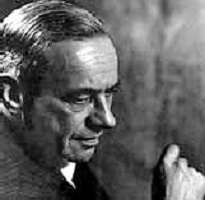
The Wisdom of Robert Strausz-Hupé
The following essay is adapted from remarks delivered at the ninety-fifth birthday party for Ambassador Robert Strausz-Hupé, held at the Union League Club in Philadelphia on March 26, 1998. Mr. Ambassador, General Haig, Dr. Sicherman, ladies and gentlemen. I...
Read more »Military Culture Does Matter
Does military culture matter? Students of either military history or current military institutions have devoted little attention to it, yet it may be the most important factor not only in military effectiveness on the battlefield, but in the processes...
Read more »Religion in Diplomatic History
Everyone talks, but hardly anyone thinks or does anything about it. I refer to the upsurge in awareness of religion’s impact on international politics, a phenomenon almost as startling as the crackup of the Soviet empire which faith- based...
Read more »Why Some Neo-Cons Are Wrong About U.S. Foreign Policy
Experience and history teach only this, wrote the philosopher Hegel in 1827: that people and governments never learn anything from history or act on principles derived from it. Americans’ confusion over foreign policy in the post-Cold War era would...
Read more »