 A Nation Must Think Before it Acts
Glimmers of Optimism: Evaluating Taiwan’s Evolving Political Landscape
A Nation Must Think Before it Acts
Glimmers of Optimism: Evaluating Taiwan’s Evolving Political Landscape

A nation must think before it acts.

Glimmers of Optimism: Evaluating Taiwan’s Evolving Political Landscape
Since President Lai Ching-te was inaugurated in May 2024, Taiwan’s domestic politics have been in relative turmoil. Large-scale protests, the incarceration of Taiwan People’s Party (TPP) leader Ko Wen-je on corruption charges, and an unprecedented recall election targeting thirty-one Kuomintang (KMT) legislators rendered the past fifteen months unusually turbulent. With the recall dust beginning to settle and Ko’s release on bail, now is a good time to take stock of Taiwan’s political landscape. Whether Taiwan’s two political camps can forge some minimal consensus amidst democratic competition holds important implications for cross-strait deterrence and US policy in the region.
The Democratic Progressive Party: “Resting and Recuperating”?
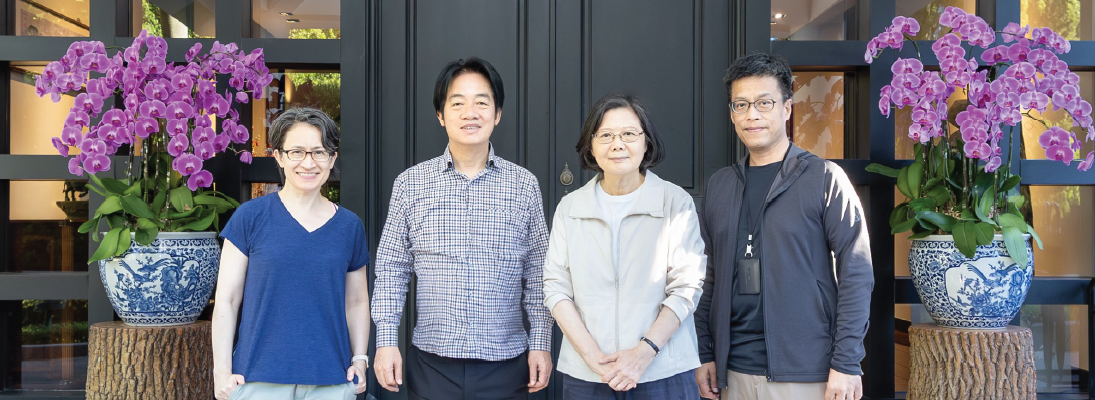
The recall failure led to widespread calls for Democratic Progressive Party (DPP) accountability and reflection. President Lai Ching-te has responded to this challenge in several ways. First, Lai held immediate talks with the various factions within the DPP—for example, calling former premier Su Tseng-chang and gathering the factions together for intra-party dialogue. Former President Tsai Ying-wen also visited Lai to display her support. These important dialogues likely helped secure party buy-in for the inevitable cabinet reshuffle and leadership changes that followed.
Second, Lai gave a national address thanking all who participated in the election. Lai vowed to reshuffle the cabinet, reprioritize economic issues, and recalibrate the interaction between his administration and the KMT-majority legislature. In particular, Lai expressed hope for “dialogue, cooperation, and unity between the ruling and opposition parties,” noting that “only through unity can [Taiwan] protect our nation and safeguard our precious democracy and freedom.”
Finally, Lai initiated dialogue at the grassroots and inter-party levels. Lai tasked Premier Cho Jung-tai with engaging opposition mayors to discuss local economic issues, while Lai himself began a nationwide “listening tour.” Lai also gave a comprehensive interview with the Liberty Times, addressing everything from growing US-Taiwan relations, to the need to better address skepticism of US support within Taiwan, to his commitment to improved inter-party dialogue.
Lai’s response to date has generally won support. The DPP has broadly rallied behind him, even as Lai engages graciously with other DPP camps, such as that of caucus convener Ker Chien-ming, with whom there are likely ongoing differences. Ker, for example, called loudly for the recall beginning in January and reportedly is a source of friction with some junior members of the DPP coalition. Even so, and despite polling that suggests Ker, not Lai, should bear most responsibility for the recall outcome, Lai has shown willingness to personally shoulder the blame. While continued pressure may yet result in Ker stepping down from his position, Lai’s gesture demonstrates important leadership.
Perhaps most critically, the sensitivity of this post-recall moment has not appeared to impact the Lai administration’s ability to govern. Since the recall, Taiwan has hosted a US delegation from the Senate Armed Services Committee as well as legislators from Japan, amongst other international engagements. Taiwan’s former deputy national security advisor met with a senior Pentagon official in Alaska, while Ambassador Alexander Yui and Minister Chiu Chui-cheng of the Mainland Affairs Council met with bipartisan members of the US Congress in Washington. Plans to begin the next legislative session in Taiwan with a focus on a special budget for strengthening national resilience are underway. While Lai has acknowledged the need for Taiwanese society to “rest and recuperate” following the tumultuous year of politicking, the government is pressing forward.
The KMT Chairperson Race
Following the KMT’s success in fending off the recall, all eyes turned to who would lead the party in the upcoming October 18 chairperson election. Until recently, much of the discussion centered on whether current chairman Eric Chu would seek reelection or perhaps cede way to Taichung mayor Lu Shiow-yen, who is widely speculated to be the KMT’s favored presidential candidate in 2028.
The issue initially appeared to be resolved when, immediately following the final recall on August 23, Chu announced he would step down and support Lu for chairperson. However, despite repeated calls for her to run, Lu has remained adamant that she will decline and focus instead on governing Taichung. This may be a wise decision, as internal KMT polling shows nearly half of the public disapproves of mayors simultaneously serving in this national partisan leadership position.
The race subsequently broke wide open, with nine officials or former KMT leaders declaring their candidacy. None of the nine, however, was perceived as having the necessary gravitas to lead the party. This changed when Hau Lung-bin, Taipei’s mayor from 2006 to 2014, announced on September 9 that he would run if Jaw Shaw-kong, the KMT’s 2024 vice presidential candidate, did not. Hau subsequently officially declared his candidacy and is favored amongst the final six candidates.
Jaw, who left the KMT to found the right-leaning New Party in 1993, and Hau, who joined the New Party that same year before returning to the KMT in the 2000s, represent the KMT’s more conservative wing. In practical terms, this has meant being more receptive to a “one country, two systems” framework for cross-strait relations–or, at the very least, advocating for relations based on the “1992 consensus.” Yet, while the former position has become anathema to Taiwanese voters—and hence would almost certainly preclude Hau or Jaw from being competitive in a presidential race—Hau has signaled his support for the moderate and more popular Lu should she pursue the presidency in 2028, while downplaying his own future ambitions.
In addition to bolstering the KMT’s presidential candidate, another key KMT chair responsibility will be facilitating collaboration with the TPP. While the TPP and KMT have coordinated successfully so far in the legislature, few have forgotten how their dramatic collapse on the 2024 presidential ticket helped pave the way to President Lai’s election. Avoiding a similar outcome is crucial for the “pan-blue” coalition’s hopes of defeating the DPP in 2028. Hau’s contentious history with TPP founder Ko Wen-je, dating back to at least 2016, has thus raised questions about his ability to play this facilitator role. Understandably, Hau has attempted to downplay the conflict and emphasize that strengthening KMT unity and facilitating KMT-TPP cooperation are key priorities.
Ko’s recent release on bail after a year in prison, as well as approaching local elections in 2026, are likely to shine a renewed spotlight on KMT-TPP dynamics. As Kharis Templeman points out, the incentive structures of the two parties have never completely aligned, a fact that elections, particularly who heads the presidential ticket, exacerbate. Ko, moreover, is a mercurial figure. Having previously aligned and fallen out with both the DPP and KMT, even harmony between Ko and the current TPP chairman Huang Kuo-chang is not guaranteed. Yet Ko also appears to recognize the need to further institutionalize the KMT-TPP coalition if both are to achieve future success. This much at least is evident in his recent direction to create a research group to study the experience of coalition governments in other countries.
Moving forward, the pan-blue’s ideal scenario is perhaps one in which Hau is elected KMT chair, the party rallies around moderate Taichung mayor Lu Shiow-yen for president in 2028, and Ko is peaceably aligned as a vice presidential candidate. The official KMT chair election in mid-October and KMT-TPP coordination in local elections in 2026 will help illustrate whether these pieces fall into place. Even if they do, the KMT will still likely face an uphill battle in its bid to return to power for the first time in over a decade.
Green and Blue Shoots?
After a year that one DPP legislator acknowledged was quite difficult, a key question is whether the future heralds more of the same. As has been previously noted, the circumstances that led to this year of protest and polarization were rather exceptional, including Taiwan’s first divided government since 2008. Yet despite the internal maneuvering now underway in both parties, there are glimmers to suggest greater harmony on the horizon than past trends lead many to expect.
On a purely symbolic level, cross-party meetings to discuss the new legislative session began amicably. More substantively, the KMT agreed to raise Taiwan’s defense budget above 3 percent, a key area of concern for US policymakers. Internationally, the KMT’s deputy legislative speaker Johnny Chiang led a cross-party delegation to the UK parliament, with follow-on stops planned in Ireland, the Netherlands, and the Czech Republic.
US engagement perhaps provided additional bipartisan encouragement. Shortly after the final recall election, American Institute in Taiwan Director Raymond Greene held meetings with both DPP cabinet officials and KMT lawmakers. This was followed by a US delegation to Taiwan led by Senator Roger Wicker, chair of the Senate Armed Services Committee. In addition to meetings with President Lai and cabinet officials, Wicker and Senator Deb Fischer met jointly with leaders from the DPP, KMT, and TPP. Such cross-party engagement sends an important signal of US support for unity in Taiwan amidst democratic competition. It also meaningfully enhances the US understanding of Taiwan’s evolving democratic landscape.
There is additional evidence that both parties are taking a workmanlike approach in the aftermath of the heated recall campaign. In addition to the Lai government’s US meetings, both DPP and TPP legislators hosted Japanese lawmakers in Taipei. The KMT, meanwhile, led Taiwan’s largest ever parliamentary delegation to Japan. As noted, a tripartisan parliamentary delegation led by Johnny Chiang engaged parliamentarians in Europe. Premier Cho’s discussions with KMT and TPP local leaders over fiscal matters likewise mark a step in the right direction.
With local elections again on the horizon, both parties should feel incentivized to demonstrate their governing ability. The latest polling reflects low public approval of both parties, with the DPP and KMT garnering only 33 and 36 percent favorability ratings, respectively. Further, when asked whether the failed recall better represented a reprimand to President Lai and the DPP or public support for KMT legislators, 49 percent said the result better represented a DPP reprimand, while only 17 percent said it represented public support for KMT legislators. Both parties, in short, have something to prove. Their early actions suggest they know this.
Conclusion
Global events continue to provide stark reminders that Taiwan is not alone in facing the challenges of deep polarization. Of course, the measure of any nation is in how it responds to such challenges. Following one of the most unusual large-scale recall elections not only in Taiwan’s history but perhaps anywhere, early indicators in Taiwan give cause for cautious optimism. The DPP has broadly rallied around President Lai, the KMT is so far not overplaying its hand, and both parties are working together domestically and abroad.
Such assessments do not belie Taiwan’s difficult road ahead. With unrelenting coercion from China, pressure from the Trump administration in the form of tariffs and calls for increased defense spending, and understandable fatigue after a year of protest, tests of the island nation’s resilience are set to continue.
The United States should continue taking actions that make Taiwan’s path easier. In addition to Senator Wicker’s timely visit, publicizing the participation of Taiwanese troops in the annual Northern Strike military exercises in Michigan and the announcement of Taiwan’s inclusion in a Department of Defense Defense Innovation Unit send valuable signals of support. Reports of an imminent “big deal” trade agreement will further bolster Taiwanese confidence in its partnership with the United States. Such confidence is critical to helping bridge the gap between KMT and DPP approaches to China, even if the two parties will never be fully aligned on this issue.
Ultimately, whether Taiwan can maintain early post-recall momentum remains to be seen. More will become clear during the new legislative session that began on September 19, as well as following the KMT chair election on October 18. The ongoing legal issues surrounding Ko Wen-je and implications for KMT-TPP coordination also remain unresolved. Whether Lai and the DPP can translate their post-recall composure into improved public sentiment is similarly undetermined. In the meantime, cross-party collaboration from Taipei to London offers a promising model for Taiwanese unity amidst robust democratic competition.
Image: Former President Tsai Ying-wen visiting President Lai Ching-te in August 2025. (Facebook |賴清德)