 A Nation Must Think Before it Acts
FPRI Experts React | Options in the Strait of Hormuz
A Nation Must Think Before it Acts
FPRI Experts React | Options in the Strait of Hormuz

A nation must think before it acts.

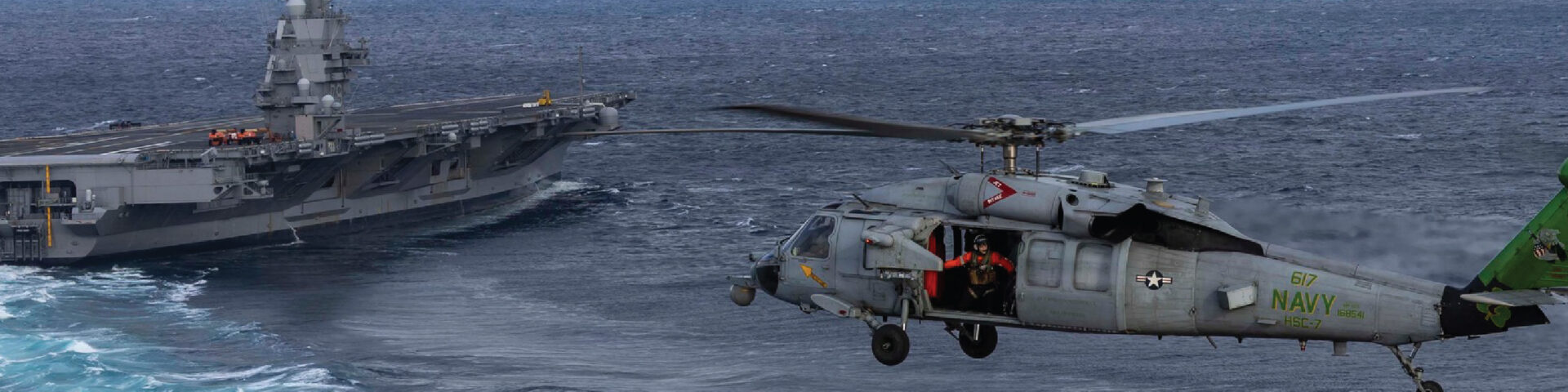
FPRI Experts React | Options in the Strait of Hormuz
After weeks of war, pressure is mounting on the Trump administration to deploy sea and ground forces on an open-ended mission to reopen the Strait of Hormuz, the vital waterway connecting Asia with the Arabian Sea. The options for the United States are fraught with risk and will require further extending the war and risking Navy ships in the narrow and crowded Arabian Gulf.
The Foreign Policy Research Institute (FPRI) gathered three experts to consider the risks of a naval operation and to discuss the options the United States has to seize control of the Strait of Hormuz and unlock the flow of energy.
Emma Salisbury, Senior Fellow
Iran’s strategy to close the Strait of Hormuz doesn’t rely on a conventional naval blockade, as its surface navy has been almost completely destroyed by US and Israeli strikes. Instead, it is operating something more like an insurance blockade: It only needs to strike occasionally and deploy a few mines to make insurance uneconomical for commercial shipping companies, effectively shutting down the Strait.
In an ideal world, the United States could opt for a strategy along the lines of the Tanker War playbook, escorting convoys through the Strait with warships, coupled with mine countermeasures and strikes against shore-based threats. However, this is not an ideal world.
Any naval presence will be at considerable risk from Iran’s still-extant ability to launch drones and missiles from any point along the coastline. The United States does not have the mine countermeasures capability available to properly sweep the Strait. And with offensive operations against Iran still ongoing, there is a real question of whether sufficient US Navy assets and air support exist to sustain both escort duties and strike missions simultaneously. Without allied contributions, controlling the Strait will likely be extremely difficult, and those contributions are certainly not forthcoming at the moment.
Michael Petersen, Senior Fellow
The pressure is mounting on the US Navy to reopen the Strait of Hormuz, which has been effectively closed since the war with Iran began. But given what might be called Iran’s “anti-navy,” an extensive set of capabilities that includes sea mines, anti-ship cruise missiles (ASCMs), fast-attack and fast inshore attack craft (FAC/FIACs), and unmanned surface drones, the US Navy has few good options when it comes to opening the strait.
In 1991, following the first Gulf War, it took four months for over forty ships—ten times the number of US minesweepers decommissioned in CENTCOM last year—to clear Iraqi minefields in a permissive environment and with the Iraqi minefield charts. The less time consuming task of clearing a Q-route for merchant ships to travel still takes time and enormous risk because it is unclear how much of Iran’s arsenal of mobile ASCMs and FAC/FIACs has survived the US onslaught. Even with unmatched US reconnaissance capabilities, Iran’s dispersed mobile missile launchers are highly survivable from air attack due to ground clutter. And if even a portion of the hundreds of FAC/FIACs operated by the IRGC-N survived, they likewise pose a serious threat, especially when used alongside unmanned surface drones in swarm attacks. Already operating on the thinnest of margins around the world, the US Navy has few choices beyond acceptance of extreme levels of risk to open the strait.
Frank Hoffman, Senior Fellow and Advisory Board Member
The Strait of Hormuz reminds us that geography matters. Iran holds a significant advantage there with the ability to range the narrow international shipping channel with small boats with rockets and guns, and an array of anti-ship cruise missiles. It also retains the ability to employ a mixed collection of old surface mines and a medley of sub-surface influence mines. Because Iran seeks to continue its energy exports, particularly to China, sowing mines is probably the least likely problem for shipping.
US Naval forces can make a clear contribution to establishing sea control, but only if the Administration is willing to accept risk. Naval aviation can maintain an overwatch position and conduct intelligence surveillance over Iran’s coastline near Bandar Abbas. The aim here would be to ensure that Iran does not position ship-killing missile batteries along the north side of the passage to threaten shipping. The complexity of the terrain would make this a difficult mission.
Naval assets for mine detection and clearing are limited in scale and capability, but could be applied once it is confirmed that the shipping lanes have been compromised by mines. It would take no less than two weeks for a force to be reassembled in the Gulf and at least another two weeks to clear the channel. Influence mines, supplied by Russia or China, can be anchored on the floor of the gulf and are the hardest to find. Overall, mine clearing is a tedious task, and more so if you’re operating in a contested environment where minelayers and helicopters dropping sensors are vulnerable.
A Marine Expeditionary Unit (Special Operations Capable) of 2,500 Marines has been deployed to the region. This force could be used to seize or clear small islands in the Gulf if Iran deployed forces on them, or threaten to conduct limited raids along the Iranian coast where potential missile sites or hidden rocket artillery systems are placed. To preclude the risk of casualties (or capture) to the raid forces, it is more likely that targets would be destroyed by precision strike capabilities from the US naval task force if they can be found. The amphibious task force includes a LHA-class ship capable of employing the MEU’s stealthy F-35 Lightnings for such attacks on inshore targets.
The Marine deployment has drawn some notice and it is anticipated that it provides a reserve force for the theater as well as a prepositioned force if a noncombatant evacuation mission is needed to remove US embassy personnel and American citizens in one of the region’s capitals.
More likely tasks for Marines could be the use of their rotary-wing aircraft, the Cobra gunship with its M197 20mm gun, to defeat IRGC small boats that may attack tankers with rockets or attachable mines. These were effective in the past during the Tanker War. Marine detachments (squad or platoon-sized) may also be used to reinforce civilian crews on large tankers (in either direction) to deter Iranian efforts to board or seize tankers and their crews. Such detachments would be a deterrent and could be more useful if they had a robust counter-drone capability. These tasks are considered possible, especially after the US task force has degraded Iran’s most potent missile capabilities. At that point, a desperate IRGC would very likely employ unconventional tactics from fast boats as it has in the past. Such ‘a guerrilla war at sea’ would pose a threat but not a very lethal one.
Image: Facebook | US Navy