

A nation must think before it acts.
Publications
“A More Feminine Approach?” Rethinking How America Deters a Nuclear-Capable Iran

Abstract To demonstrate why a more feminist approach offers potentially greater success than the more masculine approaches already tried, and failed, this article provides a case study of US deterrence strategy toward Iran during the most recent presidential administrations—two...
Read more »The Next Frontier in Great Power Rivalry: Competing with Russia and China in Cyberspace
Editor’s Note: This conversation is a slightly edited version of a Global Demons podcast that aired in December 2021and continues to have great relevance. Listen to all the Global Demons podcasts at FPRI.org. Read the full article here. ...
Read more »The Security Governance Challenge of Emerging Technologies
Abstract In recent decades, governments have been ineffectual at regulating dangerous emerging technologies like lethal autonomous weapons and synthetic biology. In today’s era of great power competition, changing course is difficult but imperative. Four areas of technological development illustrate...
Read more »Robert Strausz-Hupé’s Hope for America’s Place in the World Still Resonates
Abstract Sixty-five years ago, FPRI’s founder and president Robert Strausz-Hupé inaugurated Orbis journal with an essay, “The Balance of Tomorrow,” in which he expressed hope for a future that would “belong to America” with its spirit of an open...
Read more »World War II and Its Meaning for Americans
Editor’s Note: This slightly revised essay is based on a presentation that Professor Eisenhower delivered at an FPRI History Institute for Teachers, held in March 2007, at the First Division Museum in Wheaton, Illinois. Read the full article here....
Read more »Nightmares of an International Relations Professor
Editor’s Note: This slightly edited article originally appeared as an FPRI E-Note in September 2012. As you will see, it remains a relevant and compelling read. Excerpts Old friends of FPRI may recall that from 1994 to 2000, I...
Read more »From the Baltic to the Black Sea: NATO’S Drive to the East Versus Russia’s Sphere of Influence
Abstract This essay engages with and revises the author’s article titled, “Fateful Collision: NATO’s Drive to the East versus Russia’s Sphere of Influence,” for the Institute for New Economic Thinking. In addition, it draws on his book, The American...
Read more »Civil-Military Tensions and the US Civil-Military Bargain
Abstract Civil-military relations (CMR) are concerned with the interactions among the people of a state, the political institutions of that state, and the military of the state. In the United States, these interactions can be understood as a bargain...
Read more »Editor’s Corner Fall 2022
With this issue, Orbis completes its 65th year of publication. Its founder, Ambassador Robert Strausz-Hupé, wanted a publication that would focus attention and debate on the “key international issues on which the nation’s long-range future hinges.” In commemoration of...
Read more »Filling the Geopolitical Void in Central Asia
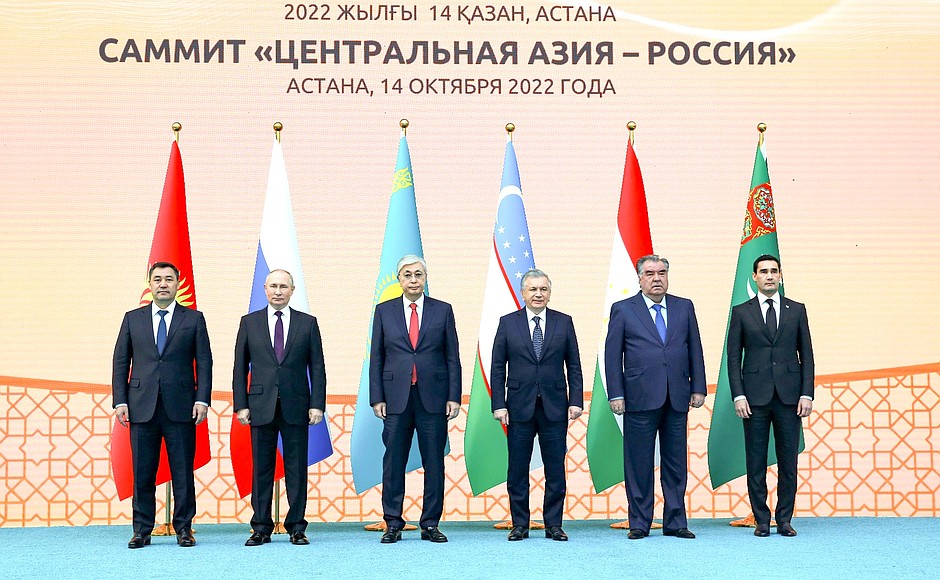
Kyrgyzstan and Tajikistan: The Poorest Countries in Central Asia Kyrgyzstan and Tajikistan are probably the most dependent on Russia of all the Central Asian states. Some 1.1 million migrant laborers from Kyrgyzstan and 1.6 million from Tajikistan worked abroad...
Read more »