 A Nation Must Think Before it Acts
National Security
A Nation Must Think Before it Acts
National Security

A nation must think before it acts.

National Security
The American Ways of War and Play
Last week marked the start of Major League Baseball’s regular season schedule in North America. (The season actually started on March 22 in Australia when the Los Angeles Dodgers played the Arizona Diamondbacks for two games at the Sydney...
Read more »The Revenge of Great Power Politics
WHAT A DIFFERENCE A week makes. A week ago Tom Ricks of the New American Foundation wrote about the non-military nature of today’s news, and then Russia conducts an invasion of the Crimea. This isn’t to be critical of Tom at all (full disclosure:...
Read more »Dempsey’s Wise Words on the Military Profession
Last week, Chairman of the Joint Chiefs of Staff Gen. Martin Dempsey delivered a speech at the National Defense University where he spoke about the current strategic environment, the military instrument and the military profession. On the current strategic...
Read more »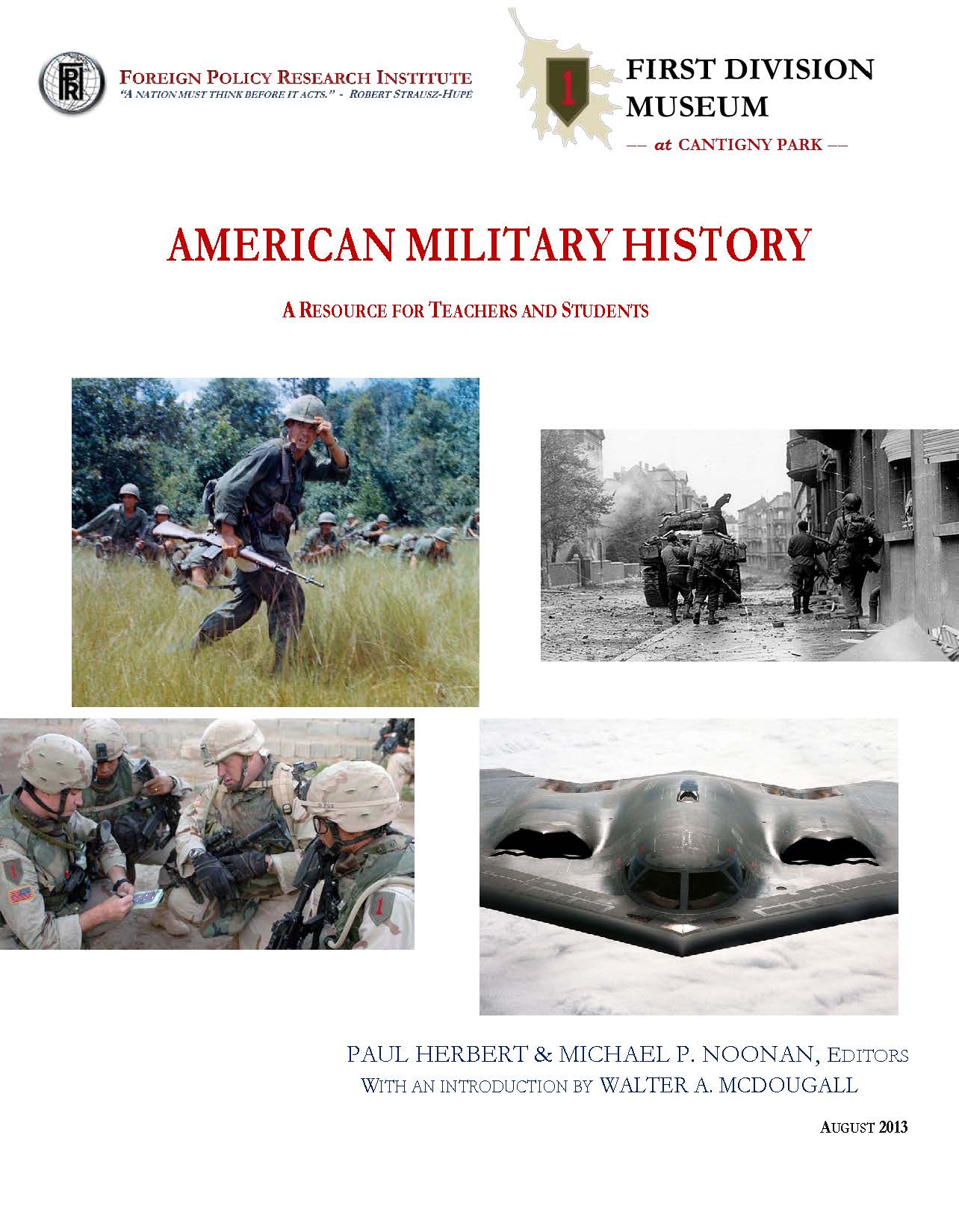
American Military History: A Resource for Teachers and Students
PREFACE Teaching America’s military history is an important civic duty because “We the People” are responsible for the common defense and therefore should know something about it. At the Foreign Policy Research Institute (FPRI), we encourage teachers to integrate...
Read more »Parsing Dempsey’s Syria Advice
On Tuesday of this week Chris Carroll from Stars and Stripes reported on a letter from Chairman of the Joint Chiefs of Staff General Martin Dempsey to Congress outlining five military options for dealing with the situation in Syria....
Read more »Drones and the Future of War
My first in-the-flesh experience with drones came on a hot night in June of 2006 on an airfield tarmac in Taji, Iraq. Having exited a large CH47 Chinook transport helicopter and now waiting for a bus to take me...
Read more »The Greatest Captain of His Age: Remembering General Winfield Scott
Of all the Great Captains we are examining in this conference, Winfield Scott is probably the least known to the general public. Years ago, when I told people I was writing a biography of President Garfield, a common reaction...
Read more »The Way of the Soldier: Remembering General Creighton Abrams
Creighton Abrams was something quite rare in the military profession, a man of tactical and strategic brilliance, personal bravery and integrity of the highest order, and inspiring leadership who was also compassionate, modest and wise. For nearly four decades,...
Read more »“Let Us Have Peace”: Remembering General Ulysses S. Grant
It is a pleasure to speak at the conference on “The Great Captains in American History,” and to talk about General Grant. Let me begin, however, by offering a word of caution. War is a terrible thing, and it...
Read more »
21st Century Cultures of War: Advantage Them
Introduction In the inaugural launch of the FPRI’s new e-publication, The Philadelphia Papers, the anthropologist Anna Simons of the Defense Analysis department at the Naval Postgraduate School, and member of the Orbis Board of Editors, provocatively assesses cultures of war in...
Read more »